


Can silencing of transposons contribute to variation in effector gene expression in Phytophthora infestans?
- PMID: 22934246
- PMCID: PMC3429519
- DOI: 10.4161/mge.20265
Can silencing of transposons contribute to variation in effector gene expression in Phytophthora infestans?
Abstract
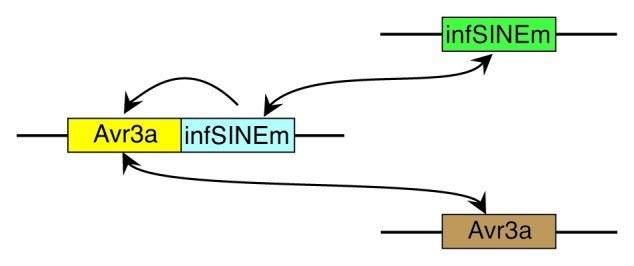
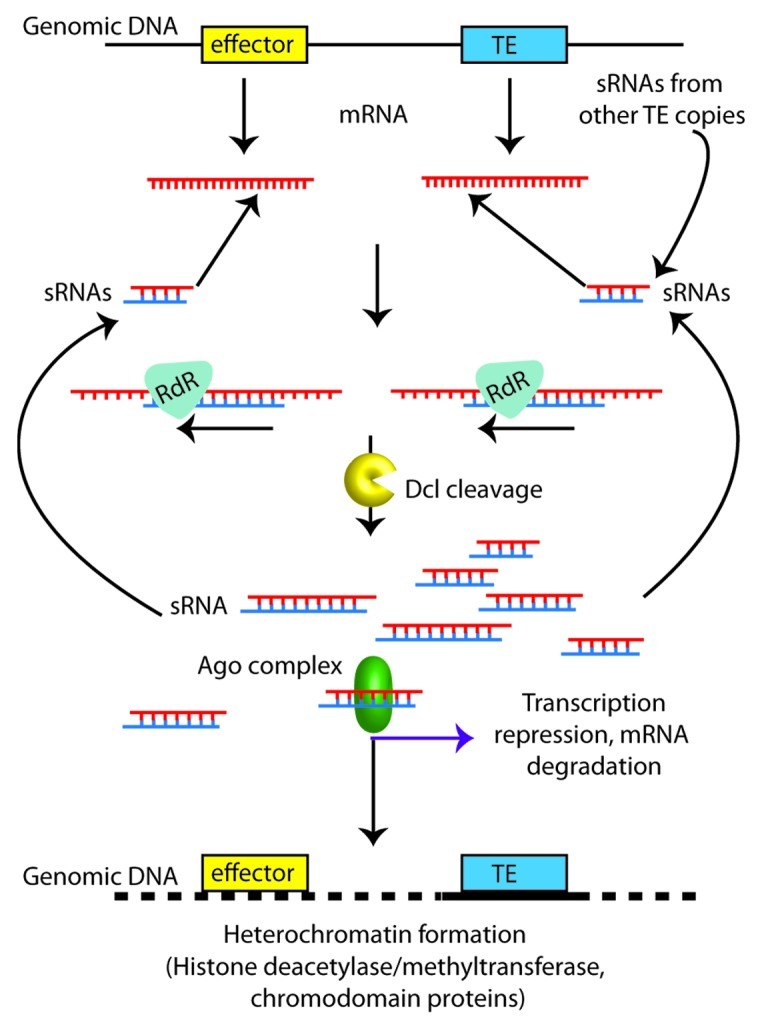
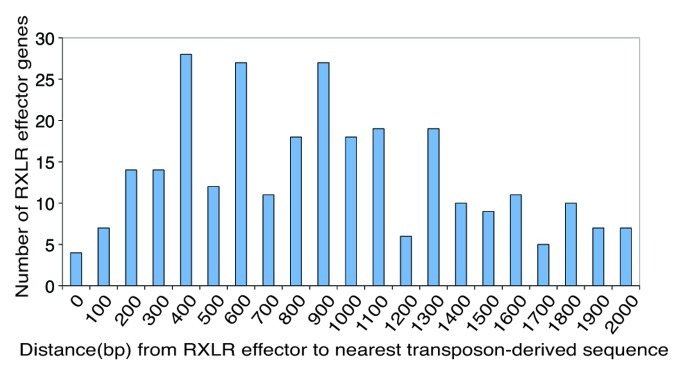
Transposable elements are ubiquitous residents in eukaryotic genomes. Often considered to be genomic parasites, they can lead to dramatic changes in genome organization, gene expression, and gene evolution. The oomycete plant pathogen Phytophthora infestans has evolved a genome organization where core biology genes are predominantly located in genome regions that have relatively few resident transposons. In contrast, disease effector-encoding genes are most frequently located in rapidly evolving genomic regions that are rich in transposons. P. infestans, as a eukaryote, likely uses RNA silencing to minimize the activity of transposons. We have shown that fusion of a short interspersed element (SINE) to an effector gene in P. infestans leads to the silencing of both the introduced fusion and endogenous homologous sequences. This is also likely to occur naturally in the genome of P. infestans, as transcriptional inactivation of effectors is known to occur, and over half of the translocated "RXLR class" of effectors are located within 2 kb of transposon sequences in the P. infestans genome. In this commentary, we review the diverse transposon inventory of P. infestans, its control by RNA silencing, and consequences for expression modulation of nearby effector genes in this economically important plant pathogen.
Figures
Comment on
- Vetukuri RR, Tian Z, Avrova AO, Savenkov EI, Dixelius C, Whisson SC. Silencing of the PiAvr3a effector-encoding gene from Phytophthora infestans by transcriptional fusion to a short interspersed element. Fungal Biol. 2011;115:1225–33. doi: 10.1016/j.funbio.2011.08.007. doi: 10.1016/j.funbio.2011.08.007
References
-
- Whisson SC, Avrova AO, Boevink PC, Armstrong MR, Seman ZA, Hein I, et al. Exploiting knowledge of pathogen effectors to enhance late blight resistance in potato. Potato Res. 2011;54:325–40. doi: 10.1007/s11540-011-9197-y. - DOI
LinkOut - more resources
Full Text Sources
