Review
. 2013 Mar;55(1-3):34-47.
doi: 10.1007/s12026-012-8348-9.

Improving T cell responses to modified peptides in tumor vaccines

Affiliations
Review

Improving T cell responses to modified peptides in tumor vaccines

Jonathan D Buhrman et al. Immunol Res. 2013 Mar.

Abstract

Immune recognition and elimination of cancerous cells is the primary goal of cancer immunotherapy. However, obstacles including immune tolerance and tumor-induced immunosuppression often limit beneficial immune responses. Vaccination is one proposed intervention that may help to overcome these issues and is an active area of study in cancer immunotherapy. Immunizing with tumor antigenic peptides is a promising, straight-forward vaccine strategy hypothesized to boost preexisting antitumor immunity. However, tumor antigens are often weak T cell agonists, attributable to several mechanisms, including immune self-tolerance and poor immunogenicity of self-derived tumor peptides. One strategy for overcoming these mechanisms is vaccination with mimotopes, or peptide mimics of tumor antigens, which alter the antigen presentation and/or T cell activation to increase the expansion of tumor-specific T cells. Evaluation of mimotope vaccine strategies has revealed that even subtle alterations in peptide sequence can dramatically alter antigen presentation and T cell receptor recognition. Most of this research has been performed using T cell clones, which may not be accurate representations of the naturally occurring antitumor response. The relationship between clones generated after mimotope vaccination and the polyclonal T cell repertoire is unclear. Our work with mimotopes in a mouse model of colon carcinoma has revealed important insights into these issues. We propose that the identification of mimotopes based on stimulation of the naturally responding T cell repertoire will dramatically improve the efficacy of mimotope vaccination.


Figures
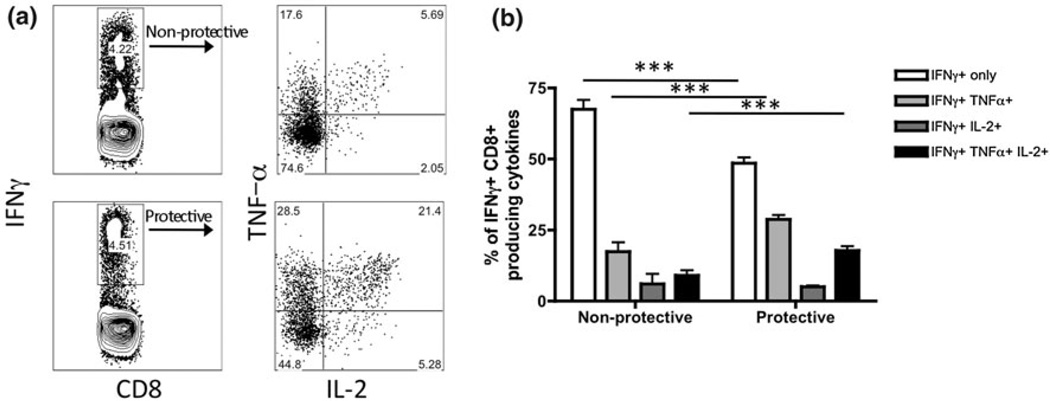
Fig. 1
Fig. 1
Vaccine-elicited T cells that protect mice from tumor challenge produce multiple cytokines. a BALB/c mice were immunized with two different vaccines, which elicit antigen-specific CD8+ T cells that protect mice (protective) from tumor challenge or do not (non-protective). Splenocytes were isolated from mice and stimulated with antigen for 5 h in the presence of monensin. Cells were then stained with antibodies specific for cytokines IFNγ, TNFα, and IL-2. b Combined data plotted from a. *** p < 0.001
Fig. 2
Fig. 2
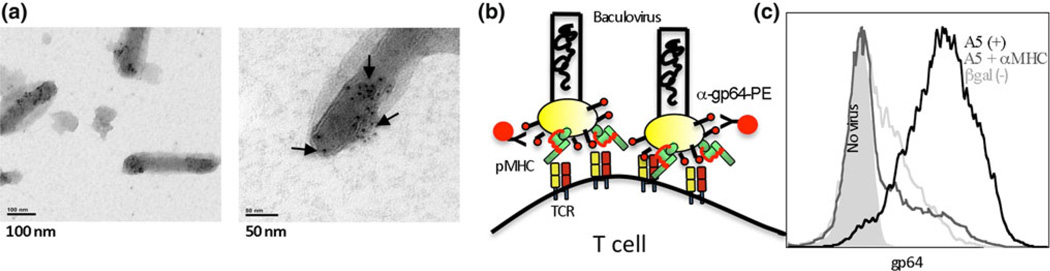
Baculovirus-encoding peptide-MHC display libraries are well-characterized systems for screening and identification of new epitopes or mimotopes. Baculovirus (BV) are large, enveloped, double-stranded DNA viruses that have been utilized extensively for expression and production of recombinant proteins. Chimeric proteins encoding the extracellular domain of mammalian MHC, linked to various peptides, and the transmembrane domain of viral glycoprotein gp64 are expressed on the surface of infected insect cells. During the infection cycle, BV ‘bud’ from the cell membrane of infected insect cells taking the membrane-bound recombinant protein with them, resulting in expression on the virion surface [124]. a BV-expressing pMHC complexes were visualized using electron microscopy and immunogold-conjugated antibody specific for MHC. Our work supports previous data demonstrating that ligands on BV bind to cell-bound cognate receptors [125]. b Briefly, rBV-expressing pMHC is incubated with antigen-specific T cells, the excess is washed away, and bound virus is detected using a monoclonal antibody specific for the gp64 viral protein. c We observe that BV-expressing peptides specific for their cognate T cell receptor (A5) bind in a pMHC–TCR complex, while non-specific pMHC (βgal) do not bind as efficiently. Furthermore, blocking with an MHC-specific antibody reduces the A5–H–2Ld interaction. Using this technology, tumor-specific T cells may be used to screen large peptide-MHC libraries expressed by BV. Bound viruses are recovered by trypsinizing the T cell surface proteins and used to infect more insect cells, enriching for peptides that bind specifically to T cells. Individual peptides can be cloned by limiting dilution and screened for antigen-specific function by stimulating T cells to proliferate, produce cytokine, or kill target cells
Fig. 3
Fig. 3
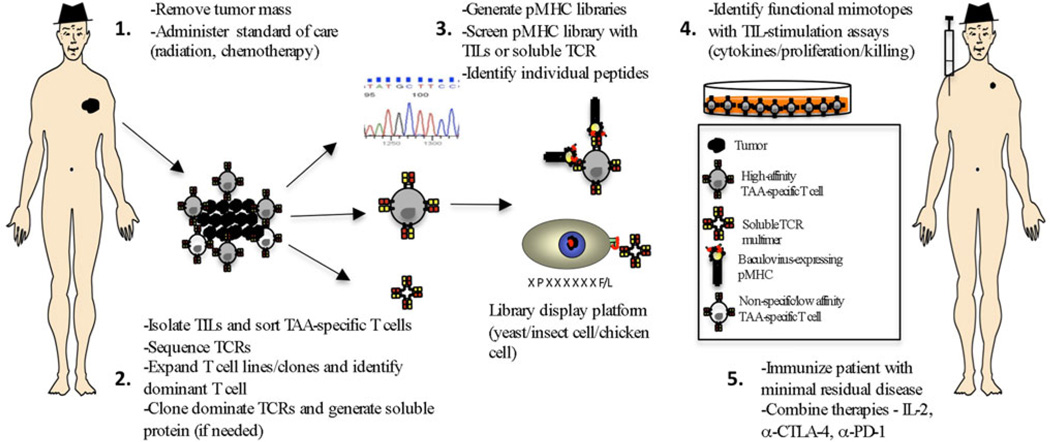
Proposed schematic representation using TIL to screen baculovirus-encoding pMHC libraries for mimotopes

References

    1. Coley WB., II Contribution to the knowledge of Sarcoma. Ann Surg. 1891;14:199–220. - PMC - PubMed
    1. Burnet M. Cancer: a biological approach. III. Viruses associated with neoplastic conditions IV Practical applications. Br Med J. 1957;1:841–847. - PMC - PubMed
    1. Thomas L. In Cellular and humoral aspects of the hypersensitive states. In: Lawrence eH., editor. Discussion. New York: Hoeber-Harper; 1959.
    1. Quezada SA, et al. Shifting the equilibrium in cancer immunoediting: from tumor tolerance to eradication. Immunol Rev. 2011;241:104–118. - PMC - PubMed
    1. Mellman I, Coukos G, Dranoff G. Cancer immunotherapy comes of age. Nature. 2011;480:480–489. - PMC - PubMed

Publication types

LinkOut - more resources