


Early systemic granulocyte-colony stimulating factor treatment attenuates neuropathic pain after peripheral nerve injury
- PMID: 22937076
- PMCID: PMC3427178
- DOI: 10.1371/journal.pone.0043680
Early systemic granulocyte-colony stimulating factor treatment attenuates neuropathic pain after peripheral nerve injury
Abstract
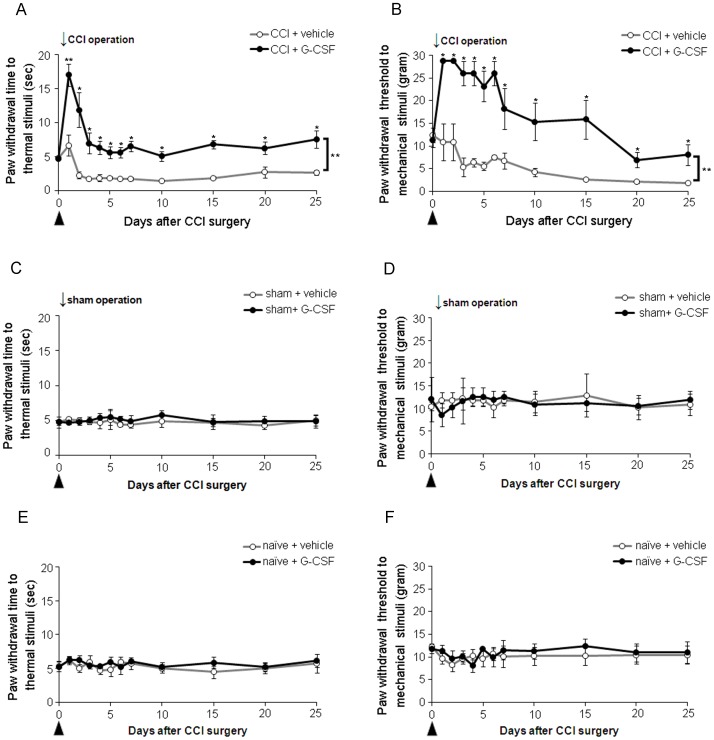
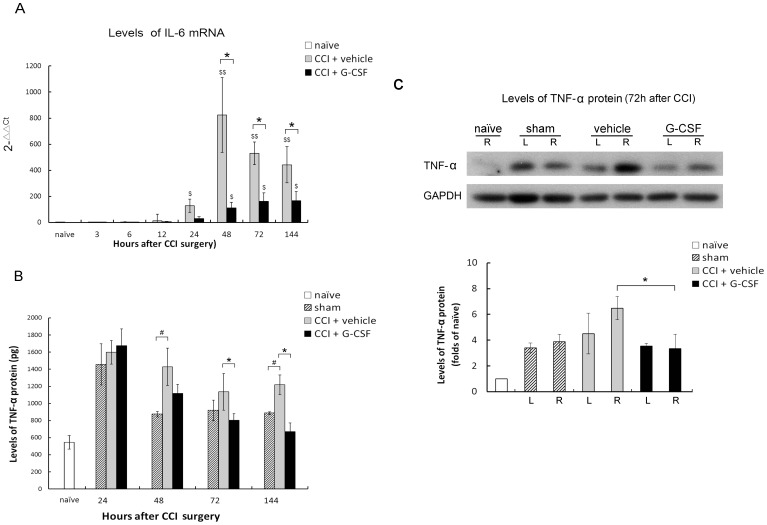
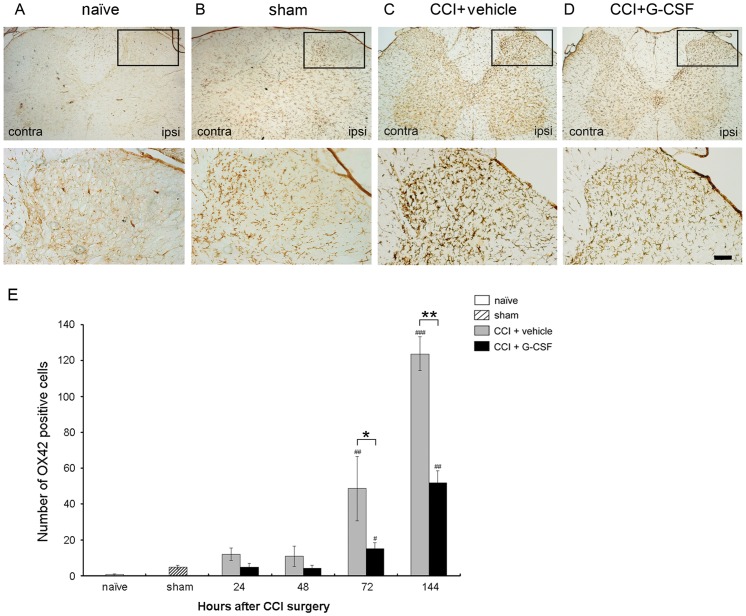
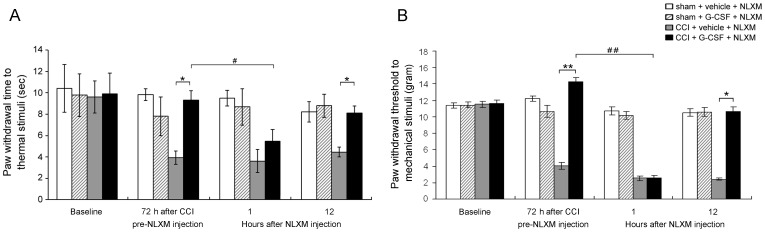
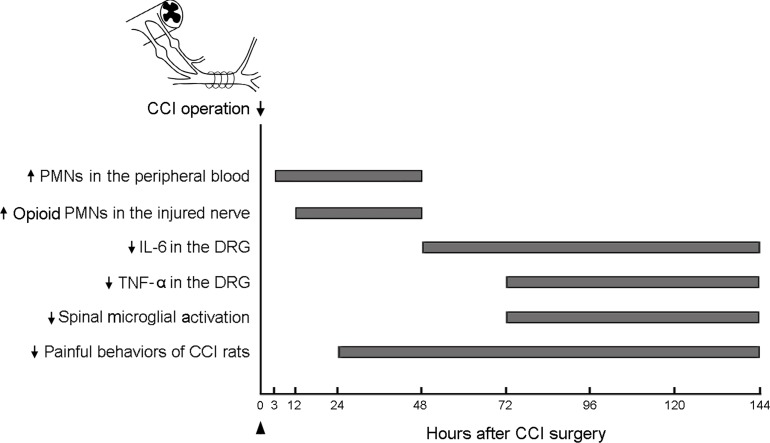
Recent studies have shown that opioid treatment can reduce pro-inflammatory cytokine production and counteract various neuropathic pain syndromes. Granulocyte colony-stimulating factor (G-CSF) can promote immune cell differentiation by increasing leukocytes (mainly opioid-containing polymorphonuclear (PMN) cells), suggesting a potential beneficial role in treating chronic pain. This study shows the effectiveness of exogenous G-CSF treatment (200 µg/kg) for alleviating thermal hyperalgesia and mechanical allodynia in rats with chronic constriction injury (CCI), during post-operative days 1-25, compared to that of vehicle treatment. G-CSF also increases the recruitment of opioid-containing PMN cells into the injured nerve. After CCI, single administration of G-CSF on days 0, 1, and 2, but not on day 3, relieved thermal hyperalgesia, which indicated that its effect on neuropathic pain had a therapeutic window of 0-48 h after nerve injury. CCI led to an increase in the levels of interleukin-6 (IL-6) mRNA and tumor necrosis factor-α (TNF-α) protein in the dorsal root ganglia (DRG). These high levels of IL-6 mRNA and TNF-α were suppressed by a single administration of G-CSF 48-144 h and 72-144 h after CCI, respectively. Furthermore, G-CSF administered 72-144 h after CCI suppressed the CCI-induced upregulation of microglial activation in the ipsilateral spinal dorsal horn, which is essential for sensing neuropathic pain. Moreover, the opioid receptor antagonist naloxone methiodide (NLXM) reversed G-CSF-induced antinociception 3 days after CCI, suggesting that G-CSF alleviates hyperalgesia via opioid/opioid receptor interactions. These results suggest that an early single systemic injection of G-CSF alleviates neuropathic pain via activation of PMN cell-derived endogenous opioid secretion to activate opioid receptors in the injured nerve, downregulate IL-6 and TNF-α inflammatory cytokines, and attenuate microglial activation in the spinal dorsal horn. This indicates that G-CSF treatment can suppress early inflammation and prevent the subsequent development of neuropathic pain.
Conflict of interest statement
Figures


References
-
- Marchand F, Perretti M, McMahon SB (2005) Role of the immune system in chronic pain. Nat Rev Neurosci 6: 521–532. - PubMed
-
- Fecho K, Manning EL, Maixner W, Schmitt CP (2007) Effects of carrageenan and morphine on acute inflammation and pain in Lewis and Fischer rats. Brain Behav Immun 21: 68–78. - PubMed
-
- Berrios I, Castro C, Kuffler DP (2008) Morphine: axon regeneration, neuroprotection, neurotoxicity, tolerance, and neuropathic pain. P R Health Sci J 27: 119–128. - PubMed
Publication types
MeSH terms
Substances
LinkOut - more resources
Full Text Sources
Other Literature Sources
Medical
