


Mechanism-based urinary biomarkers to identify the potential for aminoglycoside-induced nephrotoxicity in premature neonates: a proof-of-concept study
- PMID: 22937100
- PMCID: PMC3427159
- DOI: 10.1371/journal.pone.0043809
Mechanism-based urinary biomarkers to identify the potential for aminoglycoside-induced nephrotoxicity in premature neonates: a proof-of-concept study
Abstract
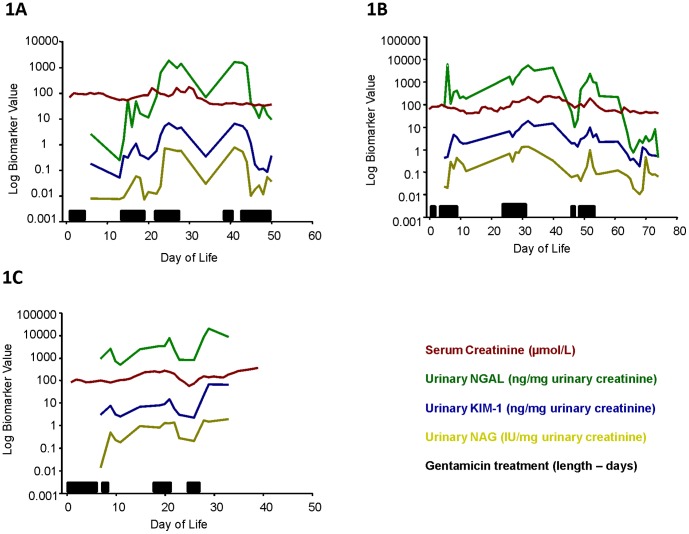
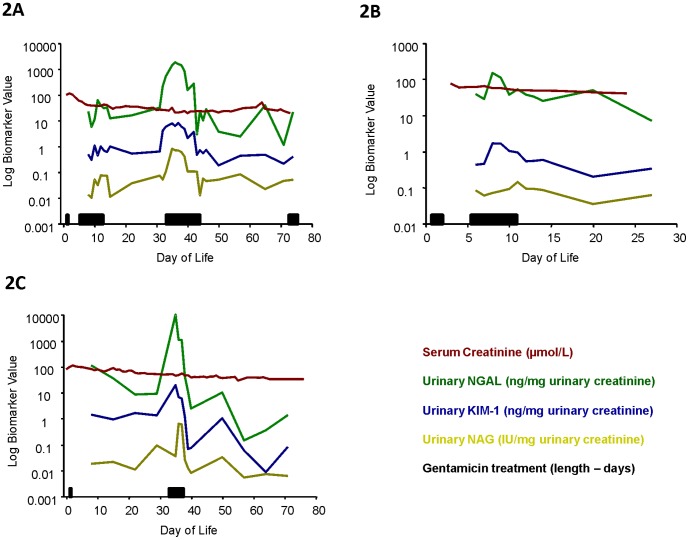
Premature infants are frequently exposed to aminoglycoside antibiotics. Novel urinary biomarkers may provide a non-invasive means for the early identification of aminoglycoside-related proximal tubule renal toxicity, to enable adjustment of treatment and identification of infants at risk of long-term renal impairment. In this proof-of-concept study, urine samples were collected from 41 premature neonates (≤ 32 weeks gestation) at least once per week, and daily during courses of gentamicin, and for 3 days afterwards. Significant increases were observed in the three urinary biomarkers measured (Kidney Injury Molecule-1 (KIM-1), Neutrophil Gelatinase-associated Lipocalin (NGAL), and N-acetyl-β-D-glucosaminidase (NAG)) during treatment with multiple courses of gentamicin. When adjusted for potential confounders, the treatment effect of gentamicin remained significant only for KIM-1 (mean difference from not treated, 1.35 ng/mg urinary creatinine; 95% CI 0.05-2.65). Our study shows that (a) it is possible to collect serial urine samples from premature neonates, and that (b) proximal tubule specific urinary biomarkers can act as indicators of aminoglycoside-associated nephrotoxicity in this age group. Further studies to investigate the clinical utility of novel urinary biomarkers in comparison to serum creatinine need to be undertaken.
Conflict of interest statement
Figures
References
Publication types
MeSH terms
Substances
Grants and funding
LinkOut - more resources
Full Text Sources
Medical
Miscellaneous
