


Enantioselective cytotoxicity profile of o,p'-DDT in PC 12 cells
- PMID: 22937105
- PMCID: PMC3427172
- DOI: 10.1371/journal.pone.0043823
Enantioselective cytotoxicity profile of o,p'-DDT in PC 12 cells
Abstract
Background: The continued uses of dichlordiphenyltrichloroethane (DDT) for indoor vector control in some developing countries have recently fueled intensive debates toward the global ban of this persistent legacy contaminant. Current approaches for ecological and health risk assessment has ignored the chiral nature of DDT. In this study by employing an array of cytotoxicity related endpoints, we investigated the enantioselective cytotoxicity of o,p'-DDT.
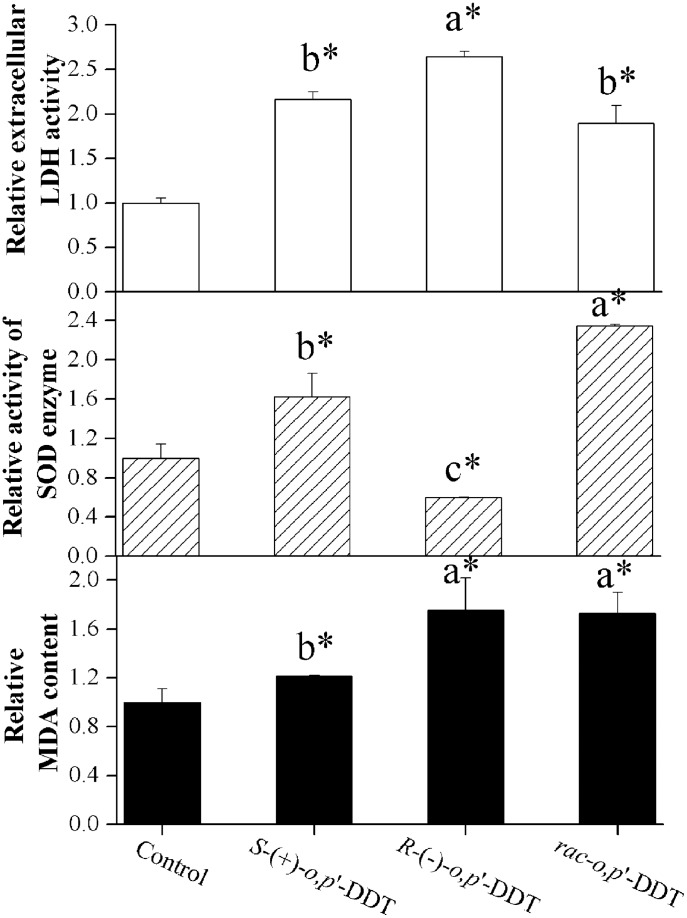
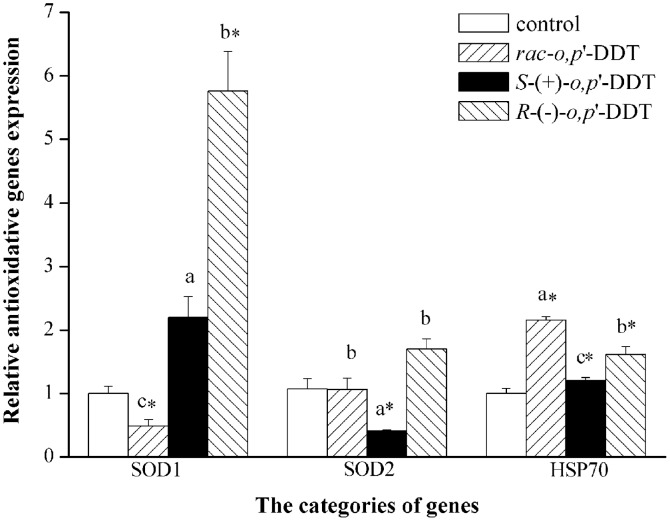
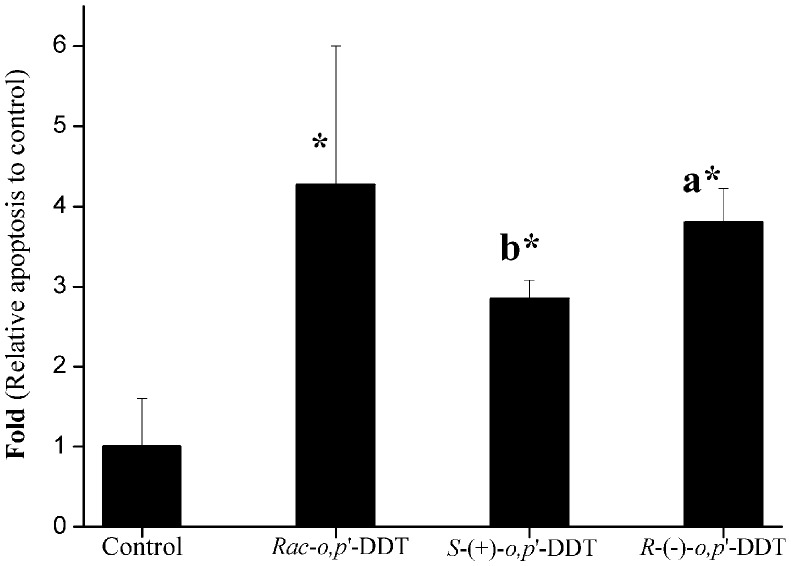
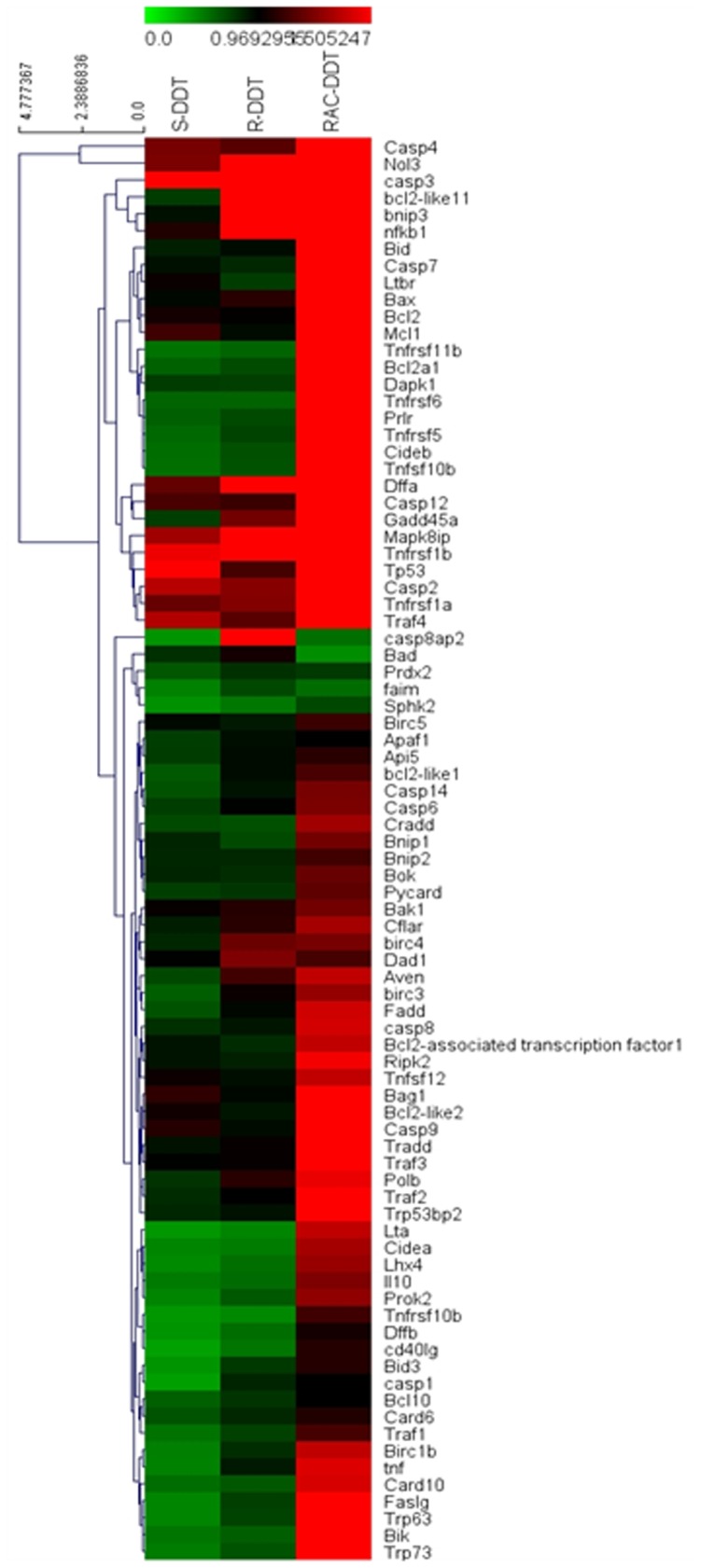
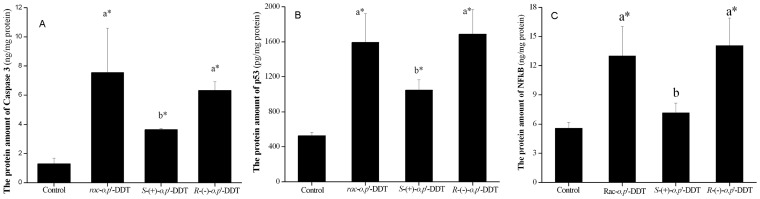
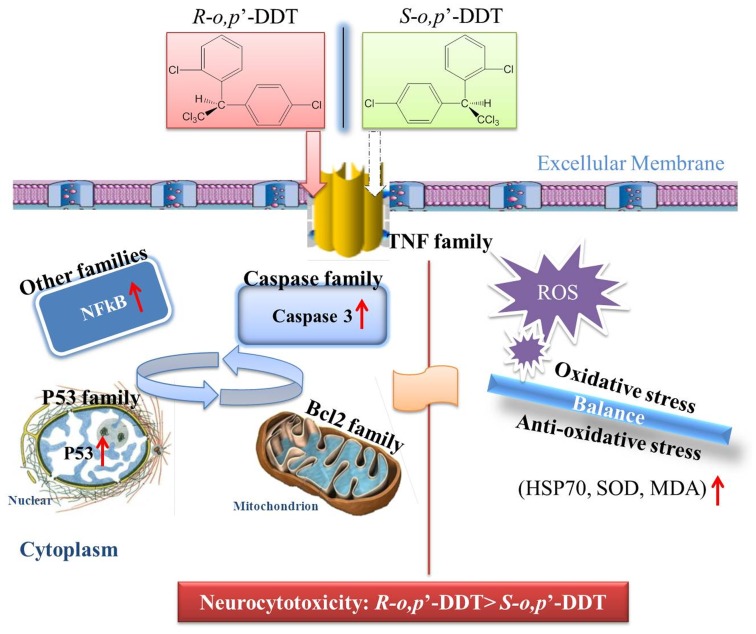
Principal findings: we demonstrated for the first time that R-(-)-o,p'-DDT caused more neuron cell death by inducing more severe oxidative stress, which selectively imbalanced the transcription of stress-related genes (SOD1, SOD2, HSP70) and enzyme (superoxide dismutase and lactate dehydrogenase) activities, and greater cellular apoptosis compared to its enantiomer S-(+)-o,p'-DDT at the level comparable to malaria area exposure (parts per million). We further elucidated enantioselective modes of action using microarray combined with enzyme-linked immunosorbent assay. The enantioselective apoptosis might involve three signaling pathways via caspase 3, tumor protein 53 (p53) and NF(k)B.
Conclusions: Based on DDT stereochemistry and results reported for other chiral pesticides, our results pointed to the same directional enantioselectivity of chiral DDT toward mammalian cells. We proposed that risk assessment on DDT should consider the enantiomer ratio and enantioselectivities.
Conflict of interest statement
Figures
References
-
- Leber ER, Benya TJ (1994) Chlorinated hydrocarbon insecticides. Patty’s Industrial Hygiene and Toxicology. Vol. 2, Part B, New York: John Wiley and Sons Inc; 1503–1506.
-
- Stemmler I, Lammel G (2009) Cycling of DDT in the global environment 1950–2002: World ocean returns the pollutant. Geophys Res Lett 36: L24602–L24606.
-
- UNEP. Stockholm convention on persistent organic pollutants (POPs). UNEP/Chemicals/2002/9. 2002, Geneva: United Nations Environment Programme.
-
- van Dyk JC, Bouwman H, Barnhoorn IE, Bornman MS (2010) DDT contamination from indoor residual spraying for malaria control. Sci Total Environ 408: 2745–2752. - PubMed
Publication types
MeSH terms
Substances
LinkOut - more resources
Full Text Sources
Research Materials
Miscellaneous
