. 2012;7(8):e43934.
doi: 10.1371/journal.pone.0043934. Epub 2012 Aug 24.

Triphala and its active constituent chebulinic acid are natural inhibitors of vascular endothelial growth factor-a mediated angiogenesis

Affiliations

Triphala and its active constituent chebulinic acid are natural inhibitors of vascular endothelial growth factor-a mediated angiogenesis

Kai Lu et al. PLoS One. 2012.

Abstract

Triphala churna (THL) is a combination of three fruits that has been used for many years in India for the treatment of various diseases. There are now reports which indicate that THL can inhibit growth of malignant tumors in animals. However, the mechanisms by which THL mediates its anti-tumor actions are still being explored. Because vascular endothelial growth factor-A (VEGF) induced angiogenesis plays a critical role in the pathogenesis of cancer, we therefore investigated whether tumor inhibitory effects of THL or its active constituents are through suppression of VEGF actions. We herein report that THL and chebulinic (CI) present in THL can significantly and specifically inhibit VEGF induced angiogenesis by suppressing VEGF receptor-2 (VEGFR-2) phosphorylation. These results are of clinical significance as these inexpensive and non-toxic natural products can be used for the prevention and treatment of diseases where VEGF induced angiogenesis has an important role.


Conflict of interest statement

Competing Interests: The authors have declared that no competing interests exist.

Figures

Figure 1
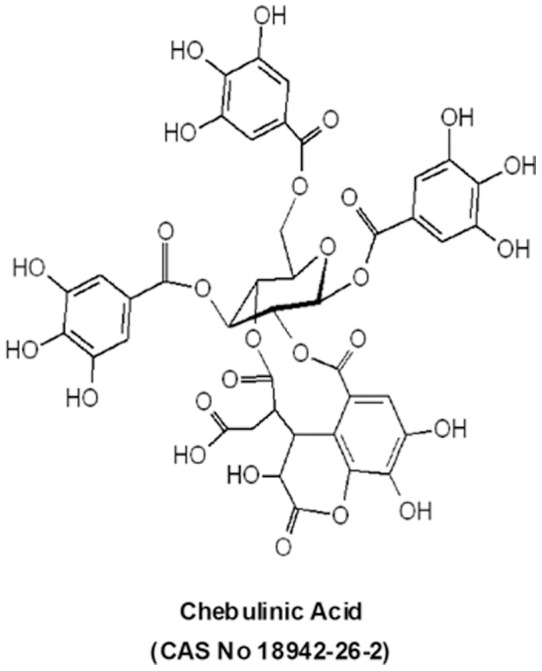
Figure 1. The chemical structure of chebulinic acid.
Figure 2
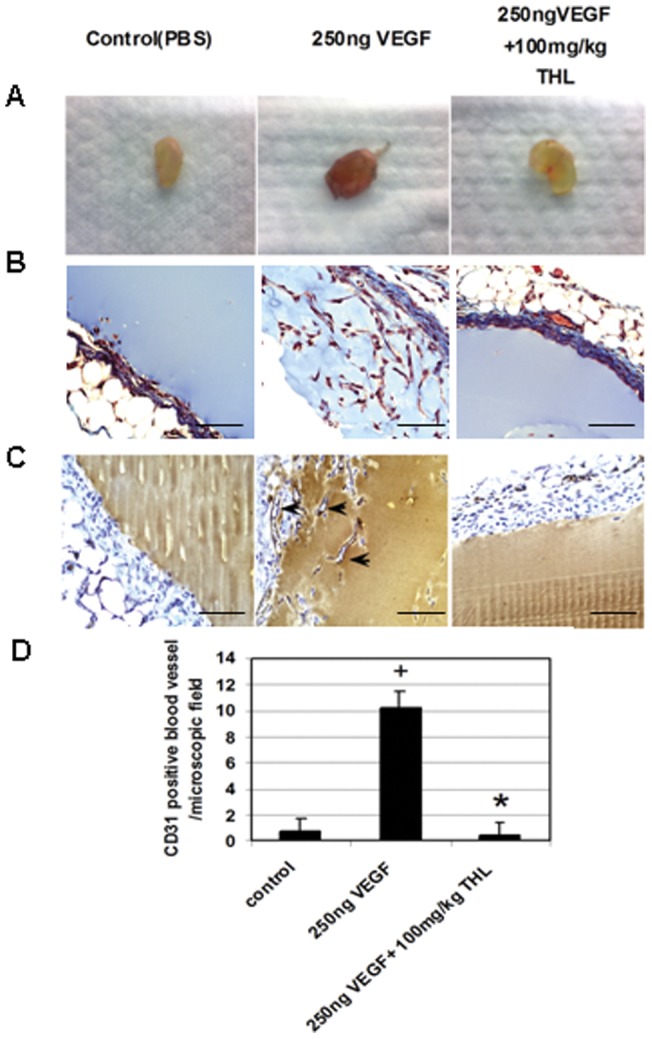
Figure 2. The effects of THL (triphala churna) on in vivo matrigel angiogenesis assay.
(A) Photographs of representative matrigel plugs show THL untreated red colored vascular endothelial growth factor (VEGF) containing plugs in comparison to the VEGF minus PBS containing controls. (A) In contrast, THL (triphala churna) treated VEGF containing matrigel plugs were pale. (B) Masson's trichrome staining (endothelial cells stain red and matrigel stains blue) and (C, D) CD31 immunohistochemistry of the matrigel plug sections show large numbers of endothelial cells in THL untreated VEGF containing plugs in comparison to controls (+, p<0.05). In contrast, THL treated VEGF containing matrigel plug section has considerably low numbers of endothelial cells as detected by Masson's trichrome staining and CD31 staining (*, p<0.05). Scale bars in B and C, 50 μm. n =  six for each experimental group.
Figure 3
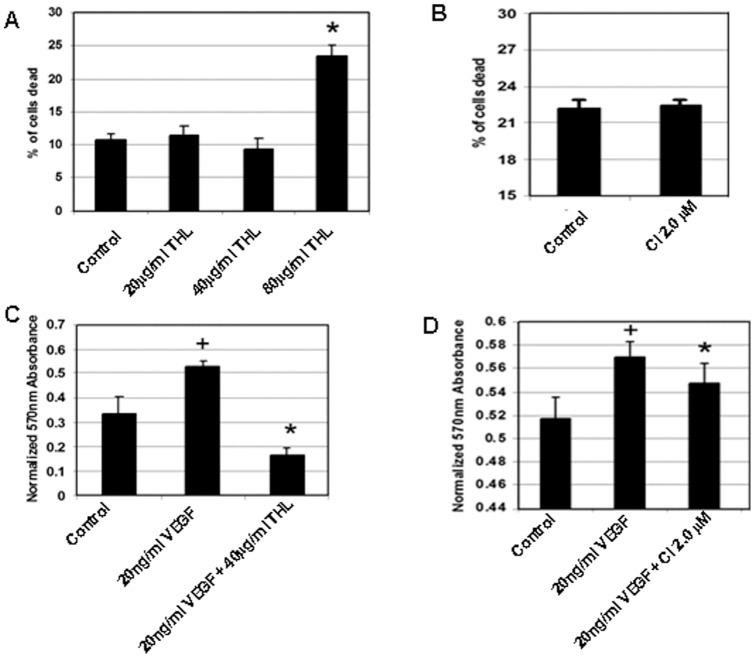
Figure 3. The effects of THL (triphala churna) and chebulinic acid (CI) on endothelial cell viability.
(A) The cytotoxic efffects of various concentrations of THL (triphala churna) and (B) chebulinic acid (CI) on human umbilical vein cells (HUVEC) (*, p<0.05). (C) Effects of THL and (D) CI on HUVEC proliferation stimulated by vascular endothelial growth factor (VEGF) (+, p<0.05 versus vascular endothelial growth factor (VEGF) and untreated control). The stimulatory effect of VEGF on HUVEC was abrogated by THL and CI (*, p<0.05). All error bars represent SEM. Results shown are representative of six separate experiments.
Figure 4
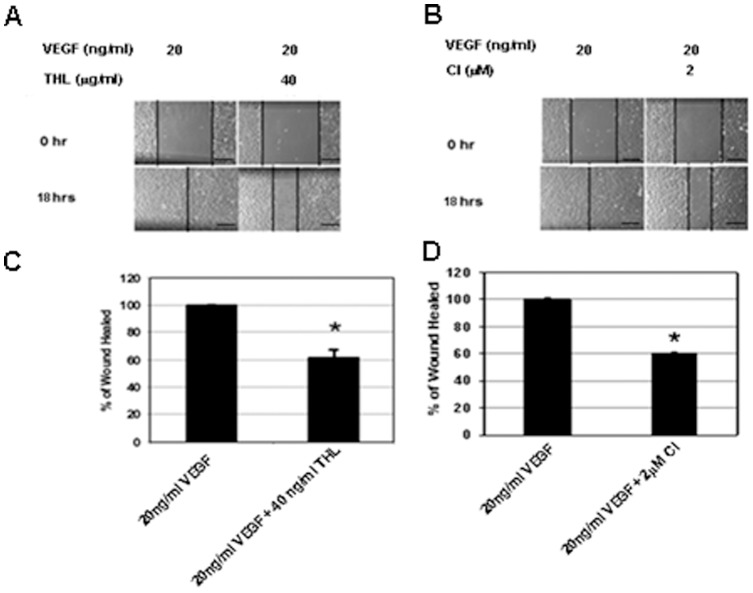
Figure 4. The effects of THL (triphala churna) and chebulinic acid (CI) on vascular endothelial growth factor (VEGF) induced migration of human umbilical vein cells (HUVEC).
Phase-contrast microphotographs of the wound area in HUVEC monolayer at 18 h after wounding (A–D) VEGF promotes complete wound closure or healing in 18vh. In contrast, this effect is lost when cells are treated either with THL (A, C) or CI (B, D). Wound healing is calculated as the distance covered by cells in relation to the initial wound distance at 0 h and is expressed as a percentage of the initial distance at 0 h. *, P<0.05. All error bars represent SEM. Scale bars in A and B, 200 μm. Results shown are representative of six separate experiments.
Figure 5
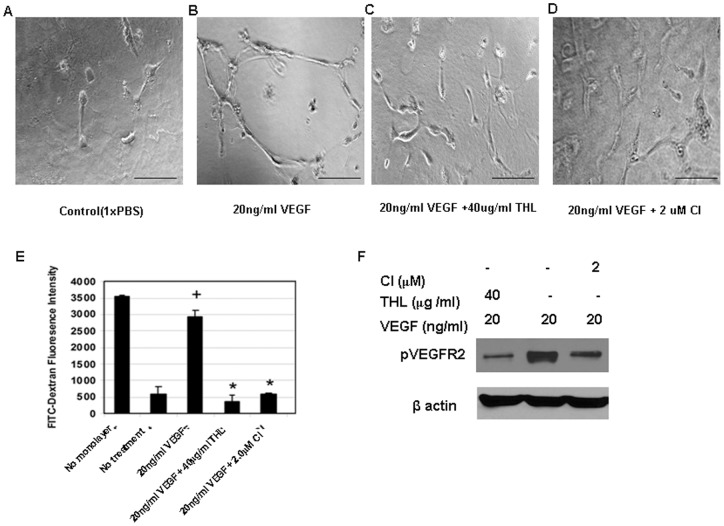
Figure 5. The effects of Triphala churna (THL) and chebulinic acid (CI) on vascular endothelial growth factor (VEGF) induced tube formation and permeability in human umbilical vein cells (HUVEC).
In contrast to (A) control, (B) VEGF promotes tube formation in HUVEC. However, treatment with either (C) THL or (D) CI inhibits VEGF induced tube formation in HUVEC. (E) Similarly, VEGF induces significant permeability in HUVEC in comparison to untreated control (+, p<0.05). On the contrary, THL and CI significantly inhibit VEGF mediated permeability in HUVEC (*, p<0.05). (F) Western blot analysis shows significant inhibition of vascular endothelial growth factor receptor-2 (VEGFR2) phosphorylation on treatment with THL and CI. Scale bars in A–D, 200 μm. The figure is representative of six separate experiments.
Figure 6
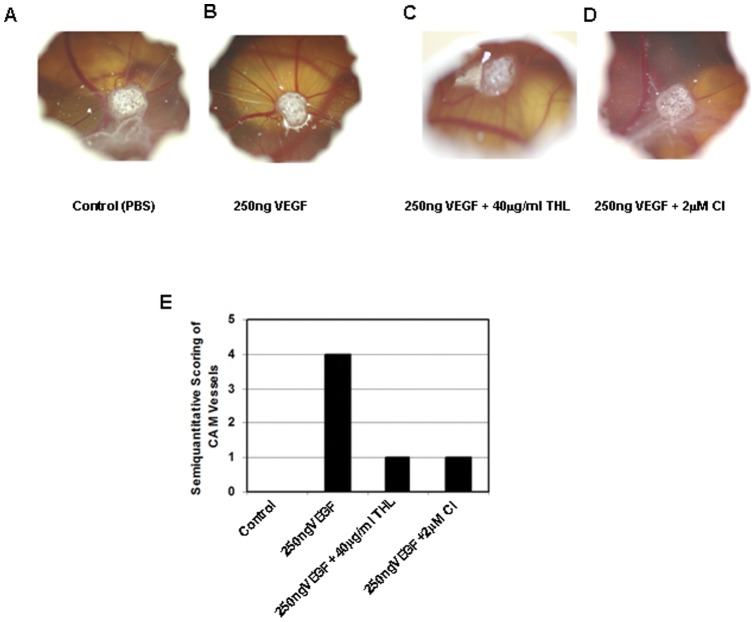
Figure 6. The effects of Triphala churna (THL) and chebulinic acid (CI) on vascular endothelial growth factor (VEGF) induced angiogenesis in the CAM assay.
(A, E) PBS used as a control does not induce blood vessel formation. (B, E) VEGF induces new blood vessel formation. (C, E) THL inhibits VEGF induced new blood vessel formation (D, E) CI inhibits VEGF mediated new blood vessel formation. Representative photographs of six separate experiments are shown.

References

    1. Folkman J (1995) Angiogenesis in cancer, vascular, rheumatoid and other disease. Nat Med 1: 27–31. - PubMed
    1. Dvorak HF (2002) Vascular permeability factor/vascular endothelial growth factor: a critical cytokine in tumor angiogenesis and a potential target for diagnosis and therapy. J Clin Oncol 20: 4368–4380. - PubMed
    1. Ferrara N (2009) Vascular endothelial growth factor. Arterioscler Thromb Vasc Biol 29: 789–791. - PubMed
    1. Basu S, Nagy JA, Pal S, Vasile E, Eckelhoefer IA, et al. (2001) The neurotransmitter dopamine inhibits angiogenesis induced by vascular permeability factor/vascular endothelial growth factor. Nat Med 7: 569–574. - PubMed
    1. Singh DP, Govindarajan R, Rawat AK (2008) High-performance liquid chromatography as a tool for the chemical standardisation of Triphala- an Ayurvedic formulation. Phytochem Anal 19: 164–168. - PubMed

Publication types

MeSH terms