


Non-invasive prenatal diagnostic test accuracy for fetal sex using cell-free DNA a review and meta-analysis
- PMID: 22937795
- PMCID: PMC3444439
- DOI: 10.1186/1756-0500-5-476
Non-invasive prenatal diagnostic test accuracy for fetal sex using cell-free DNA a review and meta-analysis
Abstract
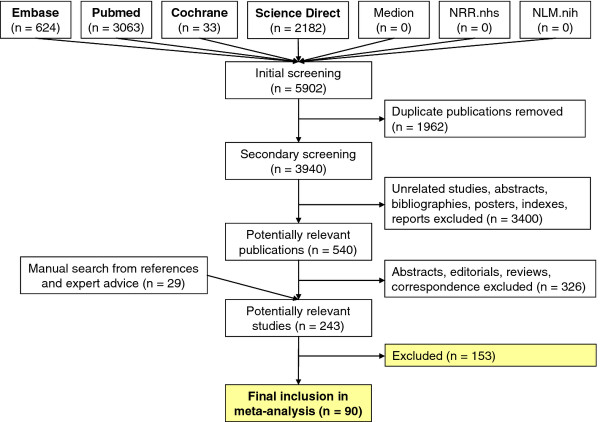
Background: Cell-free fetal DNA (cffDNA) can be detected in maternal blood during pregnancy, opening the possibility of early non-invasive prenatal diagnosis for a variety of genetic conditions. Since 1997, many studies have examined the accuracy of prenatal fetal sex determination using cffDNA, particularly for pregnancies at risk of an X-linked condition. Here we report a review and meta-analysis of the published literature to evaluate the use of cffDNA for prenatal determination (diagnosis) of fetal sex. We applied a sensitive search of multiple bibliographic databases including PubMed (MEDLINE), EMBASE, the Cochrane library and Web of Science.
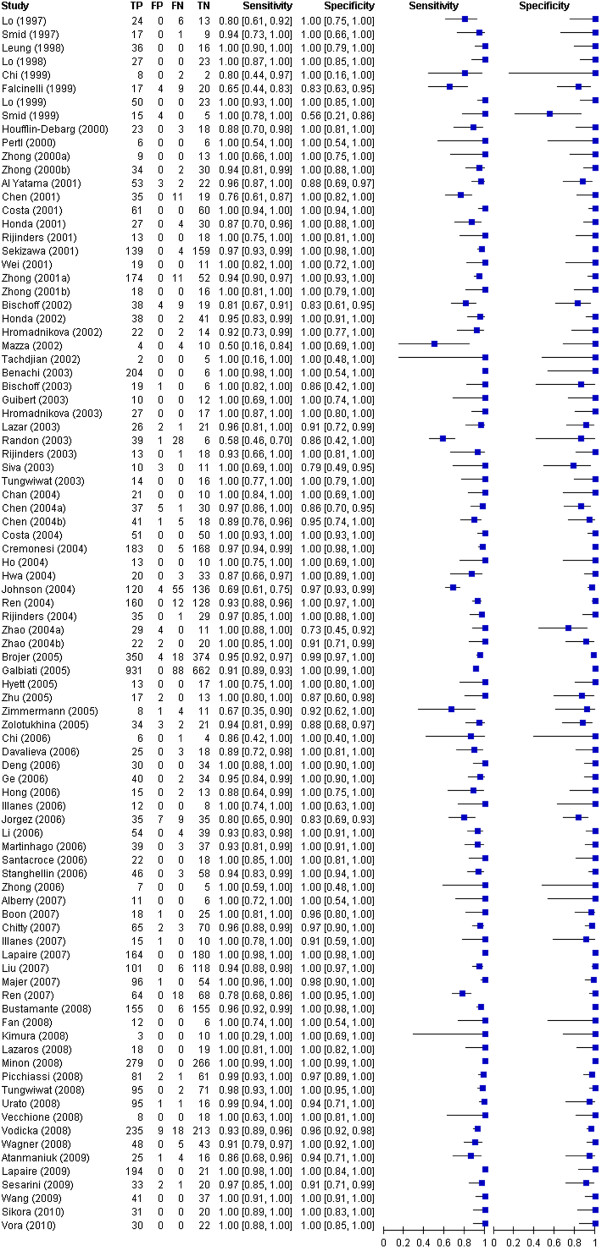
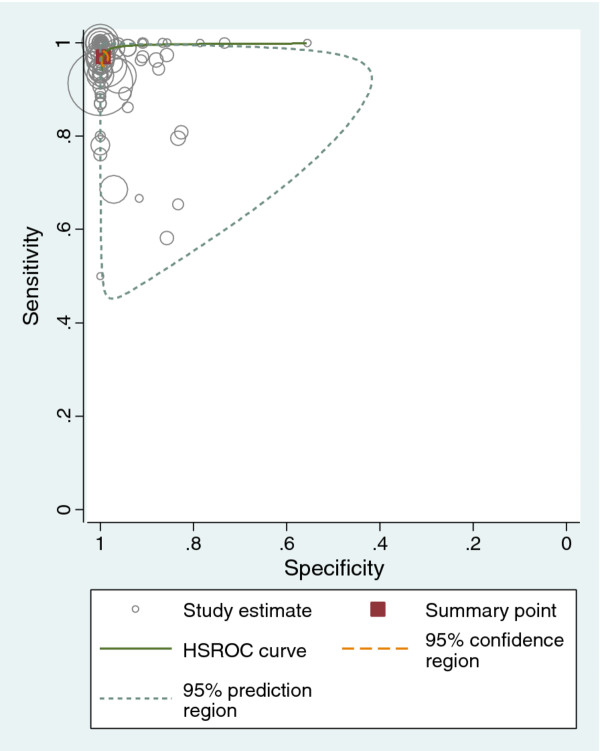
Results: Ninety studies, incorporating 9,965 pregnancies and 10,587 fetal sex results met our inclusion criteria. Overall mean sensitivity was 96.6% (95% credible interval 95.2% to 97.7%) and mean specificity was 98.9% (95% CI = 98.1% to 99.4%). These results vary very little with trimester or week of testing, indicating that the performance of the test is reliably high.
Conclusions: Based on this review and meta-analysis we conclude that fetal sex can be determined with a high level of accuracy by analyzing cffDNA. Using cffDNA in prenatal diagnosis to replace or complement existing invasive methods can remove or reduce the risk of miscarriage. Future work should concentrate on the economic and ethical considerations of implementing an early non-invasive test for fetal sex.
Figures
References
Publication types
MeSH terms
Substances
Grants and funding
LinkOut - more resources
Full Text Sources
Medical
Miscellaneous
