


Volumetric reductions in the subgenual anterior cingulate cortex in adolescents with bipolar I disorder
- PMID: 22938166
- PMCID: PMC3433284
- DOI: 10.1111/j.1399-5618.2012.01043.x
Volumetric reductions in the subgenual anterior cingulate cortex in adolescents with bipolar I disorder
Abstract
Objectives: A range of prefrontal and subcortical volumetric abnormalities have been found in adults and adolescents with bipolar disorder. It is unclear, however, if these deficits are present early in the onset of mania or are a consequence of multiple mood episodes or prolonged exposure to medication. The goal of this study was to examine whether youth with bipolar I disorder who recently experienced their first episode of mania are characterized by brain volumetric abnormalities.
Methods: Anatomical images from magnetic resonance imaging of 26 13- to 18-year-old adolescents with bipolar I disorder and 24 age-comparable healthy controls with no personal or family history of psychopathology were analyzed using whole-brain voxel-based morphometry (VBM).
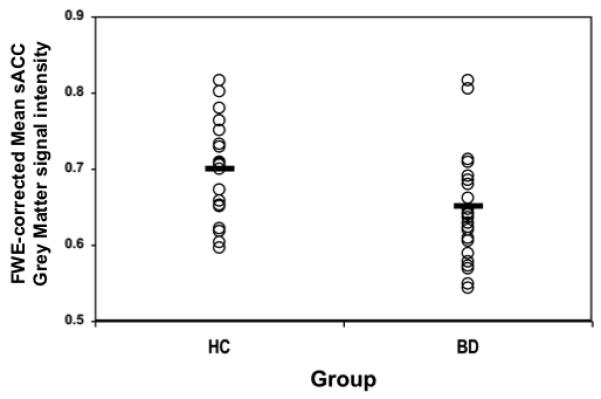
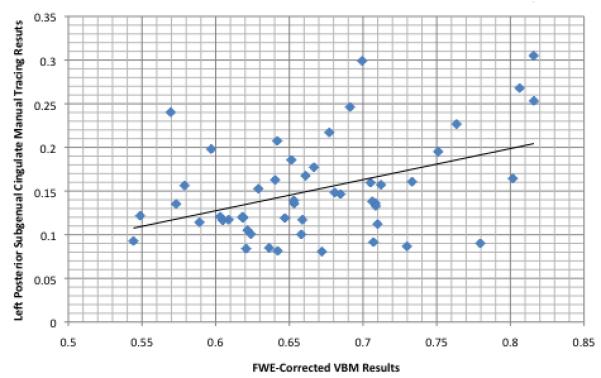
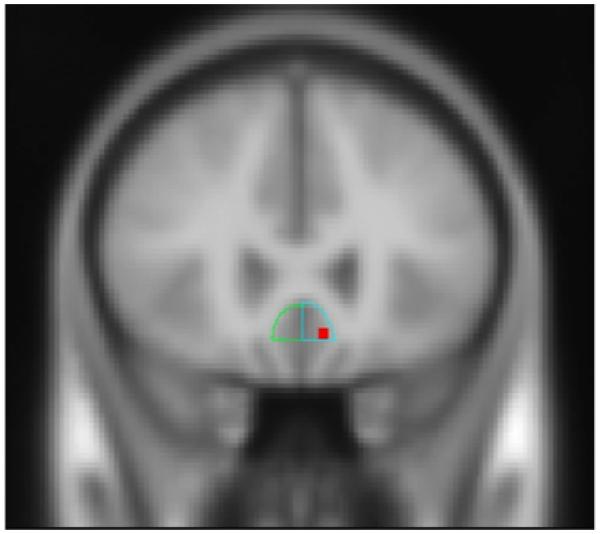
Results: Compared with healthy controls, adolescents with bipolar I disorder had significantly less gray matter volume in the left subgenual cingulate cortex [p<0.05, family-wise error (FWE)-corrected].
Conclusions: Adolescents with a recent single episode of mania have smaller subgenual cingulate cortex volume than do their healthy counterparts, suggesting that this anomaly occurs early in the onset of, or may predate the disorder. Longitudinal studies are needed to examine the impact of this volumetric reduction on the course and outcome of this disorder.
© 2012 John Wiley and Sons A/S.
Figures
References
-
- Swann AC. Impulsivity in mania. Curr Psychiatry Rep. 2009;11:481–487. - PubMed
-
- Henry C, Van den Bulke D, Bellivier F, Roy I, Swendsen J, M’Baïlara K, Siever LJ, Leboyer M. Affective lability and affect intensity as core dimensions of bipolar disorders during euthymic period. Psychiatry Res. 2008;159:1–6. - PubMed
-
- Post RM. Kindling and sensitization as models for affective episode recurrence, cyclicity, and tolerance phenomena. Neurosci Biobehav Rev. 2007;31:858–873. - PubMed
