


Examining the use of ICD-9 diagnosis codes for primary immune deficiency diseases in New York State
- PMID: 22941512
- PMCID: PMC3690548
- DOI: 10.1007/s10875-012-9773-1
Examining the use of ICD-9 diagnosis codes for primary immune deficiency diseases in New York State
Abstract
Purpose: To use International Classification of Disease Codes (ICD-9) codes to investigate primary immune deficiency (PID) in New York State.
Methods: We investigated the diagnosis of Primary Immune Deficiency (PID) in New York State (NYS) using the Statewide Planning and Research Cooperative System (SPARCS) database, a comprehensive data reporting system that collects ICD-9 codes for each patient hospitalized in NYS.
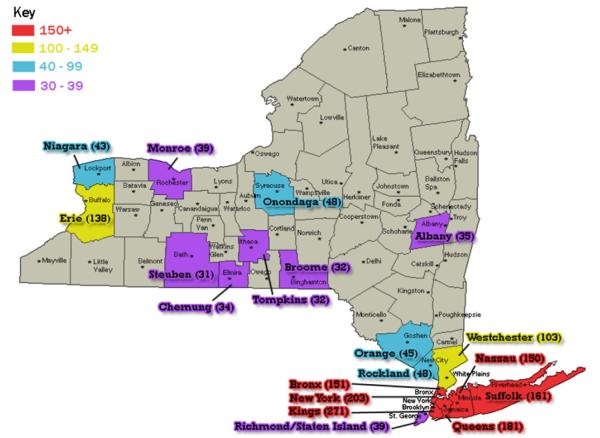
Results: From 2000-2004 there were 13,539,358 hospitalizations for 4,777,295 patients; of these, 2,361 patients (0.05 %) were diagnosed with one or more of the ICD-9 codes for PID. Antibody defects were the most common diagnoses made. The PID population had significantly more Caucasians, and fewer African American or Hispanic subjects compared to the general population. Subjects with PID codes were younger, had longer hospitalizations, were less likely to have Medicare and more likely to have Medicaid or Blue Cross insurance. Most hospitalizations were due to respiratory and infectious diseases. Most patients resided in the most populous counties, Kings, New York and Queens, but the distribution of home zip codes was not proportional to county populations.
Conclusions: These data provide useful information on incidence and complications of selected PID diagnoses in one large state.
Figures
References
-
- Bruton OC. Agammaglobulinemia. Pediatrics. 1952;9:722–8. - PubMed
-
- Bellanti JA, Immunology IV. Clinical applications in health and disease. Saunders; Bethesda: 2012.
Publication types
MeSH terms
Grants and funding
LinkOut - more resources
Full Text Sources
