


Time course of right ventricular pressure-overload induced myocardial fibrosis: relationship to changes in fibroblast postsynthetic procollagen processing
- PMID: 22942178
- PMCID: PMC3517645
- DOI: 10.1152/ajpheart.00482.2012
Time course of right ventricular pressure-overload induced myocardial fibrosis: relationship to changes in fibroblast postsynthetic procollagen processing
Abstract
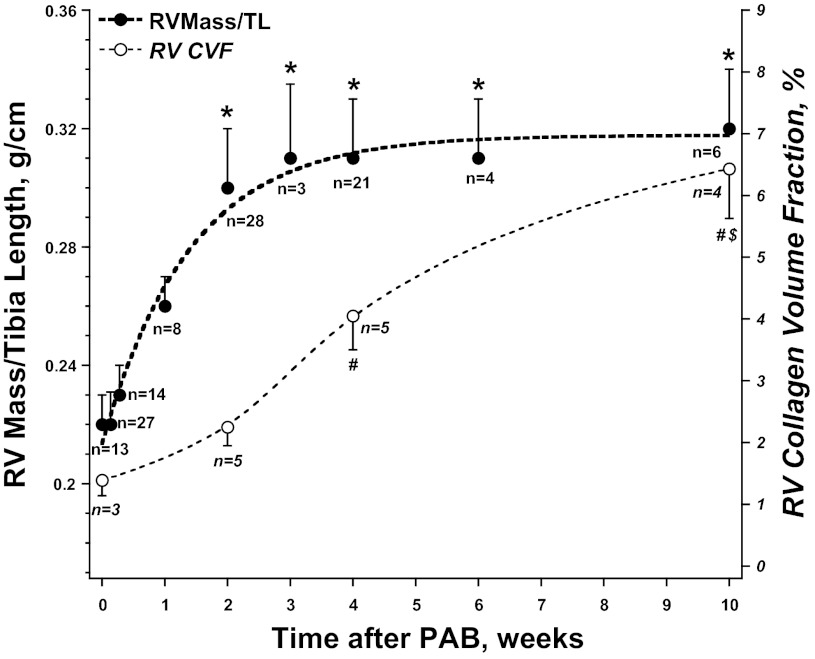
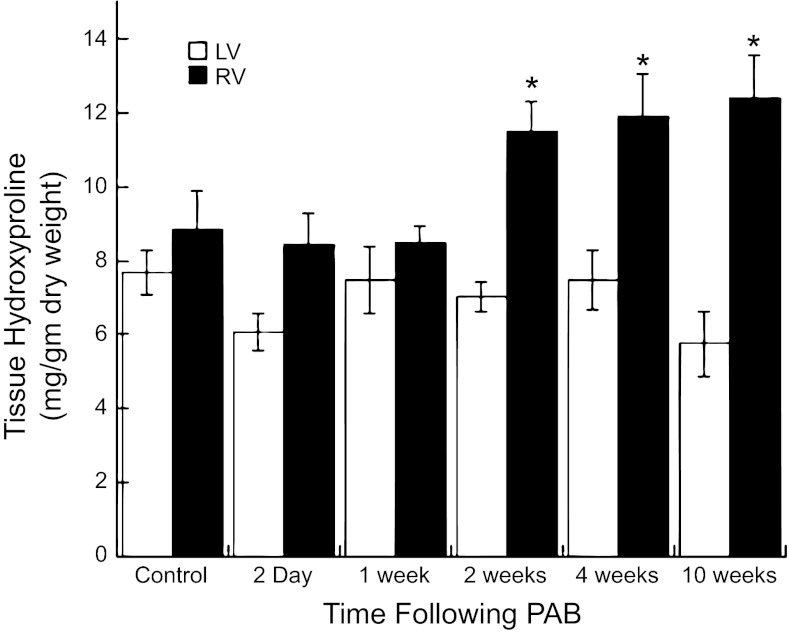
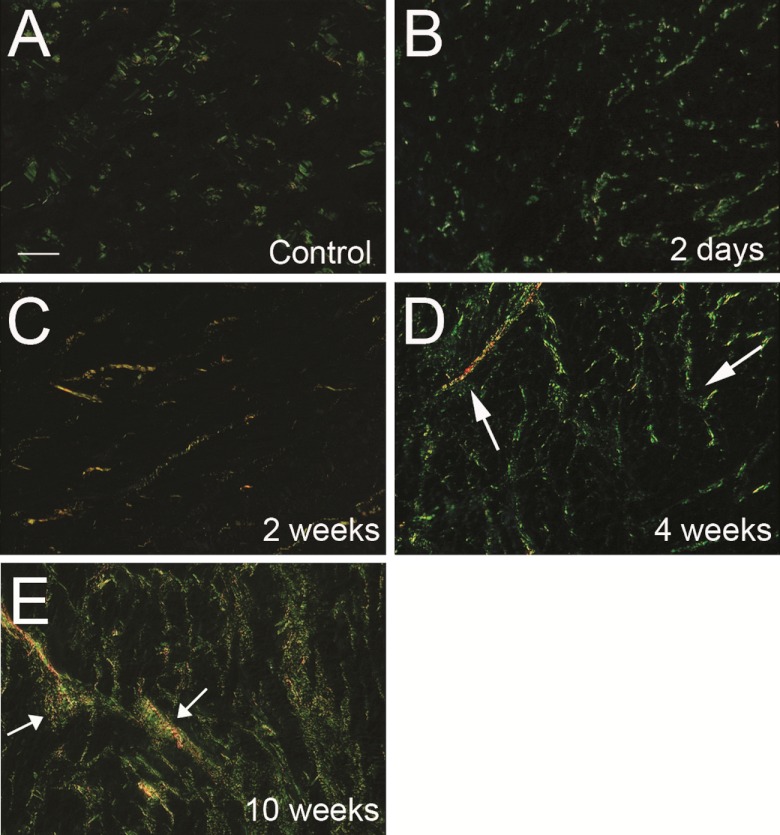
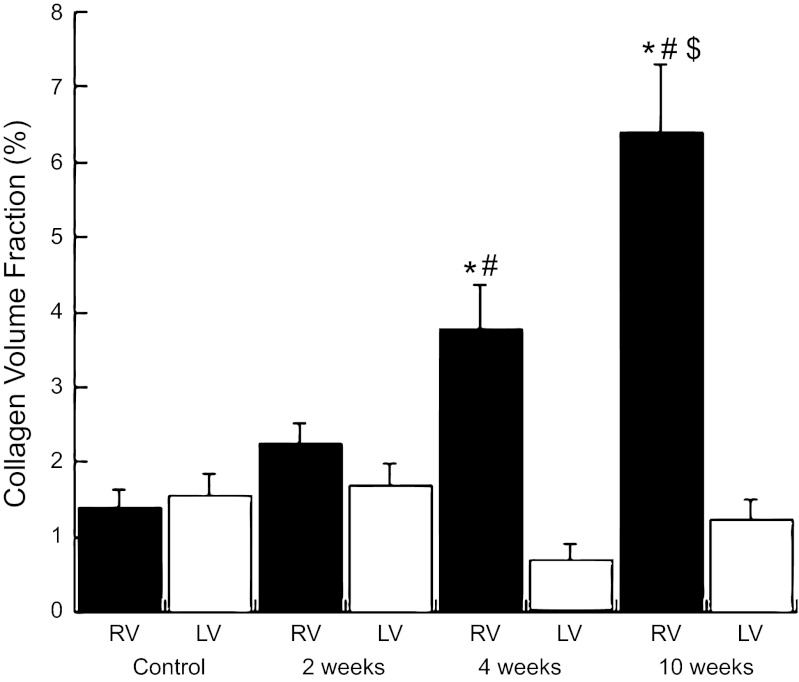
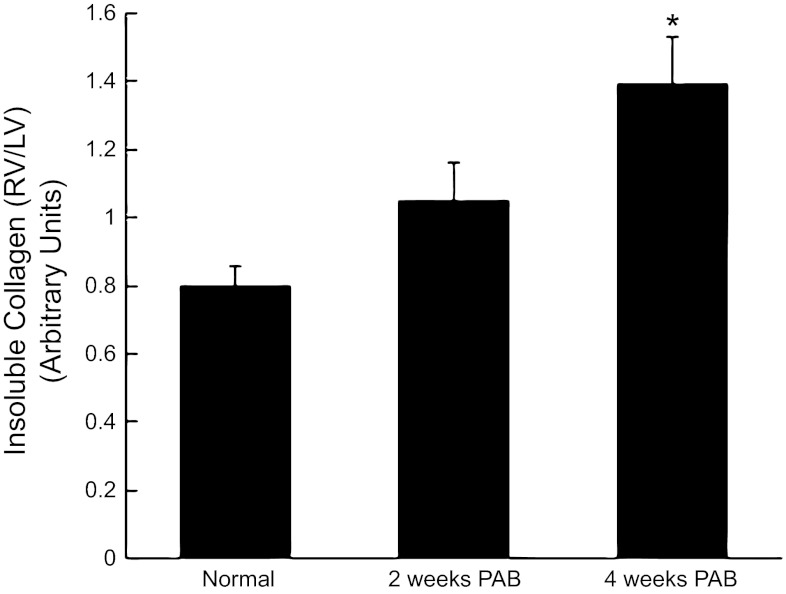
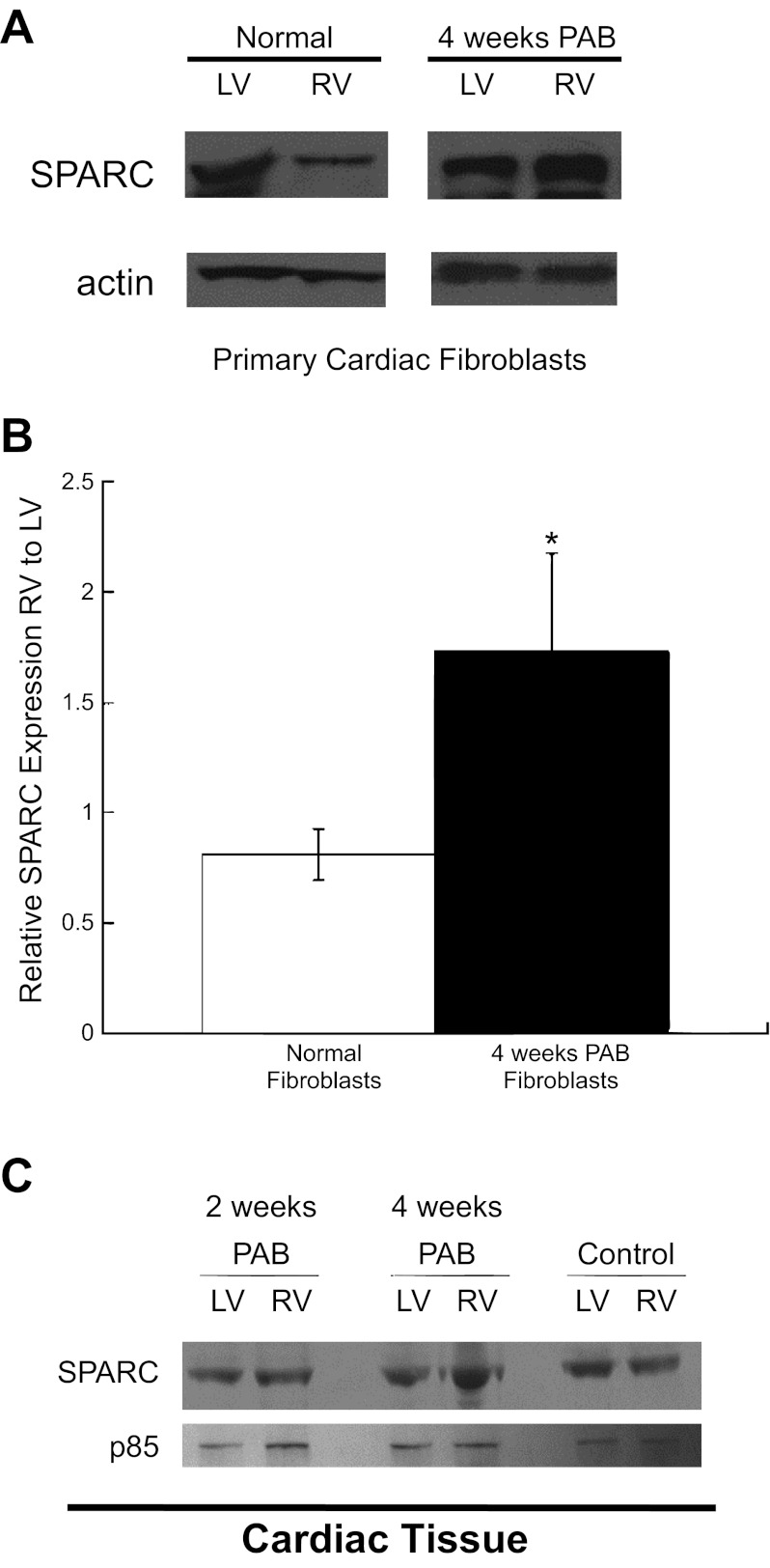
Myocardial fibrillar collagen is considered an important determinant of increased ventricular stiffness in pressure-overload (PO)-induced cardiac hypertrophy. Chronic PO was created in feline right ventricles (RV) by pulmonary artery banding (PAB) to define the time course of changes in fibrillar collagen content after PO using a nonrodent model and to determine whether this time course was dependent on changes in fibroblast function. Total, soluble, and insoluble collagen (hydroxyproline), collagen volume fraction (CVF), and RV end-diastolic pressure were assessed 2 days and 1, 2, 4, and 10 wk following PAB. Fibroblast function was assessed by quantitating the product of postsynthetic processing, insoluble collagen, and levels of SPARC (secreted protein acidic and rich in cysteine), a protein that affects procollagen processing. RV hypertrophic growth was complete 2 wk after PAB. Changes in RV collagen content did not follow the same time course. Two weeks after PAB, there were elevations in total collagen (control RV: 8.84 ± 1.03 mg/g vs. 2-wk PAB: 11.50 ± 0.78 mg/g); however, increased insoluble fibrillar collagen, as measured by CVF, was not detected until 4 wk after PAB (control RV CVF: 1.39 ± 0.25% vs. 4-wk PAB: 4.18 ± 0.87%). RV end-diastolic pressure was unchanged at 2 wk, but increased until 4 wk after PAB. RV fibroblasts isolated after 2-wk PAB had no changes in either insoluble collagen or SPARC expression; however, increases in insoluble collagen and in levels of SPARC were detected in RV fibroblasts from 4-wk PAB. Therefore, the time course of PO-induced RV hypertrophy differs significantly from myocardial fibrosis and diastolic dysfunction. These temporal differences appear dependent on changes in fibroblast function.
Figures
References
-
- Bishop JE, Rhodes S, Laurent GJ, Low RB, Stirewalt WS. Increased collagen synthesis and decreased collagen degradation in right ventricular hypertrophy induced by pressure overload. Cardiovasc Res 28: 1581–1585, 1994 - PubMed
-
- Boluyt MO, O'Neill L, Meredith AL, Bing OH, Brooks WW, Conrad CH, Crow MT, Lakatta EG. Alterations in cardiac gene expression during the transition from stable hypertrophy to heart failure. Marked upregulation of genes encoding extracellular matrix components. Circ Res 75: 23–32, 1994 - PubMed
-
- Bradshaw AD, Baicu CF, Rentz TJ, Van Laer AO, Boggs J, Lacy JM, Zile MR. Pressure overload-induced alterations in fibrillar collagen content and myocardial diastolic function: role of secreted protein acidic and rich in cysteine (SPARC) in post-synthetic procollagen processing. Circulation 119: 269–280, 2009 - PMC - PubMed
-
- Brekken RA, Sage EH. SPARC, a matricellular protein: at the crossroads of cell-matrix communication. Matrix Biol 19: 816–827, 2001 - PubMed
Publication types
MeSH terms
Substances
Grants and funding
LinkOut - more resources
Full Text Sources
Miscellaneous
