


Effects of climatic region on peritonitis risk, microbiology, treatment, and outcomes: a multicenter registry study
- PMID: 22942270
- PMCID: PMC3598268
- DOI: 10.3747/pdi.2011.00317
Effects of climatic region on peritonitis risk, microbiology, treatment, and outcomes: a multicenter registry study
Abstract
Background: The impact of climatic variations on peritoneal dialysis (PD)-related peritonitis has not been studied in detail. The aim of the current study was to determine whether various climatic zones influenced the probability of occurrence or the clinical outcomes of peritonitis.
Methods: Using ANZDATA registry data, the study included all Australian patients receiving PD between 1 October 2003 and 31 December 2008. Climatic regions were defined according to the Köppen classification.
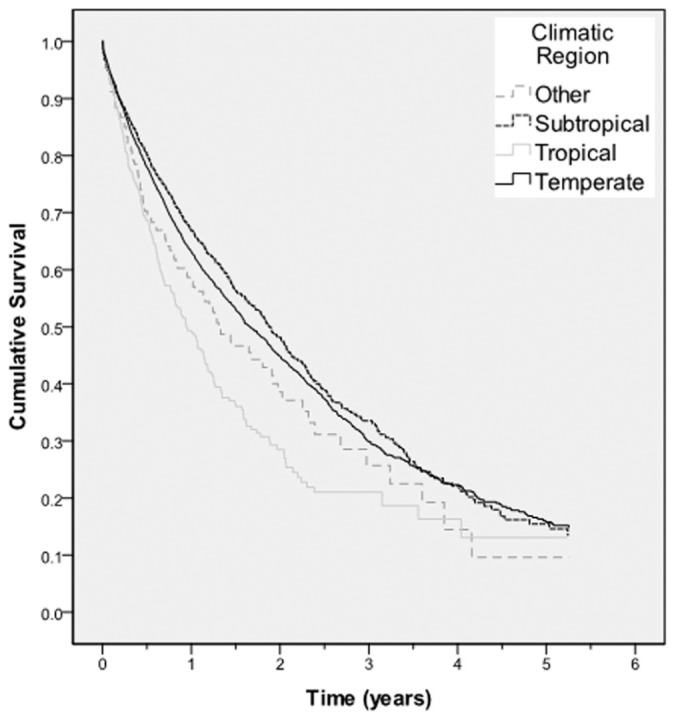
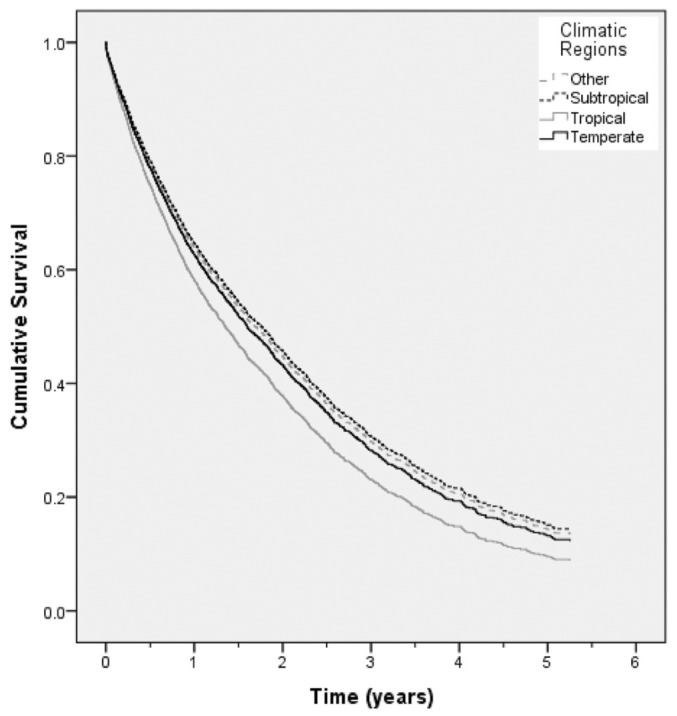
Results: The overall peritonitis rate was 0.59 episodes per patient-year. Most of the patients lived in Temperate regions (65%), with others residing in Subtropical (26%), Tropical (6%), and Other climatic regions (Desert, 0.6%; Grassland, 2.3%). Compared with patients in Temperate regions, those in Tropical regions demonstrated significantly higher overall peritonitis rates and a shorter time to a first peritonitis episode [adjusted hazard ratio: 1.15; 95% confidence interval (CI): 1.01 to 1.31]. Culture-negative peritonitis was significantly less likely in Tropical regions [adjusted odds ratio (OR): 0.42; 95% CI: 0.25 to 0.73]; its occurrence in Subtropical and Other regions was comparable to that in Temperate regions. Fungal peritonitis was independently associated with Tropical regions (OR: 2.18; 95% CI: 1.22 to 3.90) and Other regions (OR: 3.46; 95% CI: 1.73 to 6.91), where rates of antifungal prophylaxis were also lower. Outcomes after first peritonitis episodes were comparable in all groups.
Conclusions: Tropical regions were associated with a higher overall peritonitis rate (including fungal peritonitis) and a shorter time to a first peritonitis episode. Augmented peritonitis prophylactic measures such as antifungal therapy and exit-site care should be considered in PD patients residing in Tropical climates.
Figures
References
-
- Johnson DW, Chang S, Excell L, Livingston B, Bannister K, McDonald SP. Peritoneal dialysis. In: McDonald S, Chang S, Excell L, eds. The Twenty-Ninth Report Australia and New Zealand Dialysis and Transplant Registry 2006. Adelaide, Australia: ANZDATA Registry; 2007: 87–103
-
- Barraclough K, Hawley CM, McDonald SP, Brown FG, Rosman JB, Wiggins KJ, et al. Polymicrobial peritonitis in peritoneal dialysis patients in Australia: predictors, treatment, and outcomes. Am J Kidney Dis 2010; 55:121–31 - PubMed
-
- Barraclough K, Hawley CM, McDonald SP, Brown FG, Rosman JB, Wiggins KJ, et al. Corynebacterium peritonitis in Australian peritoneal dialysis patients: predictors, treatment and outcomes in 82 cases. Nephrol Dial Transplant 2009; 24:3834–9 - PubMed
-
- Edey M, Hawley CM, McDonald SP, Brown FG, Rosman JB, Wiggins KJ, et al. Enterococcal peritonitis in Australian peritoneal dialysis patients: predictors, treatment and outcomes in 116 cases. Nephrol Dial Transplant 2009; 25:1272–8 - PubMed
-
- Fahim M, Hawley CM, McDonald SP, Brown FG, Rosman JB, Wiggins KJ, et al. Culture-negative peritonitis in peritoneal dialysis patients in Australia: predictors, treatment, and outcomes in 435 cases. Am J Kidney Dis 2009; 55:690–7 - PubMed
Publication types
MeSH terms
Substances
LinkOut - more resources
Full Text Sources
Other Literature Sources
Medical
