


The ClaudicatioNet concept: design of a national integrated care network providing active and healthy aging for patients with intermittent claudication
- PMID: 22942648
- PMCID: PMC3428244
- DOI: 10.2147/VHRM.S34095
The ClaudicatioNet concept: design of a national integrated care network providing active and healthy aging for patients with intermittent claudication
Abstract
Introduction: Intermittent claudication (IC) is a manifestation of peripheral arterial occlusive disease (PAOD). Besides cardiovascular risk management, supervised exercise therapy (SET) should be offered to all patients with IC. Outdated guidelines, an insufficient number of specialized physiotherapists (PTs), lack of awareness of the importance of SET by referring physicians, and misguided financial incentives all seriously impede the availability of a structured SET program in The Netherlands.
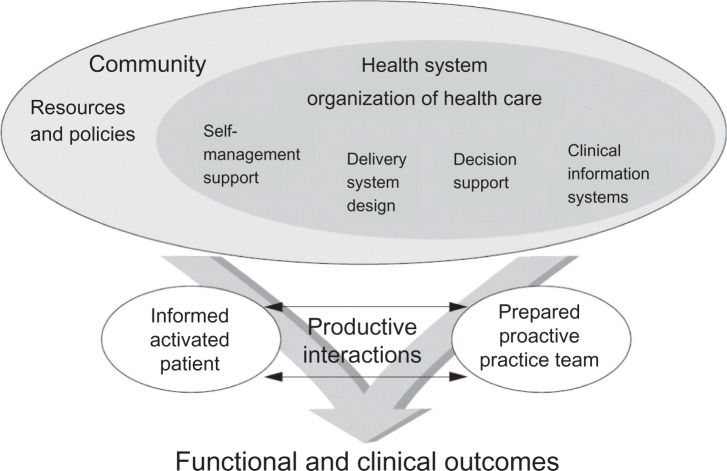
Description of care practice: By initiating regional care networks, ClaudicatioNet aims to improve the quality of care for patients with IC. Based on the chronic care model as a conceptual framework, these networks should enhance the access, continuity, and (cost) efficiency of the health care system. With the aid of a national database, health care professionals will be able to benchmark patient results while ClaudicatioNet will be able to monitor quality of care by way of functional and patient reported outcome measures.
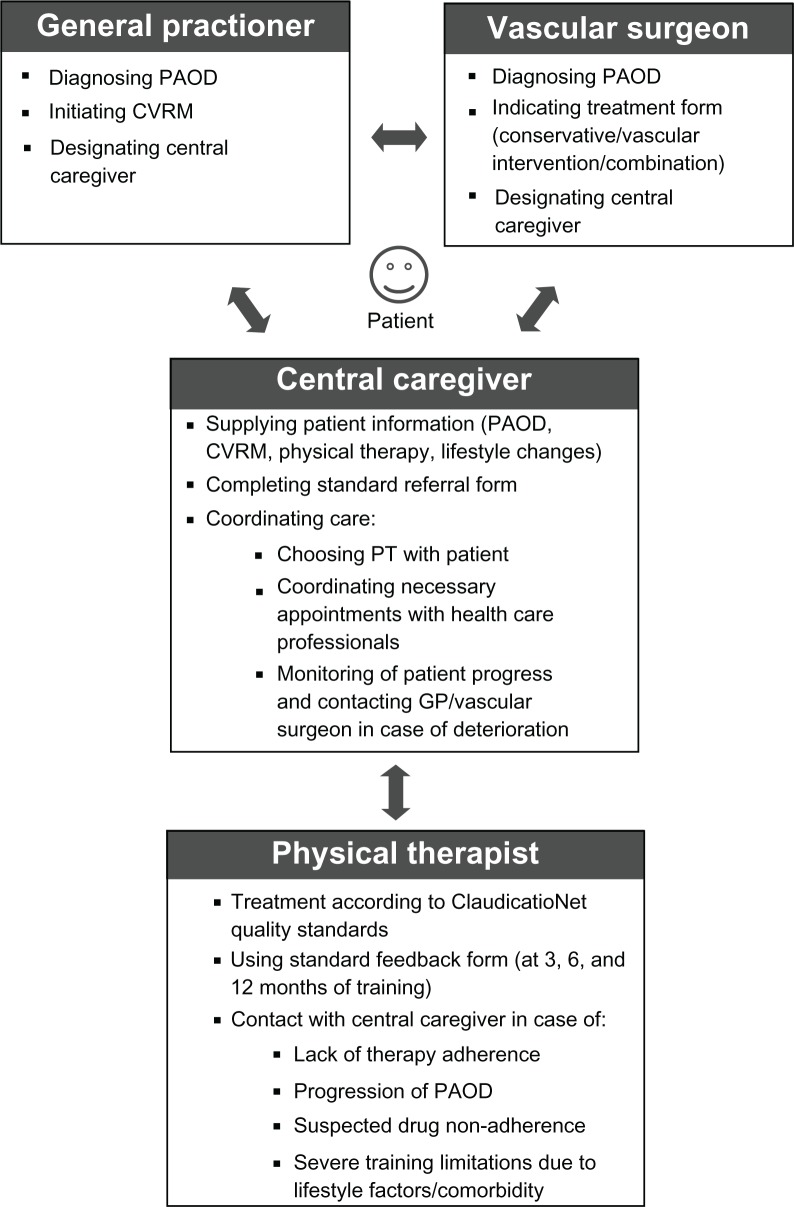
Discussion: The success of ClaudicatioNet is dependent on several factors. Vascular surgeons, general practitioners and coordinating central caregivers will need to team up and work in close collaboration with specialized PTs. A substantial task in the upcoming years will be to monitor the quality, volume, and distribution of ClaudicatioNet PTs. Finally, misguided financial incentives within the Dutch health care system need to be tackled.
Conclusion: With ClaudicatioNet, integrated care pathways are likely to improve in the upcoming years. This should result in the achievement of optimal quality of care for all patients with IC.
Keywords: active healthy aging; chronic care model; integrated care network; intermittent claudication; supervised exercise therapy.
Figures
References
-
- Norgren L, Hiatt WR, Dormandy JA, Nehler MR, Harris KA, Fowkes FG. Inter-Society Consensus for the Management of Peripheral Arterial Disease (TASC II) J Vasc Surg. 2007;45(Suppl S):S5–S67. - PubMed
-
- Fowkes FG, Housley E, Cawood EH, Macintyre CC, Ruckley CV, Prescott RJ. Edinburgh Artery Study: prevalence of asymptomatic and symptomatic peripheral arterial disease in the general population. Int J Epidemiol. 1991;20:384–392. - PubMed
-
- Murabito JM, Evans JC, Nieto K, Larson MG, Levy D, Wilson PW. Prevalence and clinical correlates of peripheral arterial disease in the Framingham Offspring Study. Am Heart J. 2002;143:961–965. - PubMed
-
- Hooij JD, Stoffers HE, Kester AD, Rinskens PE, Kaiser V. Risk factors and cardiovascular diseases associated with asymptomatic peripheral arterial occlusion disease. The Limburg PAOD Study. Scand J Prim Health Care. 1998;16:177–182. - PubMed
-
- Meijer WT, Hoes AW, Rutgers D, Bots ML, Hofman A, Grobbee DE. Peripheral arterial disease in the elderly: The Rotterdam Study. Arterioscler Thromb Vasc Biol. 1998;18:185–192. - PubMed
Publication types
MeSH terms
LinkOut - more resources
Full Text Sources
