


Sleep, sleep-disordered breathing and lipid homeostasis: translational evidence from murine models and children
- PMID: 22942904
- PMCID: PMC3430872
- DOI: 10.2217/clp.12.11
Sleep, sleep-disordered breathing and lipid homeostasis: translational evidence from murine models and children
Abstract
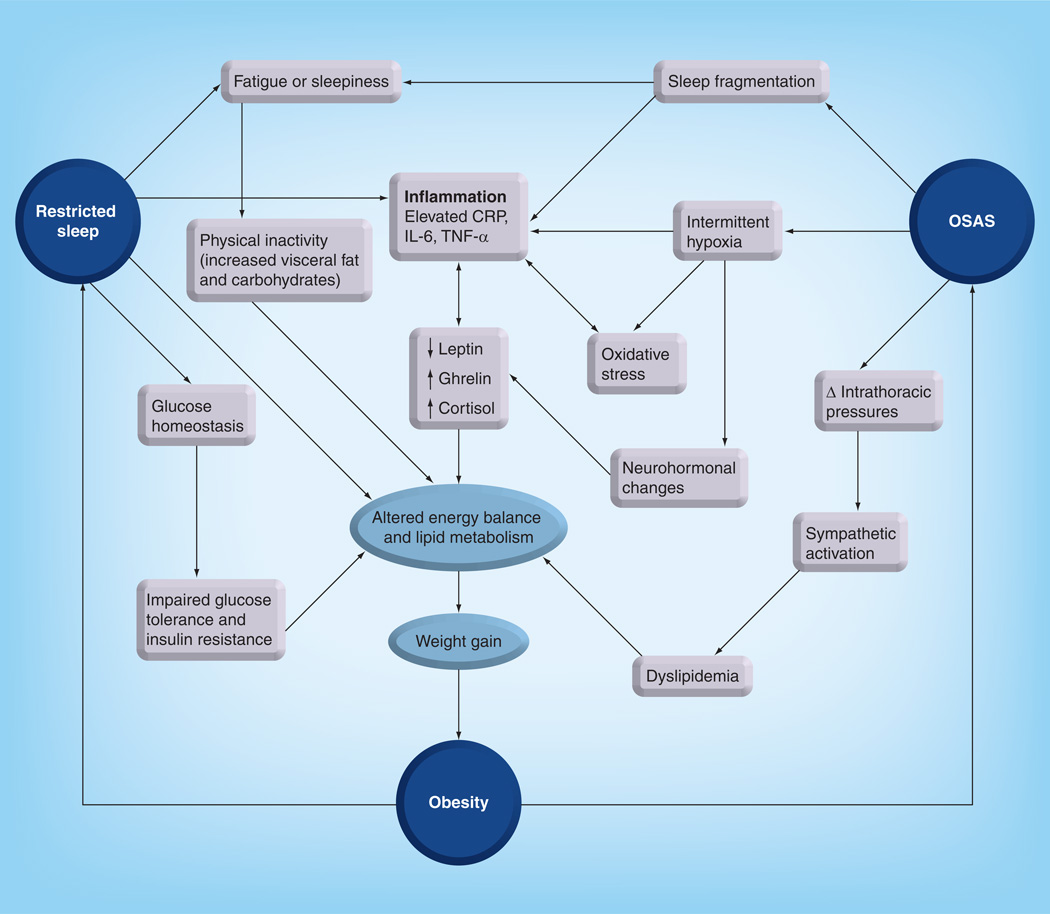
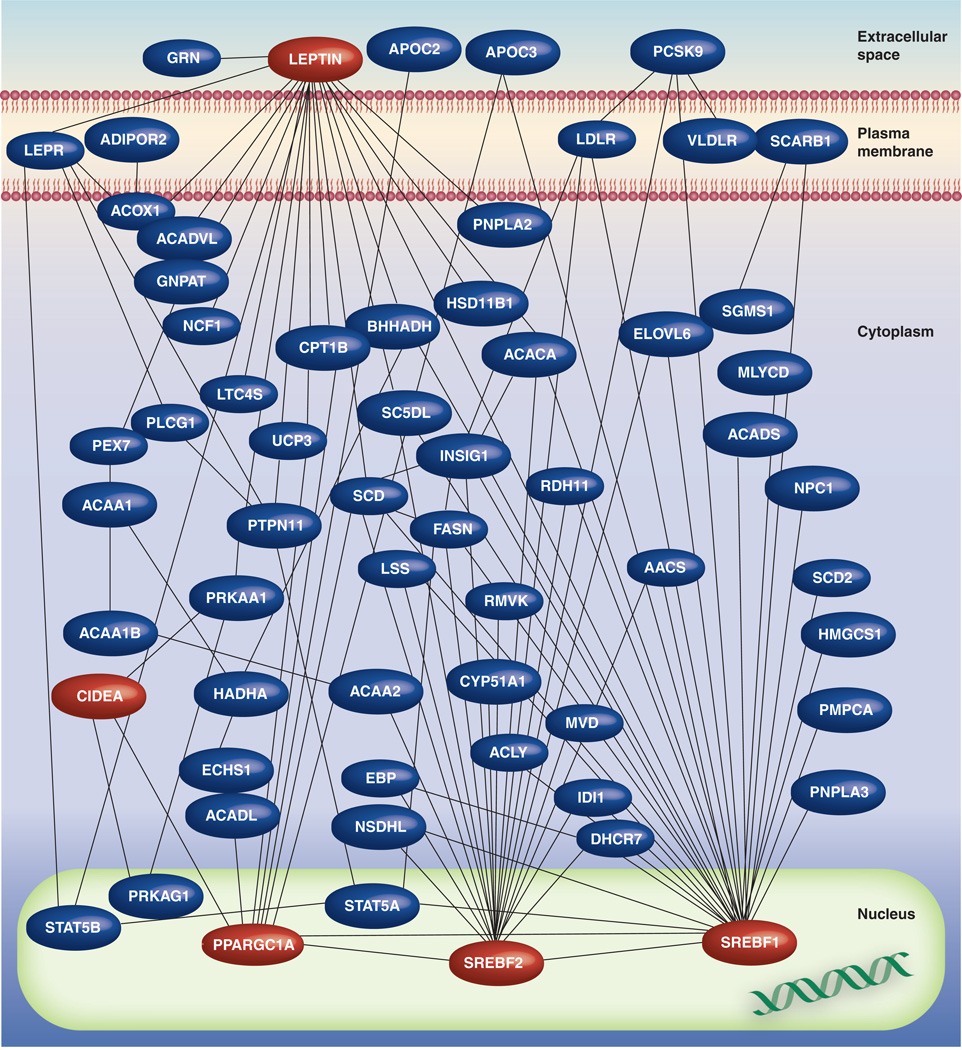
Impaired sleep, particularly in the context of sleep-disordered breathing (SDB), is associated with a vast array of comorbidities, including obesity. It is well known that the etiology of obesity is both complex and multifactorial. Recent trends have shown that obesity rates have risen at an alarming rate in children, and this has likely contributed to an increased prevalence of SDB in children. Like the 'chicken and the egg' hypothesis, the temporal relationship of obesity and SDB is unclear but it is speculated that these two conditions converge to promote a fundamental disruption to normal lipid homeostasis. In this review, the effect of sleep disruption and SDB on lipid homeostasis in both murine and human models will be critically examined, with the intent of demonstrating that disrupted sleep in children is itself a precursor to obesity via disordered lipid homeostasis.
Figures
References
-
- Montgomery-Downs HE, Gozal D. Toddler behavior following polysomnography: effects of unintended sleep disturbance. Sleep. 2006;29(10):1282–1287. - PubMed
-
- O’Brien LM. The neurocognitive effects of sleep disruption in children and adolescents. Child Adolesc. Psychiatr. Clin. N. Am. 2009;18(4):813–823. - PubMed
-
- O’Brien LM, Gozal D. Neurocognitive dysfunction and sleep in children: from human to rodent. Pediatr. Clin. North. Am. 2004;51(1):187–202. - PubMed
-
-
Chaput JP, Brunet M, Tremblay A. Relationship between short sleeping hours and childhood overweight/obesity: results from the ‘Quebec en Forme’ Project. Int. J. Obesity (Lond.) 2006;30(7):1080–1085.. ▪ Population-based study linking sleep duration and obesity.
-
Grants and funding
LinkOut - more resources
Full Text Sources