. 2012 Spring;8(1):55-60.

Therapeutic Mechanisms of Treatment in Cervical and Vaginal Cancer

Affiliations

Therapeutic Mechanisms of Treatment in Cervical and Vaginal Cancer

Charles A Kunos. Oncol Hematol Rev. 2012 Spring.

Abstract

Cervical and vaginal cancers remain serious health problems. Worldwide, more than 530,000 women annually are diagnosed with these diseases, with most new incident cases occurring in nations with limited health resources and underdeveloped screening programs. For women whose disease is too bulky or widespread for surgery, radiochemotherapy should be looked upon as the standard of care. Randomized clinical trials have indicated that radiochemotherapy strategies that disrupt the repair of damaged DNA are key to the management of advanced stage cervical and vaginal cancers. Here, from a viewpoint of cancer cell molecular biology, treatments for advanced stage cervical and vaginal cancers are discussed.


Conflict of interest statement

Disclosure: The author has no conflicts of interest to declare.

Figures

Figure 1
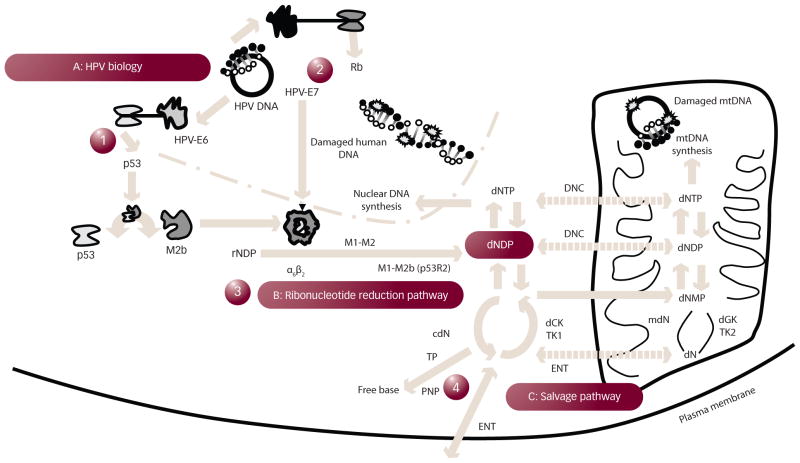
Figure 1. Diagram of Human Papillomavirus Biology and the Generation of Deoxyribonucleotide Diphosphate
In step 1, human papillomavirus (HPV)-E6 protein promotes p53 degradation. In doing so, p53 may not be able to bind M2b as it normally does in a protein–protein interaction, freeing M2b (a small subunit β) to associate with M1 (the large subunit α) and form catalytically active ribonucleotide reductase (RNR) (perhaps most often in its α6β2 higher order form). In step 2, HPV-E7 protein aids in retinoblastoma (Rb) protein degradation, activating transcription factors that may elevate RNR subunits. Together, ribonucleotide diphosphate (rNDP) substrates are reduced to 2′-deoxyribonucleoside diphosphate (dNDP) in step 3. Once phosphorylated to a deoxynucleoside triphosphate (dNTP), DNA may be repaired. Enzymes in a complementary salvage pathway can also lead to dNDP production in a fourth pathway. cdN = cytosolic deoxynucleotidase; dCK = deoxycytidine kinase; dGK = deoxyguanine kinase; dN = deoxynucleoside; DNC = deoxynucleotide carrier; dNMP = deoxynucleoside monophosphate; ENT = equilibrative nucleoside transporter; mdN = mitochondrial deoxynucleotidase; mtDNA = mitochondrial DNA; NDP = nucleoside diphosphate; PNP = purine nucleoside phosphorylase; TK = thymidine kinase; TP = thymidine phosphorylase.
Figure 2
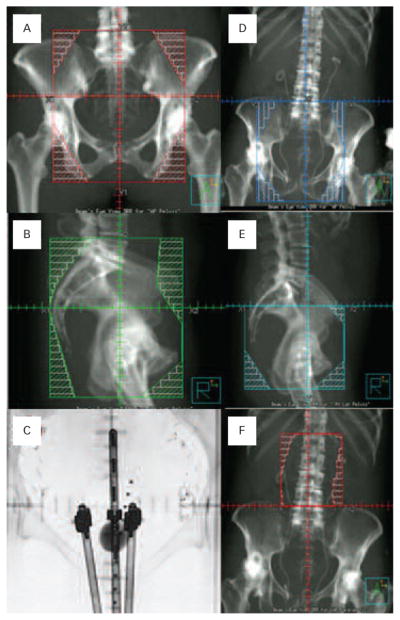
Figure 2. Example External Beam Radiation Fields and Low-dose-rate Brachytherapy
Anteroposterior (A) and right lateral (B) fields (two of four opposed fields) are shown with multi-leaf collimation shielding of organs at-risk for normal tissue toxicity. Anterior fluoroscopic projection of a low-dose-rate tandem-ovoid applicator is depicted for an intracavitary brachytherapy of an advanced stage cervical cancer (C). Dummy sources are positioned in the tandem-ovoid device. A graduated marker is positioned in the rectum. A Foley catheter balloon is shown filled with radiopaque fluid (7 ml). Anteroposterior (D) and right lateral (E) half-beam projections are provided as part of an extended four-field arrangement for the treatment of cervical cancer with disease-proven para-aortic lymph node involvement. A matched, half-beam anteroposterior extended treatment field is shown (F). An opposed posteroanterior would also be used.

References

    1. Papanicolaou G. Atlas of Exfoliative Cytology. Boston: Massachusetts Commonwealth Fund: University Press; 1954.
    1. Guzick D. Efficacy of screening for cervical cancer: a review. Am J Public Health. 1978;68:125–34. - PMC - PubMed
    1. Ferlay J, Shin H, Bray F, et al. GLOBOCAN 2008 Cervical Cancer Incidence and Mortality Worldwide. Vol. 2011. International Agency for Research on Cancer; 2010. [accessed 16 March 2012]. Available at: http://globocan.iarc.fr/factsheets/cancers/cervix.asp.
    1. FIGO Committee On Gynecologic Oncology, Revised FIGO staging for carcinoma of the vulva, cervix, and endometrium. Int J Gynecol Obstet. 2009;105:103–4. - PubMed
    1. FIGO Committee on Gynecologic Oncology, Current FIGO staging for cancer of the vagina, fallopian tube, ovary, and gestational trophoblastic neoplasia. Int J Gynecol Obstet. 2009;105:3–4. - PubMed

LinkOut - more resources