


Lung carcinogenesis by tobacco smoke
- PMID: 22945513
- PMCID: PMC3479369
- DOI: 10.1002/ijc.27816
Lung carcinogenesis by tobacco smoke
Abstract
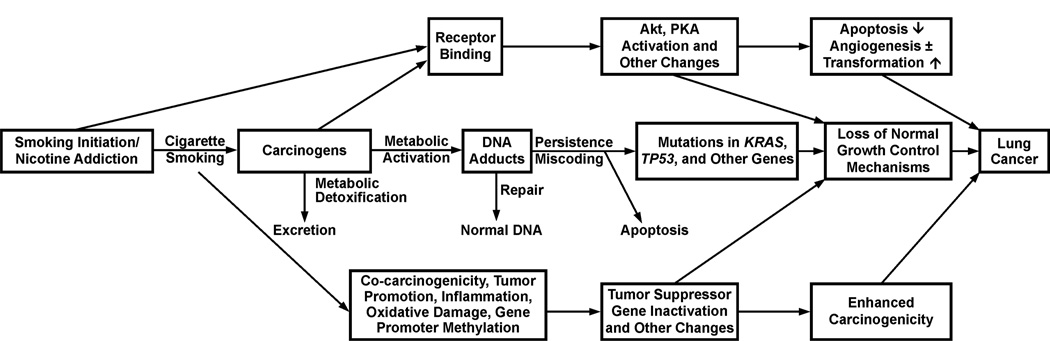
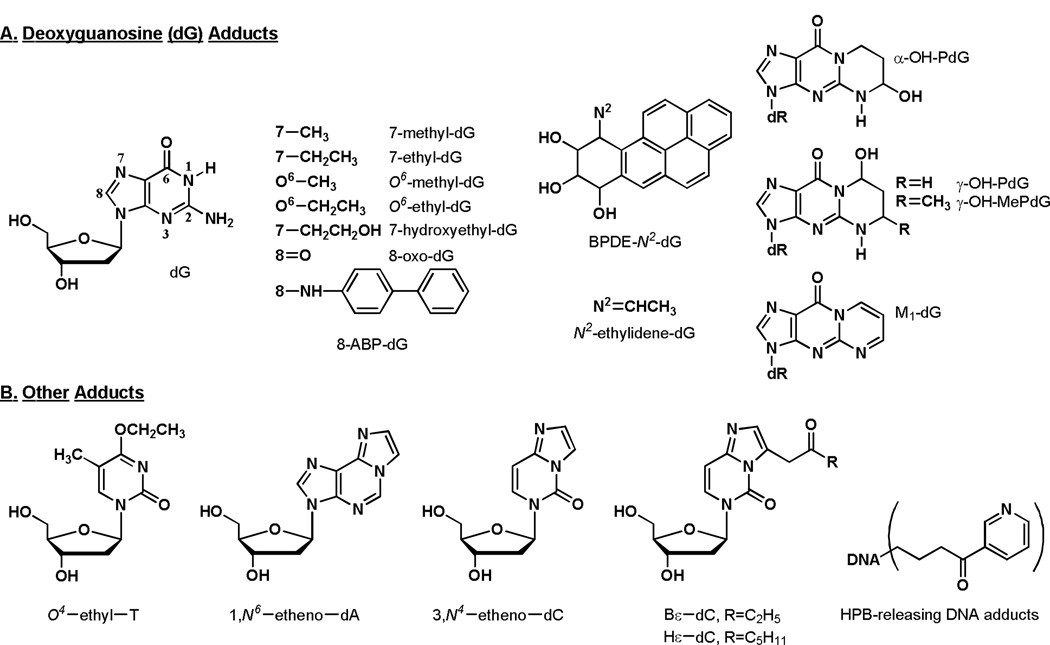
Cigarette smoke is a complex mixture of chemicals including multiple genotoxic lung carcinogens. The classic mechanisms of carcinogen metabolic activation to DNA adducts, leading to miscoding and mutations in critical growth control genes, applies to this mixture but some aspects are difficult to establish because of the complexity of the exposure. This article discusses certain features of this mechanism including the role of nicotine and its receptors; lung carcinogens, co-carcinogens and related substances in cigarette smoke; structurally characterized DNA adducts in the lungs of smokers; the mutational consequences of DNA adduct formation in smokers' lungs; and biomarkers of nicotine and carcinogen uptake as related to lung cancer. While there are still uncertainties which may never be fully resolved, the general mechanisms by which cigarette smoking causes lung cancer are well understood and provide insights relevant to prevention of lung cancer, the number one cancer killer in the world, causing 1.37 million deaths per year.
Copyright © 2012 UICC.
Figures
References
-
- Siegel R, Naishadham D, Jemal A. Cancer statistics, 2012. 2012;62(1):10–29. - PubMed
-
- Shafey O, Eriksen MP, Ross H, Mackay J. The Tobacco Atlas. 3rd Edition. Atlanta, GA: American Cancer Society and World Lung Foundation; 2009. p. 19.
-
- Hecht SS. Tobacco smoke carcinogens and lung cancer. J Natl Cancer Inst. 1999;91:1194–1210. - PubMed
-
- Rodgman A, Perfetti T. The Chemical Components of Tobacco and Tobacco Smoke. Boca Raton, FL: CRC Press; 2009. pp. 1483–1784.
Publication types
MeSH terms
Substances
Grants and funding
LinkOut - more resources
Full Text Sources
Other Literature Sources
Medical
Molecular Biology Databases
