


Effects of malaria volunteer training on coverage and timeliness of diagnosis: a cluster randomized controlled trial in Myanmar
- PMID: 22946985
- PMCID: PMC3488026
- DOI: 10.1186/1475-2875-11-309
Effects of malaria volunteer training on coverage and timeliness of diagnosis: a cluster randomized controlled trial in Myanmar
Abstract
Background: The use of community volunteers is expected to improve access to accurate diagnosis and timely treatment of malaria, using rapid diagnostic test (RDT) and artemisinin-based combination therapy (ACT). However, empirical data from the field are still limited. The aim of this study was to assess whether training village volunteers on the use of Paracheck-Pf® RDT and ACT (artemether-lumefantrine (AL)) for Plasmodium falciparum and presumptive treatment with chloroquine for Plasmodium vivax had an effect on the coverage of timely diagnosis and treatment and on mortality in malaria-endemic villages without health staff in Myanmar.
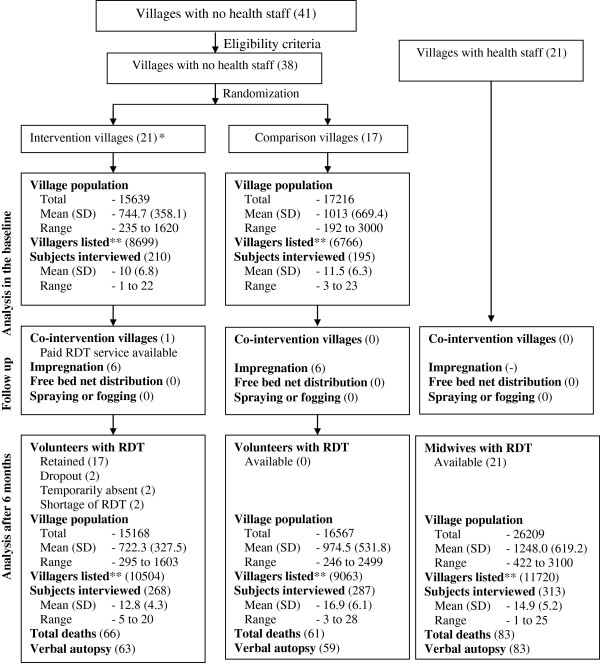
Methods: The study was designed as a cluster randomized controlled trial with a cross-sectional survey at baseline, a monthly visit for six months following the intervention (village volunteers trained and equipped with Paracheck-Pf®) and an endline survey at six months follow-up. Survey data were supplemented by the analysis of logbooks and field-based verbal autopsies. Villages with midwives (MW) in post were used as a third comparison group in the endline survey. Intention-to-treat analysis was used.
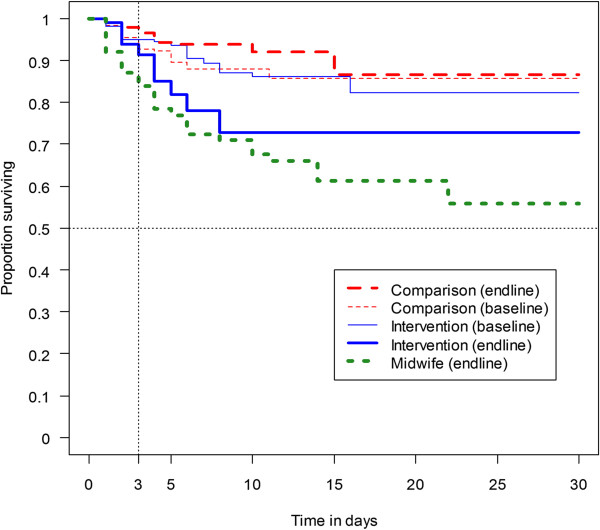
Results: Of 38 villages selected, 21 were randomly assigned to the intervention (two villages failed to participate) and 17 to the comparison group. The two groups had comparable baseline statistics. The blood tests provided by volunteers every month declined over time from 279 tests to 41 but not in MW group in 18 villages (from 326 to 180). In the endline survey, among interviewed subjects (268 intervention, 287 in comparison, 313 in MW), the coverage of RDT was low in all groups (14.9%, SE 2.4% in intervention; 5.7%, SE 1.7% in comparison; 21.4%, SE 2.6% in MW) although the intervention (OR 3.2, 95% CI 1.5-6.7) and MW (OR 5.4, 95% CI 2.6-11.0) were more likely to receive a blood test. Mean (SE) of blood tests after onset of fever in days was delayed (intervention 3.6 (0.3); comparison 4.8 (1.3); MW 3.2 (0.4)). Malaria mortality rates per 100,000 populations in a year were not significantly different (intervention 130 SE 37; comparison 119 SE 34; MW 50 SE 18). None of the dead cases had consulted volunteers.
Conclusions: The results show that implementing volunteer programmes to improve the coverage of accurate and timely diagnosis with RDT and early treatment may be beneficial but the timeliness of detection and sustainability must be improved.
Figures
References
-
- World Health Organization. WHO assessment of rapid diagnostic tests for malaria. Geneva, Switzerland; 2009.
-
- World Health Organization. World malaria report. Geneva, Switzerland; 2010.
-
- World Health Organization. Guidelines for the treatment of malaria, Second edition. Geneva, Switzerland; 2010.
Publication types
MeSH terms
Substances
LinkOut - more resources
Full Text Sources
