


Magnified visual feedback exacerbates positional variability in older adults due to altered modulation of the primary agonist muscle
- PMID: 22948735
- PMCID: PMC3631577
- DOI: 10.1007/s00221-012-3219-0
Magnified visual feedback exacerbates positional variability in older adults due to altered modulation of the primary agonist muscle
Abstract
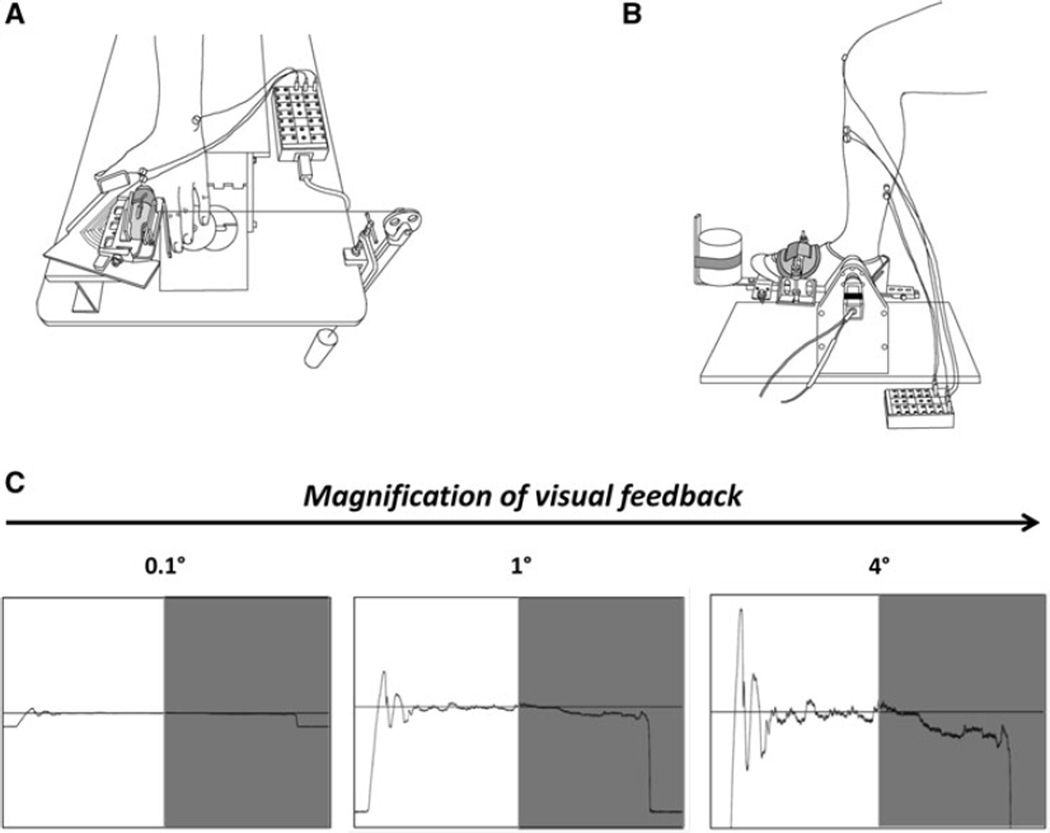
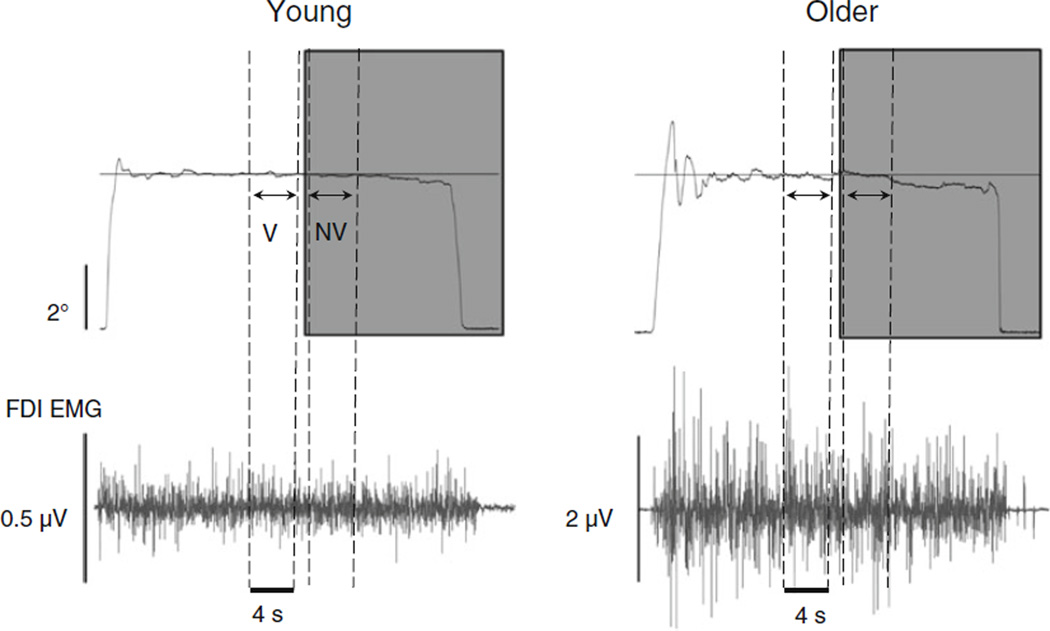
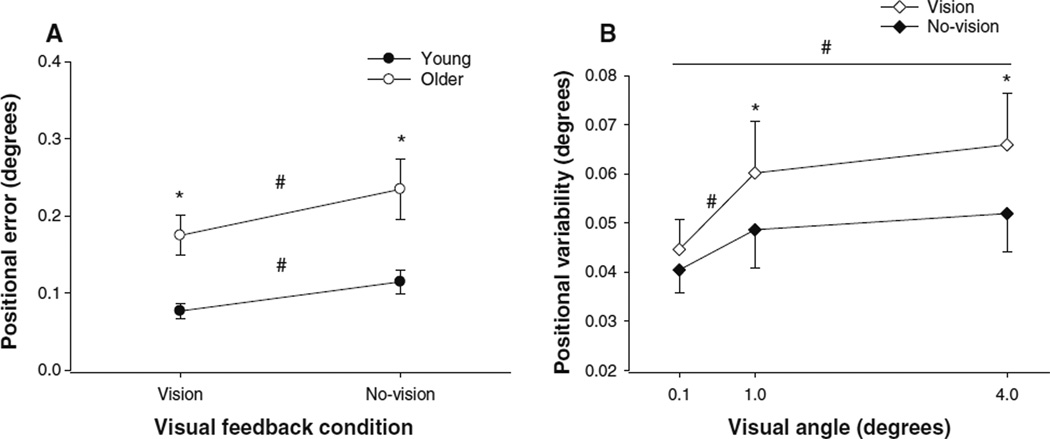
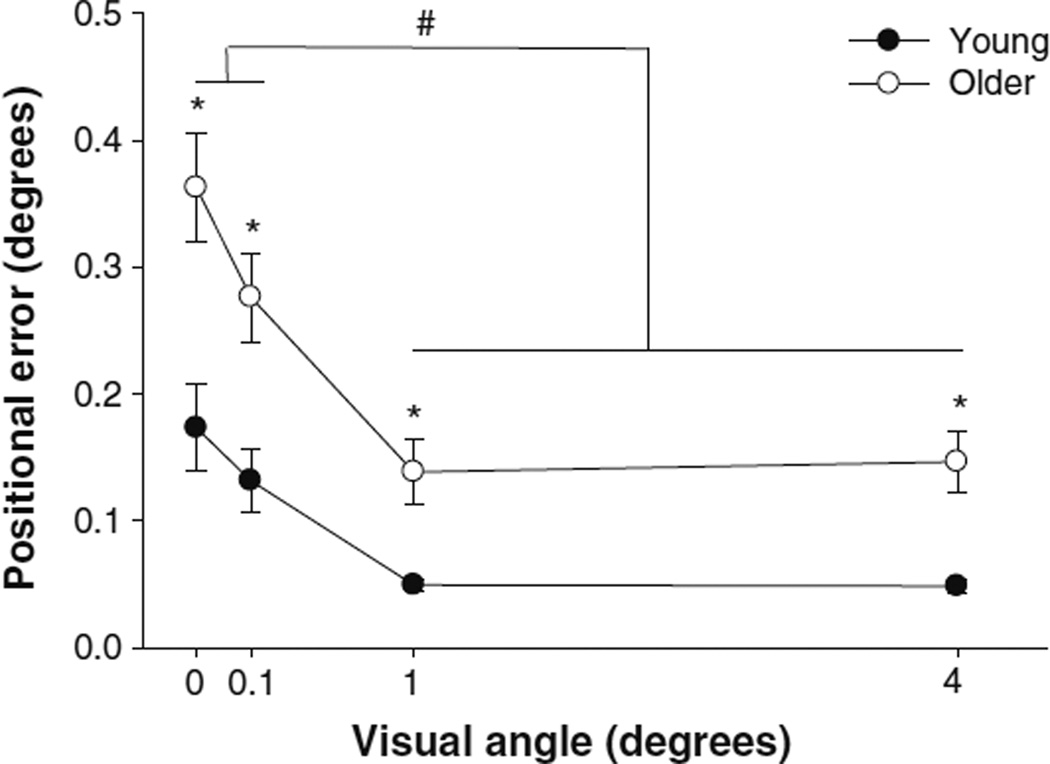
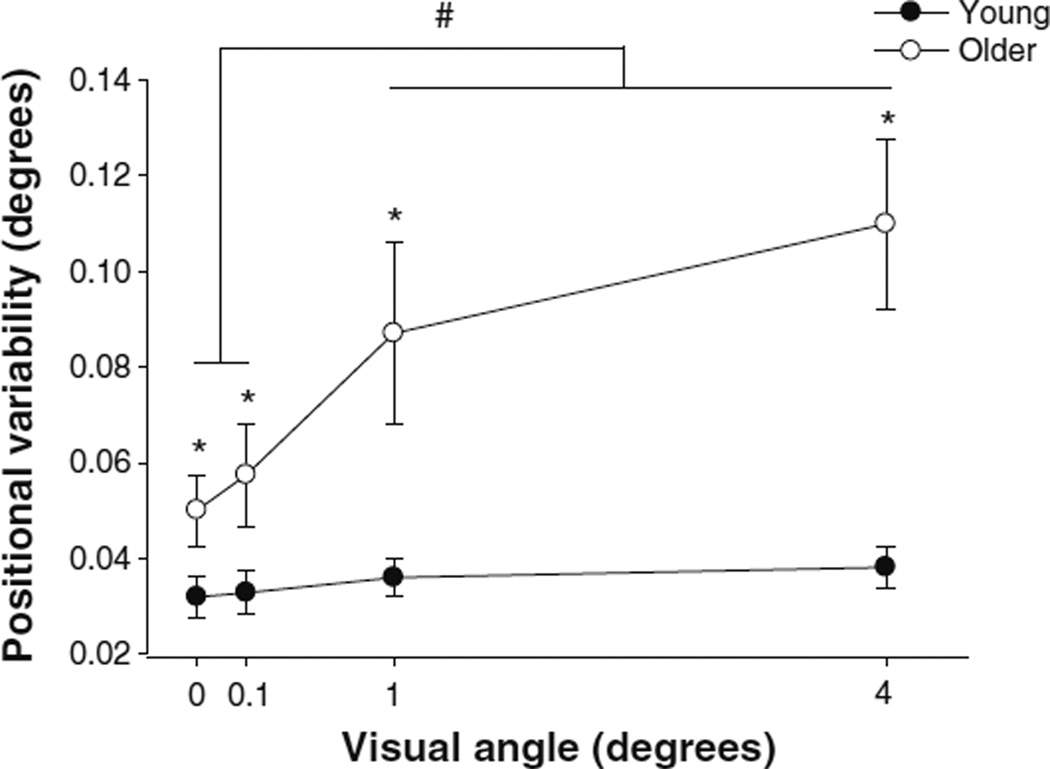
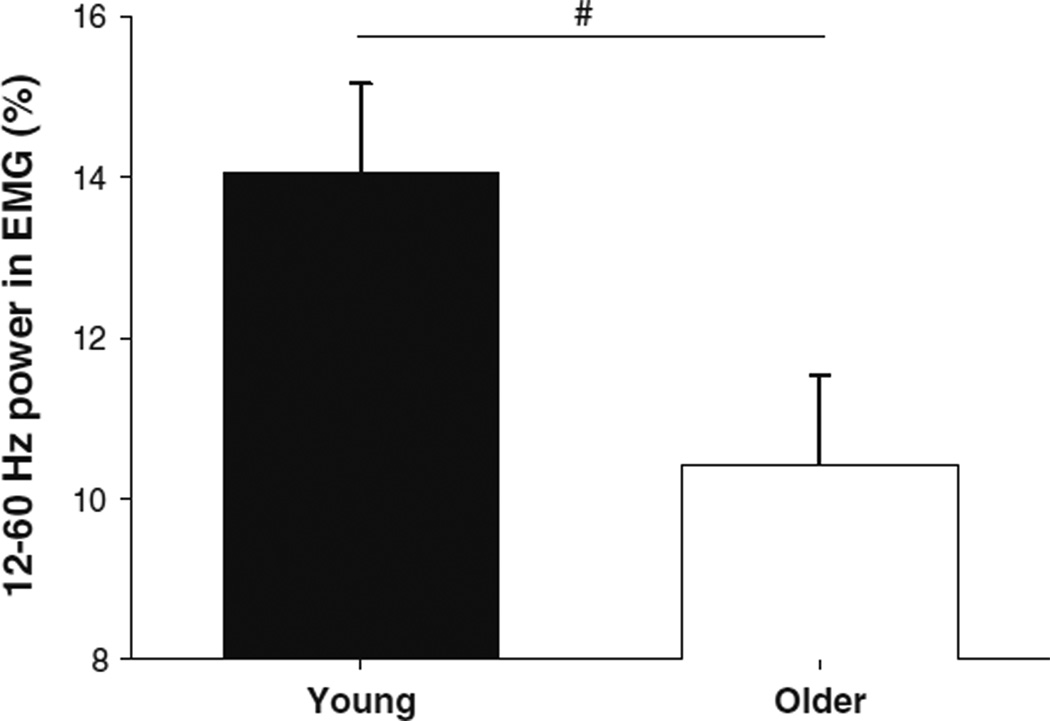
The purpose of this study was to determine whether magnified visual feedback during position-holding contractions exacerbates the age-associated differences in motor output variability due to changes in the neural activation of the agonist muscle in the upper and lower limb. Twelve young (18-35 years) and ten older adults (65-85 years) were instructed to accurately match a target position at 5° of index finger abduction and ankle dorsiflexion while lifting 10 % of their 1 repetition maximum (1RM) load. Position was maintained at three different visual angles (0.1°, 1°, and 4°) that varied across trials. Each trial lasted 25 s and visual feedback of position was removed from 15 to 25 s. Positional error was quantified as the root mean square error (RMSE) of the subject's performance from the target. Positional variability was quantified as the standard deviation of the position data. The neural activation of the first dorsal interosseus and tibialis anterior was measured with surface electromyography (EMG). Older adults were less accurate compared with young adults and the RMSE decreased significantly with an increase in visual gain. As expected, and independent of limb, older adults exhibited significantly greater positional variability compared with young adults that was exacerbated with magnification of visual feedback (1° and 4°). This increase in variability at the highest magnification of visual feedback was predicted by a decrease in power from 12 to 30 Hz of the agonist EMG signal. These findings demonstrate that motor control in older adults is impaired by magnified visual feedback during positional tasks.
Figures
References
-
- Addison PS. The illustrated wavelet transform handbook. New York: Taylor & Francis Group; 2002.
-
- Baweja HS, Kwon MH, Glover SQ, Christou EA. Greater amount of visual feedback decreases error but not variability during movements and positional tasks with the finger and foot. San Diego: Society for Neuroscience; 2010b.
Publication types
MeSH terms
Grants and funding
LinkOut - more resources
Full Text Sources
Medical
Research Materials
