


New method for measuring acetabular component positioning with EOS imaging: feasibility study on dry bone
- PMID: 22949124
- PMCID: PMC3479277
- DOI: 10.1007/s00264-012-1650-2
New method for measuring acetabular component positioning with EOS imaging: feasibility study on dry bone
Abstract
Purpose: Malposition of the acetabular cup is the most common cause of total hip arthroplasty (THA) dislocation. The position of a total hip implant is usually analysed on computed tomography (CT) scan. We aim to prove it is possible to measure, with good accuracy, the position of an acetabular cup using the low-dose irradiation (EOS) imaging.
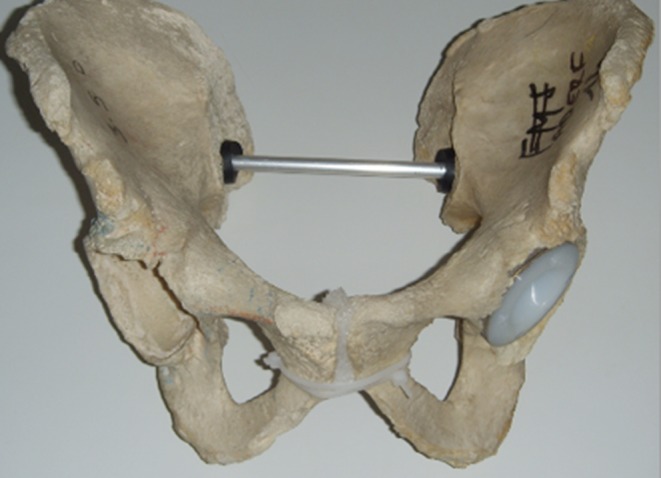
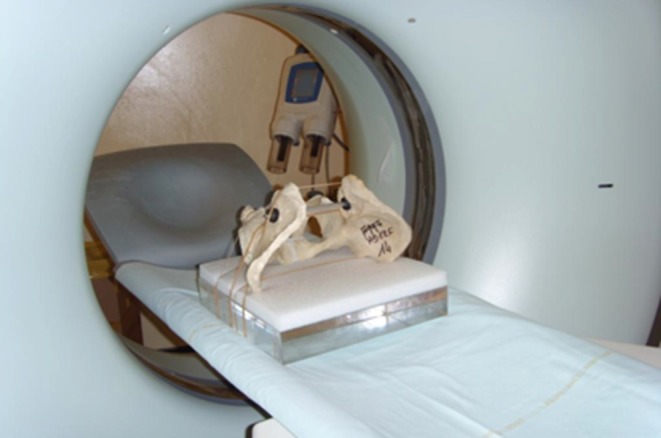
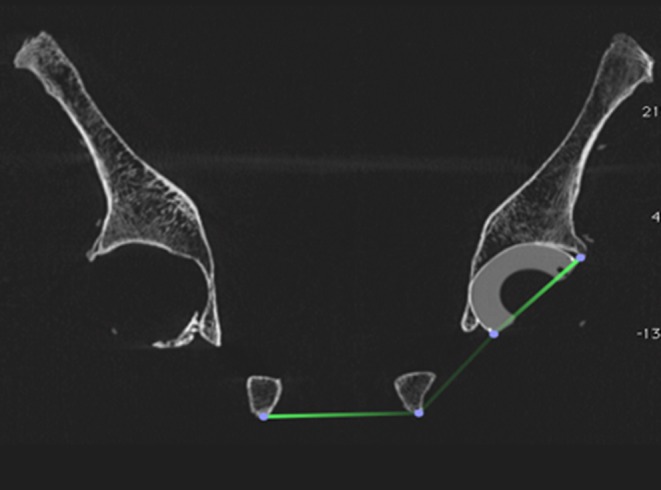
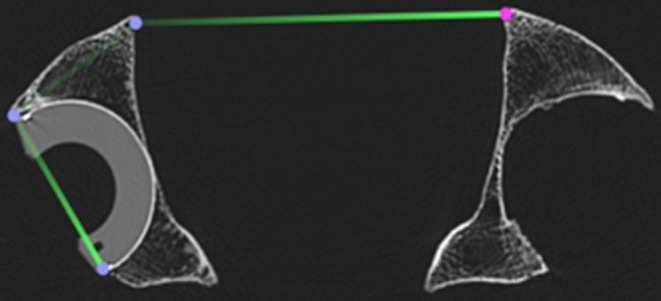
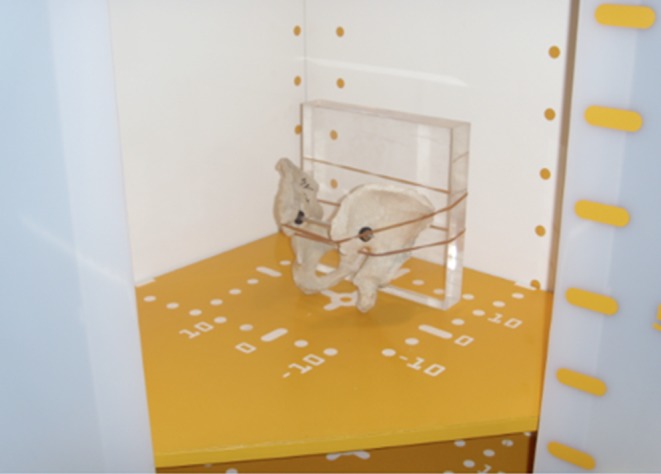
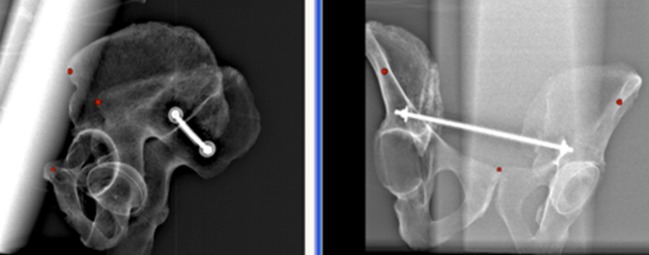
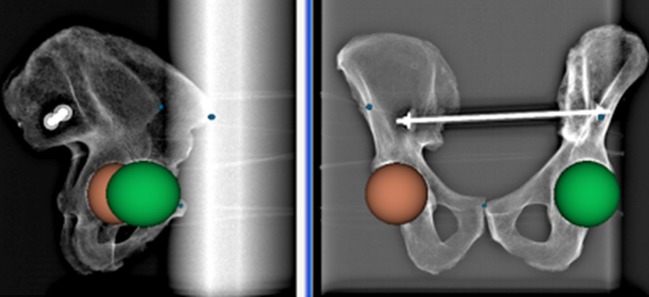
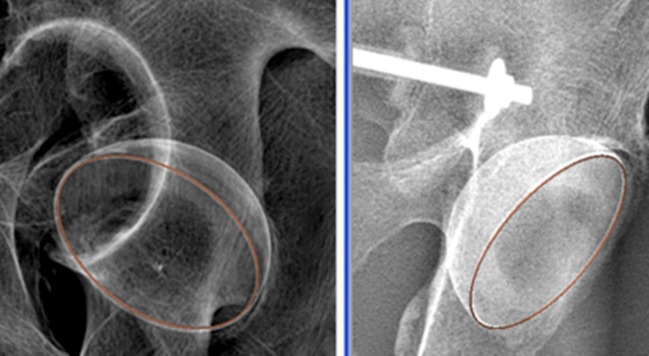
Material and methods: We implanted an acetabular cup in a pelvic dry bone and measured cup anteversion and inclination with scanography. We performed 14 series of EOS acquisitions with different inclination, rotation and pelvic tilt, which were analysed by five observers. Two observers repeated angle measurements. We then calculated measurement inter- and intrareproducibility and accuracy.
Results: Using a confidence interval (CI) of 95 %, inter- and intra-observer reproducibility were ±1.6, and ±1.4°, respectively, for cup inclination; accuracy in comparison with CT was ±2.6°. Using a 95 % CI, inter- and intra-observer reproducibility for cup anteversion were ±2.5° and ±2.3°, respectively. Measurement accuracy compared with CT was ±3.9°.
Conclusion: EOS imaging system is superior to standard radiography in terms of measuring acetabular anteversion and inclination.
Figures
References
-
- Lewinnek GE, Lewis JL, Tarr R, Compere CL, Zimmerman JR. Dislocations after total hip-replacement arthroplasties. J Bone Joint Surg Am. 1978;60(2):217–220. - PubMed
-
- McCollum DE, Gray WJ. Dislocation after total hip arthroplasty. Causes and prevention. Clin Orthop Relat Res. 1990;261:159–170. - PubMed
MeSH terms
LinkOut - more resources
Full Text Sources
Medical
