


Genetic evidence of an evolutionarily conserved role for Nrf2 in the protection against oxidative stress
- PMID: 22949501
- PMCID: PMC3486152
- DOI: 10.1128/MCB.00481-12
Genetic evidence of an evolutionarily conserved role for Nrf2 in the protection against oxidative stress
Abstract
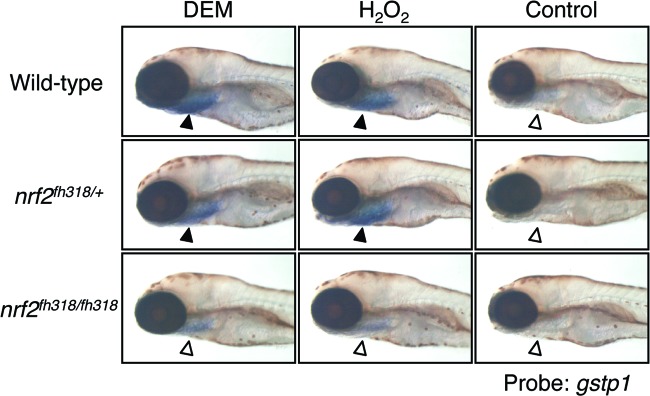
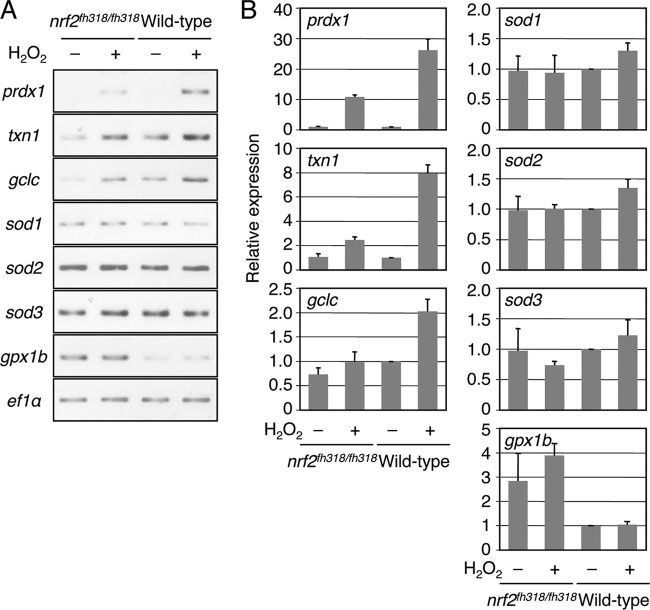
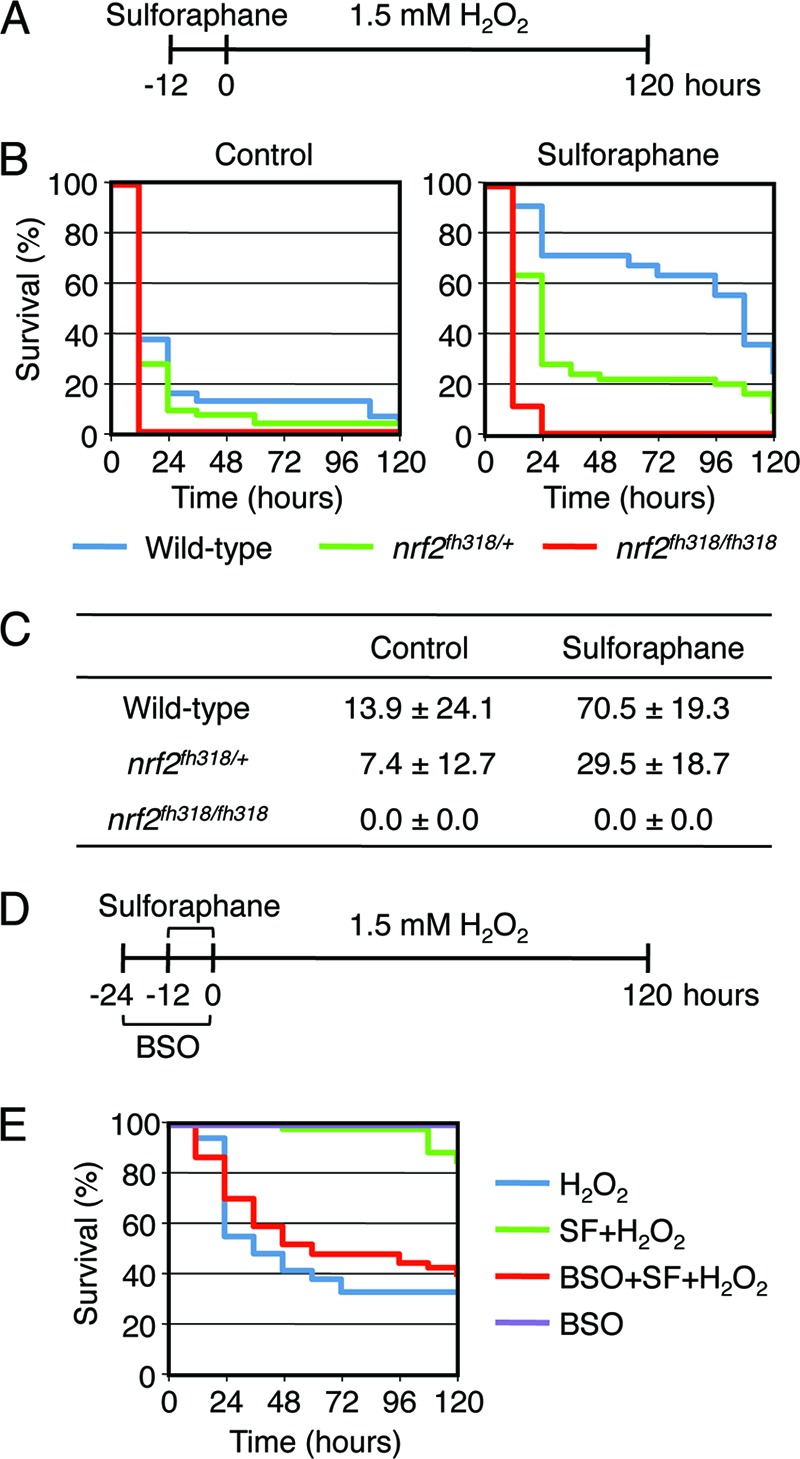
Transcription factor Nrf2 is considered a master regulator of antioxidant defense in mammals. However, it is unclear whether this concept is applicable to nonmammalian vertebrates, because no animal model other than Nrf2 knockout mice has been generated to examine the effects of Nrf2 deficiency. Here, we characterized a recessive loss-of-function mutant of Nrf2 (nrf2(fh318)) in a lower vertebrate, the zebrafish (Danio rerio). In keeping with the findings in the mouse model, nrf2(fh318) mutants exhibited reduced induction of the Nrf2 target genes in response to oxidative stress and electrophiles but were viable and fertile, and their embryos developed normally. The nrf2(fh318) larvae displayed enhanced sensitivity to oxidative stress and electrophiles, especially peroxides, and pretreatment with an Nrf2-activating compound, sulforaphane, decreased peroxide-induced lethality in the wild type but not nrf2(fh318) mutants, indicating that resistance to oxidative stress is highly dependent on Nrf2 functions. These results reveal an evolutionarily conserved role of vertebrate Nrf2 in protection against oxidative stress. Interestingly, there were no significant differences between wild-type and nrf2(fh318) larvae with regard to their sensitivity to superoxide and singlet oxygen generators, suggesting that the importance of Nrf2 in oxidative stress protection varies based on the type of reactive oxygen species (ROS).
Figures

References
-
- Aleström P, Holter JL, Nourizadeh-Lillabadi R. 2006. Zebrafish in functional genomics and aquatic biomedicine. Trends Biotechnol. 24:15–21 - PubMed
-
- Anderson ME. 1998. Glutathione: an overview of biosynthesis and modulation. Chem. Biol. Interact. 111–112:1–14 - PubMed
-
- Berggren MI, et al. 2001. Thioredoxin peroxidase-1 (peroxiredoxin-1) is increased in thioredoxin-1 transfected cells and results in enhanced protection against apoptosis caused by hydrogen peroxide but not by other agents including dexamethasone, etoposide, and doxorubicin. Arch. Biochem. Biophys. 392:103–109 - PubMed
-
- Bowerman B, Eaton BA, Priess JR. 1992. skn-1, a maternally expressed gene required to specify the fate of ventral blastomeres in the early C. elegans embryo. Cell 68:1061–1075 - PubMed
Publication types
MeSH terms
Substances
Grants and funding
LinkOut - more resources
Full Text Sources
Molecular Biology Databases
