


Acute effect of Ghrelin on ischemia/reperfusion injury in the rat spinal cord
- PMID: 22949835
- PMCID: PMC3431833
- DOI: 10.3390/ijms13089864
Acute effect of Ghrelin on ischemia/reperfusion injury in the rat spinal cord
Abstract
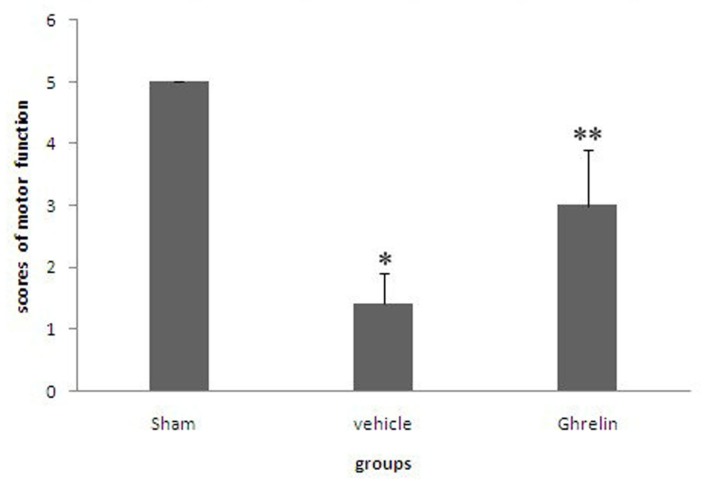
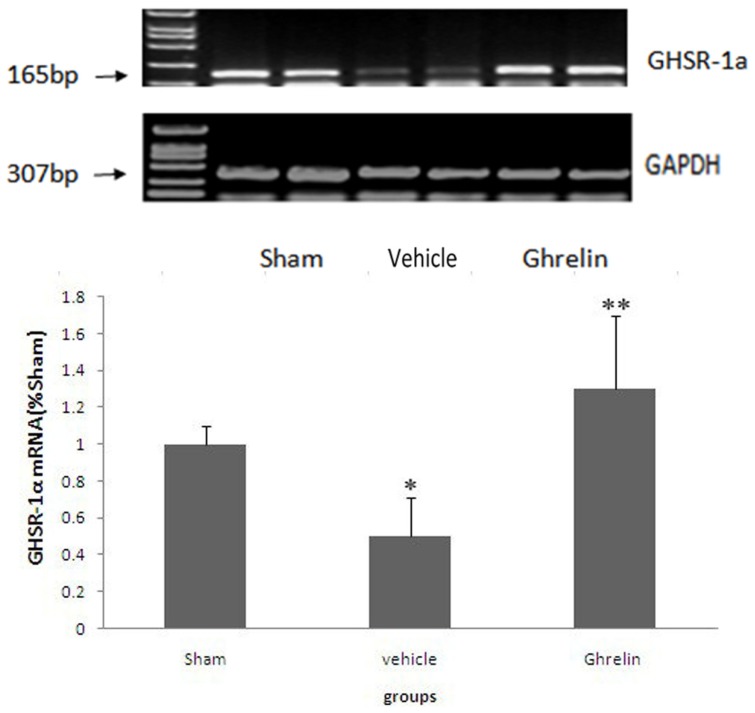
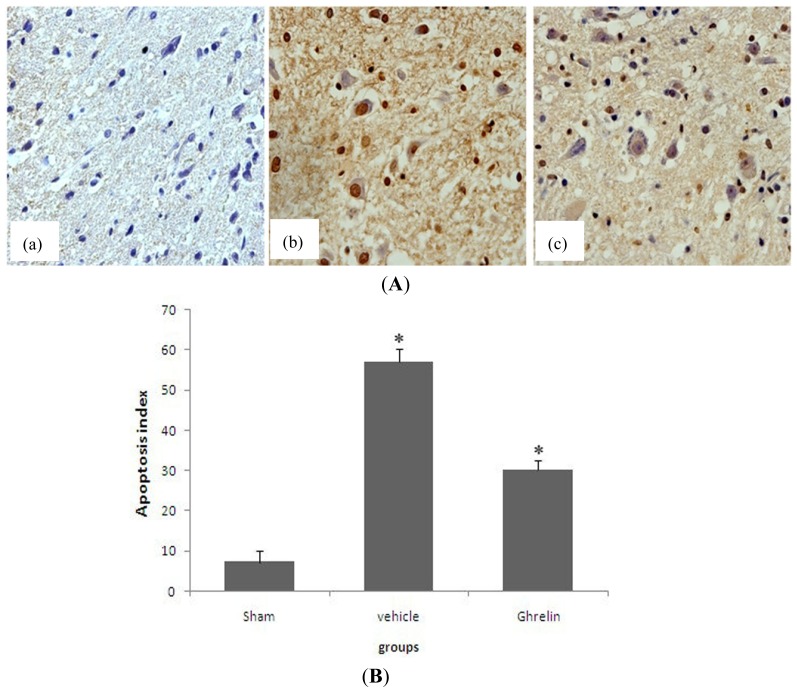
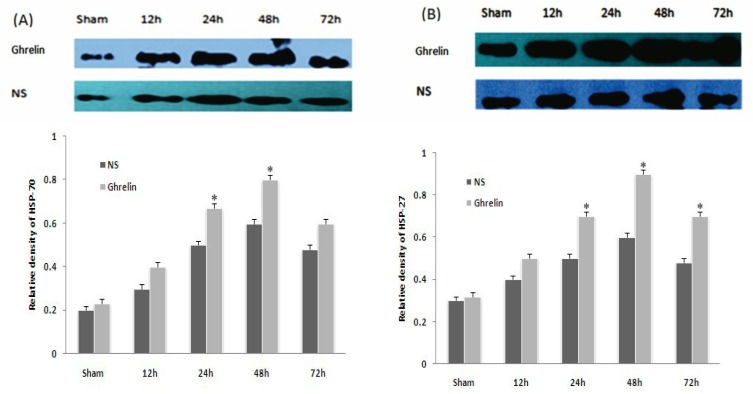
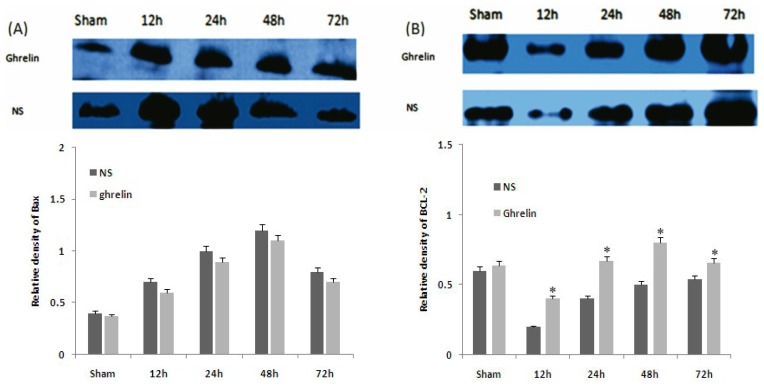
Ghrelin, a 28-amino acid peptide, is mainly secreted by the stomach. Ghrelin has been shown to have neuroprotective effects. However, whether ghrelin protects the spinal cord from ischemia/reperfusion (I/R) injury is unknown. To investigate this, 60 rats were randomly divided into three different groups: the sham group (n = 20), the vehicle group (n = 20), and the Ghrelin group (100 μg/kg, n = 20). Rats were sacrificed 12, 24, 48 and 72 h after ischemia. After the evaluation of neurologic function (48 h), the spinal cords were immediately removed for the determination of myeloperoxidase (MPO) activity (12-72 h). Apoptosis was quantitatively measured using the terminal transferase UTP nick end-labeling (TUNEL) method (24 h). The expression of bax and bcl-2 were evaluated by Western blot analysis (1 h), and GHSR-1a mRNA expression was detected using reverse transcriptase polymerase chain reaction (24 h). The neurological motor function was evaluated by 'Tarlov's score'. The neurologic outcomes in the ghrelin-group were significantly better than those in the vehicle group (p < 0.05). Serum tumor necrosis factor (TNF-α) levels were assessed in the peripheral venous blood. Ghrelin decreased the serum TNF-α levels and ameliorated the down regulation of spinal cord MPO activity. The expression of ghrelin receptors (GHSR-1a) in the rat spinal cord was decreased by I/R injury and increased by ghrelin. Ghrelin reduced the TUNEL-positive rate. Greater bcl-2, HSP27, HSP70, and attenuated bax expression were observed in the ghrelin-treated rats. Our results suggest that ghrelin administration may inhibit spinal I/R injury. Moreover, the improvement of neurologic function in rats was increased after the ghrelin treatment.
Keywords: ghrelin; ischemia/reperfusion injury; spinal cord.
Figures
References
-
- Zhou Y., Zhao Y.N., Yang E.B., Ling E.A., Wang Y., Hassouna M.M., Mack P. Induction of neuronal and inducible nitric oxide synthase in the motoneurons of spinal cord following transient abdominal aorta occlusion in rats. J. Surg. Res. 1999;87:185–193. - PubMed
-
- Gilling-Smith G.L., Worswick L., Knight P.F., Wolfe J.H., Mansfield A.O. Surgical repair of thoracoabdominal aortic aneurysm: 10 years’ experience. Br. J. Surg. 1995;82:624–629. - PubMed
-
- Marsala M., Sorkin L.S., Yaksh T.L. Transient spinal ischemia in rat: Characterization of spinal cord blood flow, extracellular amino acid release, and concurrent histopathological damage. J. Cereb. Blood Flow Metab. 1994;14:604–614. - PubMed
-
- Lewen A., Matz P., Chan P.H. Free radical pathways in cns injury. J. Neurotrauma. 2000;17:871–890. - PubMed
-
- Barone F.C., Feuerstein G.Z. Inflammatory mediators and stroke: New opportunities for novel therapeutics. J. Cereb. Blood Flow Metab. 1999;19:819–834. - PubMed
Publication types
MeSH terms
Substances
LinkOut - more resources
Full Text Sources
Other Literature Sources
Research Materials
Miscellaneous
