


Health and demographic surveillance systems: a step towards full civil registration and vital statistics system in sub-Sahara Africa?
- PMID: 22950896
- PMCID: PMC3509035
- DOI: 10.1186/1471-2458-12-741
Health and demographic surveillance systems: a step towards full civil registration and vital statistics system in sub-Sahara Africa?
Abstract
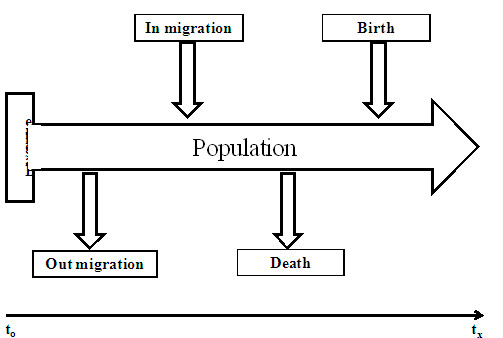
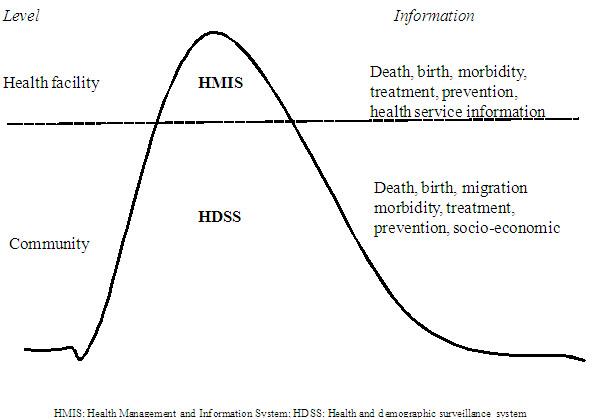
Background: In the developed world, information on vital events is routinely collected nationally to inform population and health policies. However, in many low-and middle-income countries, especially those in sub-Saharan Africa (SSA), there is a lack of effective and comprehensive national civil registration and vital statistics system. In the past decades, the number of Health and Demographic Surveillance Systems (HDSSs) has increased throughout SSA. An HDSS monitors births, deaths, causes of death, migration, and other health and socio-economic indicators within a defined population over time. Currently, the International Network for the Continuous Demographic Evaluation of Populations and Their Health (INDEPTH) brings together 38 member research centers which run 44 HDSS sites from 20 countries in Africa, Asia and Oceana. Thirty two of these HDSS sites are in SSA.
Discussion: This paper argues that, in the absence of an adequate national CRVS, HDSSs should be more effectively utilised to generate relevant public health data, and also to create local capacity for longitudinal data collection and management systems in SSA. If HDSSs get strategically located to cover different geographical regions in a country, data from these sites could be used to provide a more complete national picture of the health of the population. They provide useful data that can be extrapolated for national estimates if their regional coverage is well planned. HDSSs are however resource-intensive. Efforts are being put towards getting them linked to local or national policy contexts and to reduce their dependence on external funding. Increasing their number in SSA to cover a critical proportion of the population, especially urban populations, must be carefully planned. Strategic planning is needed at national levels to geographically locate HDSS sites and to support these through national funding mechanisms.
Summary: The paper does not suggest that HDSSs should be seen as a replacement for civil registration systems. Rather, they should serve as a short- to medium-term measure to provide data for health and population planning at regional levels with possible extrapolation to national levels. HDSSs can also provide useful lessons for countries that intend to set up nationally representative sample vital registration systems in the long term.
Figures
References
-
- Lucas D, Meyer P. Beginning Australian Population Studies. 2. National Centre for Development Studies, Research School of Pacific Studies, Australian National University, Australia; 2003. Registration, Administrative, and Qualitative Data; pp. 1–8.
-
- Status of Mortality Statistics in the Maldives. http://www.searo.who.int/LinkFiles/2007_MortalityStatus-maldives.pdf.
-
- United Nations: Handbook on Civil Registration and Vital Statistics Systems. Policies and Protocols for the Release and Archiving of Individual Records. United Nations; 2003.
Publication types
MeSH terms
Grants and funding
LinkOut - more resources
Full Text Sources
Research Materials
Miscellaneous
