. 2012;7(8):e43263.
doi: 10.1371/journal.pone.0043263. Epub 2012 Aug 29.

Differential effects of two fermentable carbohydrates on central appetite regulation and body composition

Affiliations

Differential effects of two fermentable carbohydrates on central appetite regulation and body composition

Tulika Arora et al. PLoS One. 2012.

Abstract

Background: Obesity is rising at an alarming rate globally. Different fermentable carbohydrates have been shown to reduce obesity. The aim of the present study was to investigate if two different fermentable carbohydrates (inulin and β-glucan) exert similar effects on body composition and central appetite regulation in high fat fed mice.

Methodology/principal findings: Thirty six C57BL/6 male mice were randomized and maintained for 8 weeks on a high fat diet containing 0% (w/w) fermentable carbohydrate, 10% (w/w) inulin or 10% (w/w) β-glucan individually. Fecal and cecal microbial changes were measured using fluorescent in situ hybridization, fecal metabolic profiling was obtained by proton nuclear magnetic resonance ((1)H NMR), colonic short chain fatty acids were measured by gas chromatography, body composition and hypothalamic neuronal activation were measured using magnetic resonance imaging (MRI) and manganese enhanced MRI (MEMRI), respectively, PYY (peptide YY) concentration was determined by radioimmunoassay, adipocyte cell size and number were also measured. Both inulin and β-glucan fed groups revealed significantly lower cumulative body weight gain compared with high fat controls. Energy intake was significantly lower in β-glucan than inulin fed mice, with the latter having the greatest effect on total adipose tissue content. Both groups also showed an increase in the numbers of Bifidobacterium and Lactobacillus-Enterococcus in cecal contents as well as feces. β-Glucan appeared to have marked effects on suppressing MEMRI associated neuronal signals in the arcuate nucleus, ventromedial hypothalamus, paraventricular nucleus, periventricular nucleus and the nucleus of the tractus solitarius, suggesting a satiated state.

Conclusions/significance: Although both fermentable carbohydrates are protective against increased body weight gain, the lower body fat content induced by inulin may be metabolically advantageous. β-Glucan appears to suppress neuronal activity in the hypothalamic appetite centers. Differential effects of fermentable carbohydrates open new possibilities for nutritionally targeting appetite regulation and body composition.


Conflict of interest statement

Competing Interests: The authors have declared that no competing interests exist.

Figures

Figure 1
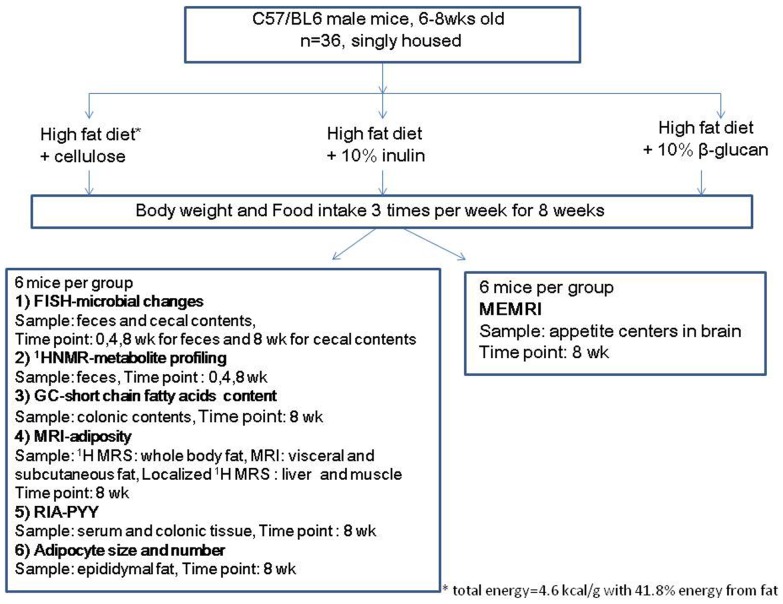
Figure 1. Flowchart showing the study design.
Figure 2
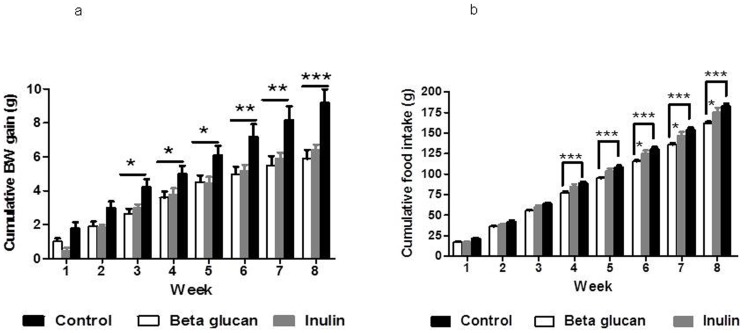
Figure 2. The effect of inulin and β-glucan supplementation over the 8-week dietary interventional period (a) weekly cumulative body weight gain, n = 12 per group (b) weekly cumulative food intake over the 8 week dietary intervention period, n = 12 per group. * = p<0.05, ** = p<0.01, *** = p<0.001.
Key: HFD-C, high fat diet control; HFD-I, high fat diet+inulin; HFD-BG, high fat diet+β-glucan.
Figure 3
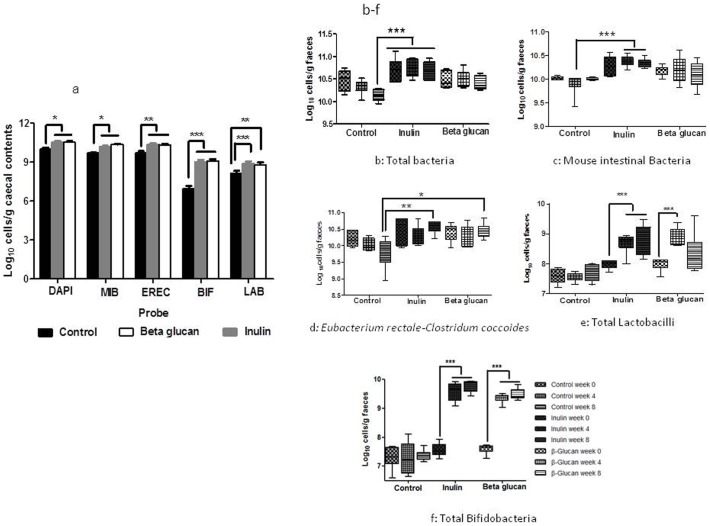
Figure 3. The effect of inulin and β-glucan supplementation on cecal and fecal microbial contents over the 8-week dietary interventional period (a) cecal microflora groups, n = 6 per group (b) fecal total bacteria microflora at week 0, 4 and 8, n = 6 per group: (c) fecal mouse intestinal bacteria, (d) fecal Eubacterium rectal-Clostridium coccoides; (e) fecal Lactobacilli; and (f) fecal Bifidobacteria. * = p<0.05, ** = p<0.01, *** = p<0.001.
Key: HFD-C, high fat diet control; HFD-I, high fat diet+inulin; HFD-BG, high fat diet+β-glucan.
Figure 4
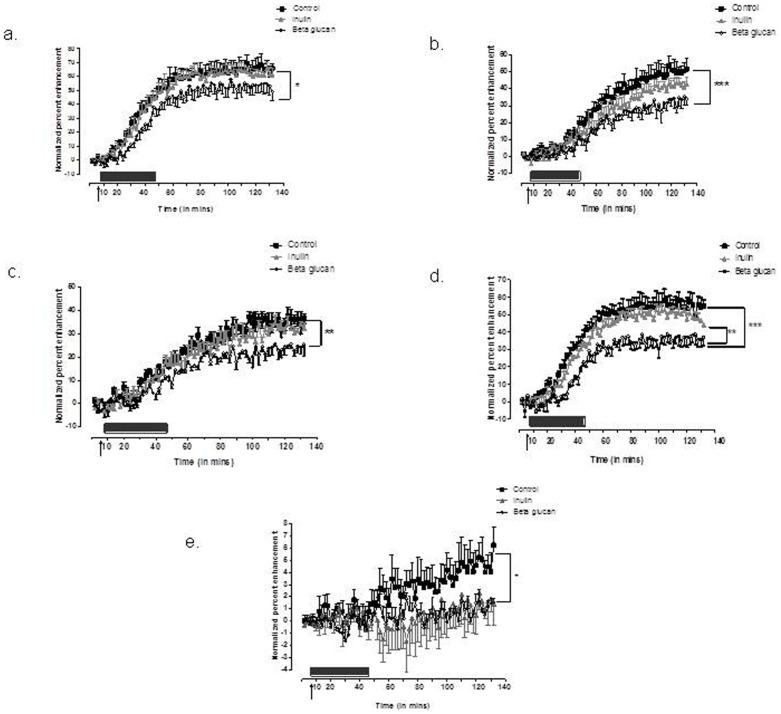
Figure 4. Representative baseline (pre-contrast) MRI images of the mouse brain showing assignment of regions of interest (ROIs) in various brain areas from which signal intensities (SI) were obtained.
Time course of changes in SI (as a percentage of baseline) before and at various times after IV manganese chloride infusion in the (a) ARC, (b) VMH (c) PVN (d) PE (e) NTS. Data are presented as means of four consecutive image acquisitions±SEM. * = p<0.05, ** = p<0.01, *** = p<0.001 Key: ARC, arcuate nucleus; VMH, ventromedial hypothalamic nucleus; PVN, paraventricular hypothalamic nucleus; PE, periventricular nucleus; NTS, nucleus of solitaries tractus; HFD-C, high fat diet control; HFD-I, high fat diet+inulin; HFD-BG, high fat diet+β-glucan.
Figure 5
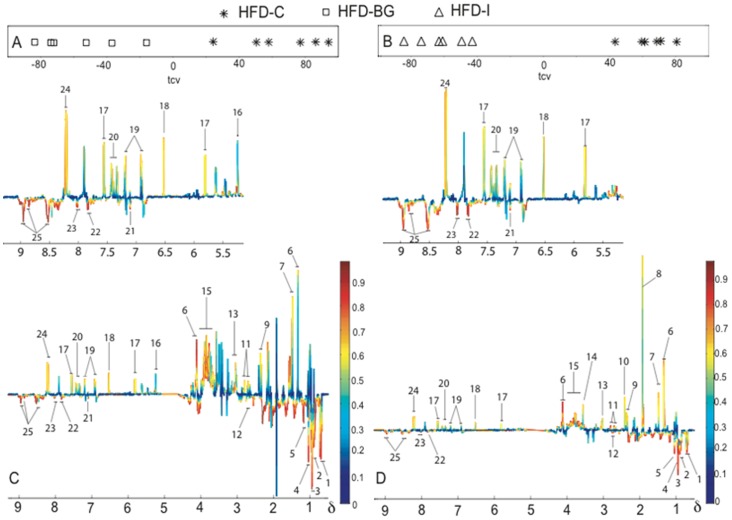
Figure 5. Multivariate statistical analysis of the fecal 1H NMR spectra.
OPLS-DA cross validated scores plots for mice fed with (a) HFD-C and HDF-BG; and (b) HFD-C and HFD-I. The corresponding coefficient plots indicated fecal metabolic differences for (c) HFD-C and HFD-BG; and (d) HFD-C and HFD-I. Insets show an expansion of the aromatic region. HFD-C, high fat diet control; HFD-I, high fat diet+inulin; HFD-BG, high fat diet+β-glucan. 1, Bile acids; 2, Butyrate; 3, Isoleucine, leucine and valine; 4, Propionate (tentative); 5, Unknown at δ 1.17 (doublets) ; 6, Lactate; 7, Alanine; 8, Acetate; 9 Glutamate (tentative); 10, Succinate; 11, Aspartate; 12, Citrate; 13, Lysine; 14, Glycine; 15, Glucose and amino acids; 16, Glucose; 17, Uracil; 18, Fumarate; 19, Thyrosine; 20, Phenylalanine; 21, Histidine; 22, Unknown at δ7.84 (doublets); 23, Unknown at δ8.02 (doublets); 24, Unknown at δ8.20 (doublets); 25, Amine related compounds.

References

    1. Backhed F, Ding H, Wang T, Hooper LV, Koh GY, et al. (2004) The gut microbiota as an environmental factor that regulates fat storage. Proc Natl Acad Sci U S A 101: 15718–15723. - PMC - PubMed
    1. Ley RE, Backhed F, Turnbaugh P, Lozupone CA, Knight RD, et al. (2005) Obesity alters gut microbial ecology. Proc Natl Acad Sci U S A 102: 11070–11075. - PMC - PubMed
    1. Ley RE, Turnbaugh PJ, Klein S, Gordon JI (2006) Microbial ecology: human gut microbes associated with obesity. Nature 444: 1022–1023. - PubMed
    1. Kleessen B, Hartmann L, Blaut M (2001) Oligofructose and long-chain inulin: influence on the gut microbial ecology of rats associated with a human faecal flora. Br J Nutr 86: 291–300. - PubMed
    1. Snart J, Bibiloni R, Grayson T, Lay C, Zhang H, et al. (2006) Supplementation of the diet with high-viscosity beta-glucan results in enrichment for lactobacilli in the rat cecum. Appl Environ Microbiol 72: 1925–1931. - PMC - PubMed

Publication types

MeSH terms