


Guillain-Barré syndrome-related Campylobacter jejuni in Bangladesh: ganglioside mimicry and cross-reactive antibodies
- PMID: 22952833
- PMCID: PMC3428305
- DOI: 10.1371/journal.pone.0043976
Guillain-Barré syndrome-related Campylobacter jejuni in Bangladesh: ganglioside mimicry and cross-reactive antibodies
Abstract
Background: Campylobacter jejuni is the predominant antecedent infection in Guillain-Barré syndrome (GBS). Molecular mimicry and cross-reactive immune responses to C. jejuni lipo-oligosaccharides (LOS) precipitate the development of GBS, although this mechanism has not been established in patients from developing countries. We determined the carbohydrate mimicry between C. jejuni LOS and gangliosides, and the cross-reactive antibody response in patients with GBS in Bangladesh.
Methodology: Sera from 97 GBS patients, and 120 neurological and family controls were tested for antibody reactivity against LOS from C. jejuni isolates from GBS patients in Bangladesh (BD-07, BD-39, BD-10, BD-67 and BD-94) by enzyme-linked immunosorbent assay (ELISA). Cross-reactivity to LOS was determined by ELISA. The LOS outer core structures of C. jejuni strains associated with GBS/MFS were determined by mass spectrometry.
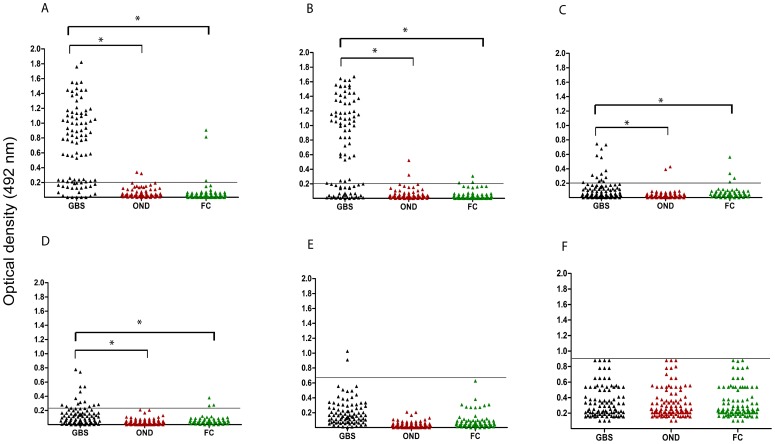
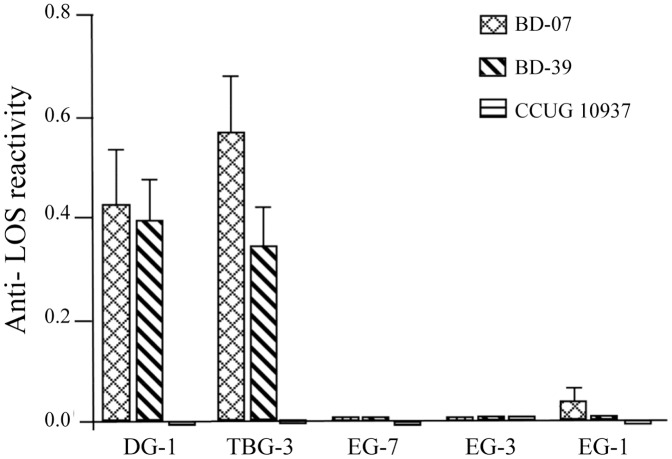
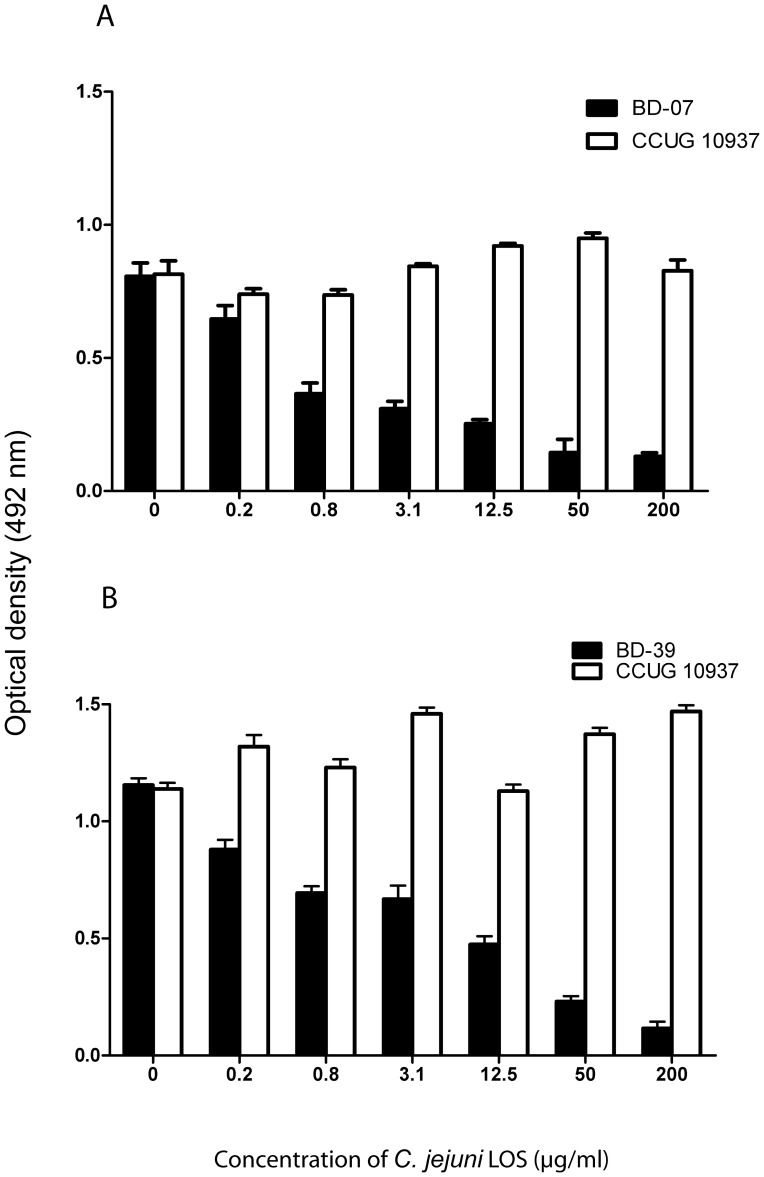
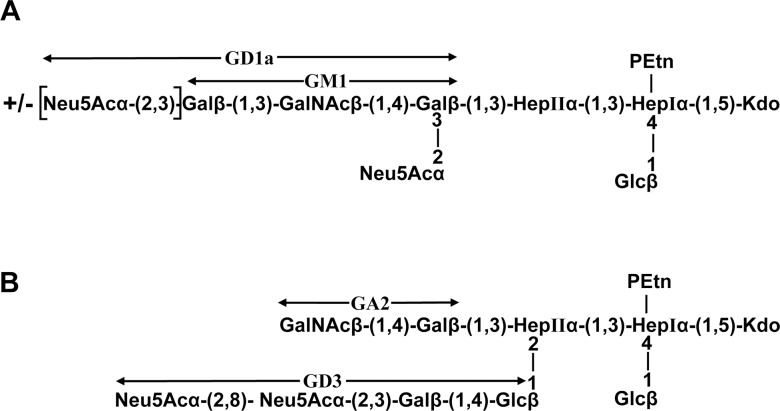
Principle findings: IgG antibodies to LOS from C. jejuni BD-07, BD-39, BD-10, and BD-67 IgG antibodies were found in serum from 56%, 58%, 14% and 15% of GBS patients respectively, as compared to very low frequency (<3%) in controls (p<0.001). Monoclonal antibodies specific for GM1 and GD1a reacted strongly with LOS from the C. jejuni strains (BD-07 and BD-39). Mass spectrometry analysis confirmed the presence of GM1 and GD1a carbohydrate mimics in the LOS from C. jejuni BD-07 and BD-39. Both BD-10 and BD-67 express the same LOS outer core, which appears to be a novel structure displaying GA2 and GD3 mimicry. Up to 90-100% of serum reactivity to gangliosides in two patients (DK-07 and DK-39) was inhibited by 50 µg/ml of LOS from the autologous C. jejuni isolates. However, patient DK-07 developed an anti-GD1a immune response while patient DK-39 developed an anti-GM1 immune response.
Conclusion: Carbohydrate mimicry between C. jejuni LOS and gangliosides, and cross-reactive serum antibody precipitate the majority of GBS cases in Bangladesh.
Conflict of interest statement
Figures
References
-
- Hughes RA, Cornblath DR (2005) Guillain-Barré syndrome. Lancet 366: 1653–1666. - PubMed
-
- Rees JH, Soudain SE, Gregson NA, Hughes RA (1995) Campylobacter jejuni infection and Guillain-Barré syndrome. N Engl J Med 333: 1374–1379. - PubMed
-
- Jacobs BC, Rothbarth PH, van der Meché FG, Herbrink P, Schmitz PI, et al. (1998) The spectrum of antecedent infections in Guillain-Barré syndrome: a case-control study. Neurology 51: 110–1115. - PubMed
-
- Nachamkin I, Arzarte Barbosa P, Ung H, Lobato C, Gonzalez Rivera A, et al. (2007) Patterns of Guillain-Barré syndromein children: results from a Mexican population. Neurology 69: 1665–1671. - PubMed
Publication types
MeSH terms
Substances
LinkOut - more resources
Full Text Sources
Other Literature Sources
Medical
Molecular Biology Databases
