. 2012;7(8):e44245.
doi: 10.1371/journal.pone.0044245. Epub 2012 Aug 31.

Activity of trifluoperazine against replicating, non-replicating and drug resistant M. tuberculosis

Affiliations

Activity of trifluoperazine against replicating, non-replicating and drug resistant M. tuberculosis

Meeta J Advani et al. PLoS One. 2012.

Abstract

Trifluoperazine, a known calmodulin antagonist, belongs to a class of phenothiazine compounds that have multiple sites of action in mycobacteria including lipid synthesis, DNA processes, protein synthesis and respiration. The objective of this study is to evaluate the potential of TFP to be used as a lead molecule for development of novel TB drugs by showing its efficacy on multiple drug resistant (MDR) Mycobacterium tuberculosis (M.tb) and non-replicating dormant M.tb. Wild type and MDR M.tb were treated with TFP under different growth conditions of stress like low pH, starvation, presence of nitric oxide and in THP-1 infection model. Perturbation in growth kinetics of bacilli at different concentrations of TFP was checked to determine the MIC of TFP for active as well as dormant bacilli. Results show that TFP is able to significantly reduce the actively replicating as well as non-replicating bacillary load. It has also shown inhibitory effect on the growth of MDR M.tb. TFP has shown enhanced activity against intracellular bacilli, presumably because phenothiazines are known to get accumulated in macrophages. This concentration was, otherwise, found to be non-toxic to macrophage in vitro. Our results show that TFP has the potential to be an effective killer of both actively growing and non-replicating bacilli including MDR TB. Further evaluation and in vivo studies with Trifluoperazine can finally help us know the feasibility of this compound to be used as either a lead compound for development of new TB drugs or as an adjunct in the current TB chemotherapy.


Conflict of interest statement

Competing Interests: The authors have declared that no competing interests exist.

Figures

Figure 1
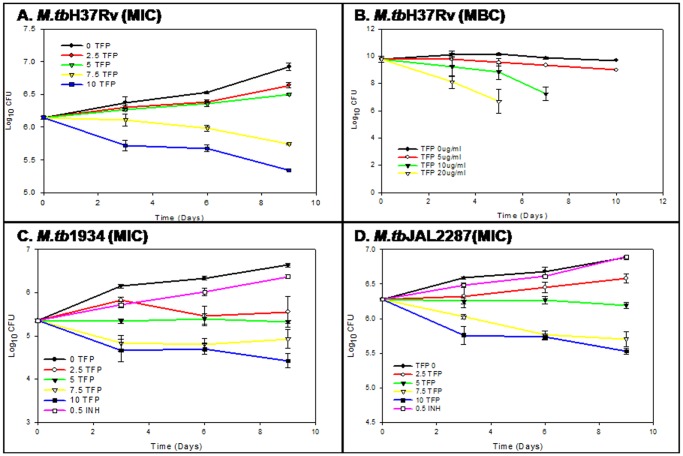
Figure 1. In vitro susceptibility of multi-drug resistant strains of M.tb to trifluoperazine.
Perturbation in growth kinetics of MDR and WT M.tb in presence of different concentrations of TFP was monitored by enumerating CFUs on days 0, 3, 6 and 9 as described in materials and methods to determine MIC and MBC of TFP for M.tb. The figure shows the growth curve of (a) M.tbH37Rv (MIC), (b) M.tbH37Rv (MBC), (c) M.tb1934 and (d) M.tbJAL2287 in presence of 0, 5, 10 and 20 µg/ml of TFP. For MDR strains 0.5 µg/ml of INH was used as control. Values represent means ± standard errors of the means of duplicates.
Figure 2
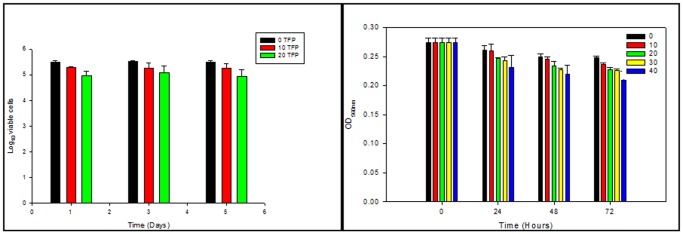
Figure 2. Viability of macrophages in presence of trifluoperazine.
(a)THP-1 cells were cultured in RPMI 1640 medium supplemented with 10% FCS at 37°C, 5% CO2 for a period of 5 days. Dose dependent response of TFP on THP-1 cells viability was determined by culturing THP-1 cells in different concentration of TFP (0, 10 and 20 µg/ml). Viability of cells was determined by trypan blue exclusion method at days 1, 2, 3 and 5. (b) Monocyte derived macrophages were treated with different concentrations of TFP (0, 10, 20, 30 and 40 µg/ml). Cell viability was checked by MTT assays after 24, 48 and 72 hours of treatment. Values represent means ± standard errors of the means of duplicates.
Figure 3
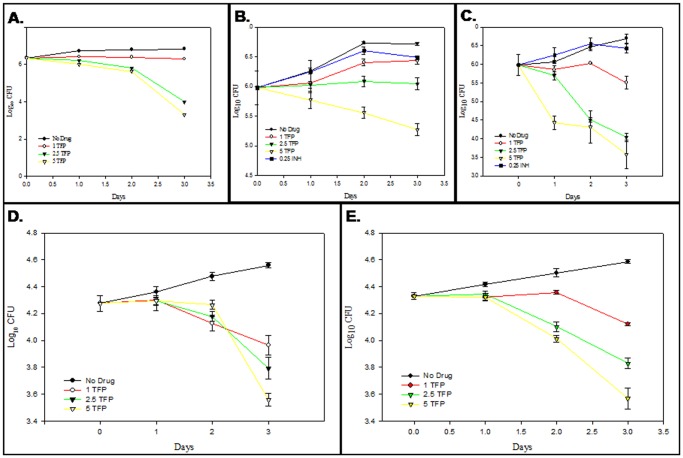
Figure 3. Ex vivo susceptibility of multi-drug resistant strains of M.tb to trifluoperazine.
THP-1 cells and MDMs infected with M.tb at an MOI of 10∶1were treated with different concentrations (0, 1, 2.5 and 5 µg/ml) in duplicates as described in materials and methods. Post 1, 2 and 3 days of infection, cells were lysed and plated on 7H11 to enumerate CFUs. Graphs depict intracellular growth perturbation of (a) M.tbH37Rv in THP-1 cells, (b) M.tbJAL2287in THP-1 cells, (c) M.tb1934 in THP-1 cells, (d) M.tbH37Rv in MDMs and (e) M.tbJAL2287 in MDMs in presence of various concentrations of TFP. Values represent means ± standard errors of the means of duplicates.
Figure 4
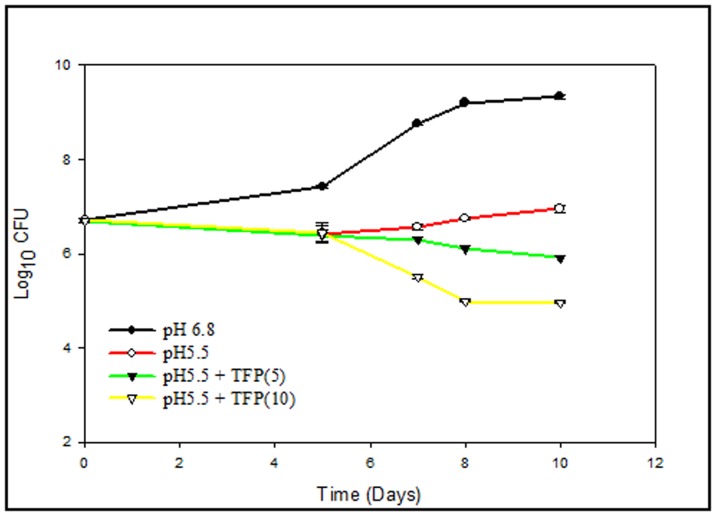
Figure 4. Effect of pH on lethality of TFP against Mycobacterium tuberculosis (H37Rv).
The effect of TFP against mycobacteria was tested at pH 6.8 and pH 5.5 in Middlebrook 7H9 broth. 7H9 broth (pH 6.8) was adjusted to pH 5.5 using HCl. TFP was added at final concentration 10 µg/ml. Controls were kept without TFP at both pH 6.8 and pH 5.5. Growth of bacilli in the two media in the presence and absence of TFP was monitored by enumerating CFUs at various time points as described in materials and methods. Graph depicts effect of pH on activity of TFP against M.tuberculosis (H37Rv). Values represent means ± standard errors of the means of duplicates.
Figure 5
Figure 5. Susceptibility of starved M.tuberculosis (H37Rv) to TFP in vitro).
Mid log phase M.tb cultures were starved in PBS for 6 weeks to induce bacteriostasis. Attainment of bacteriostasis was confirmed by enumerating CFU at week 0, 3 and 6. Starved cultures were treated with INH and TFP at their MIC separately in duplicates. Survival of bacilli in presence of drugs was monitored by enumerating CFUs on days 1, 3, and 5 post drug treatment. Graph depicts the effect of TFP and INH on starvation induced bacteriostatic M.tb cultures. Values represent means ± standard errors of the means of duplicates.
Figure 6
Figure 6. Susceptibility of NO induced NRP M.tb cultures to TFP.
Mid log phase M.tb cultures were subjected to NO stress by treating with 50 uM DETA NO for 16 hrs. Attainment of bacteriostasis was confirmed by enumerating CFU at week 1, 2 and 3. After 16 hr treatment culture was treated TFP (5 ug/ml). Growth kinetics of treated and untreated bacilli in presence of TFP was monitored by enumerating CFU at days 1, 7, 14 and 21 post treatment.

References

    1. Haydel SE (2010) Extensively Drug-Resistant Tuberculosis: A Sign of the Times and an Impetus for Antimicrobial Discovery. Pharmaceutical 3: 2268–2290. - PMC - PubMed
    1. Koul A, Arnoult E, Lounis N, Guillemont J, Andries K (2011) The challenge of new drug discovery for tuberculosis. Nature 469: 483–490. - PubMed
    1. Vandonselaar M, Hickie RA, Quail JW, Delbaere LT (1994) Trifluoperazine-induced conformational change in Ca2+-calmodulin. Nat Struct Biol 1: 795–801. - PubMed
    1. Amaral L, Martins M, Viveiros M (2007) Phenothiazines as anti-multi-drug resistant tubercular agents. Infect Disord Drug Targets 7: 257–65. - PubMed
    1. Gadre DV, Talwar V (1999) In vitro susceptibility testing of Mycobacterium tuberculosis strains to trifluoperazine. J Chemother 11: 203–6. - PubMed

Publication types

MeSH terms