


Evidence that emotion mediates social attention in rhesus macaques
- PMID: 22952968
- PMCID: PMC3431396
- DOI: 10.1371/journal.pone.0044387
Evidence that emotion mediates social attention in rhesus macaques
Abstract
Background: Recent work on non-human primates indicates that the allocation of social attention is mediated by characteristics of the attending animal, such as social status and genotype, as well as by the value of the target to which attention is directed. Studies of humans indicate that an individual's emotion state also plays a crucial role in mediating their social attention; for example, individuals look for longer towards aggressive faces when they are feeling more anxious, and this bias leads to increased negative arousal and distraction from other ongoing tasks. To our knowledge, no studies have tested for an effect of emotion state on allocation of social attention in any non-human species.
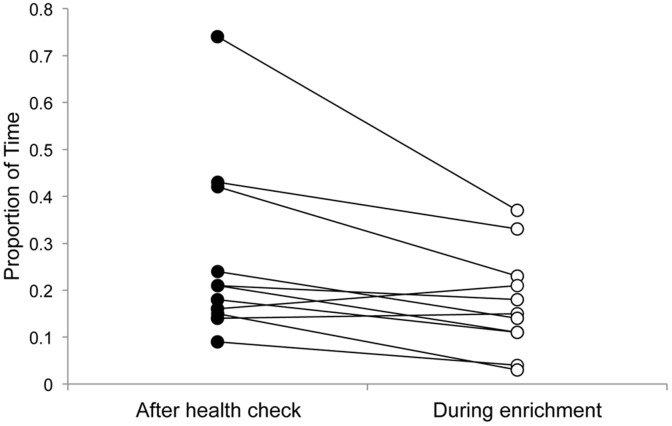
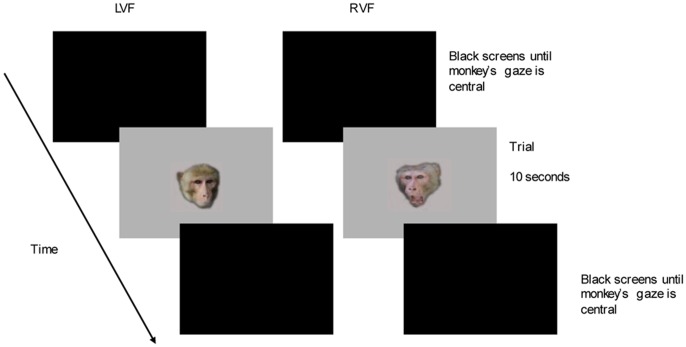
Methodology: We presented captive adult male rhesus macaques with pairs of adult male conspecific face images - one with an aggressive expression, one with a neutral expression - and recorded gaze towards these images. Each animal was tested twice, once during a putatively stressful condition (i.e. following a veterinary health check), and once during a neutral (or potentially positive) condition (i.e. a period of environmental enrichment). Initial analyses revealed that behavioural indicators of anxiety and stress were significantly higher after the health check than during enrichment, indicating that the former caused a negative shift in emotional state.
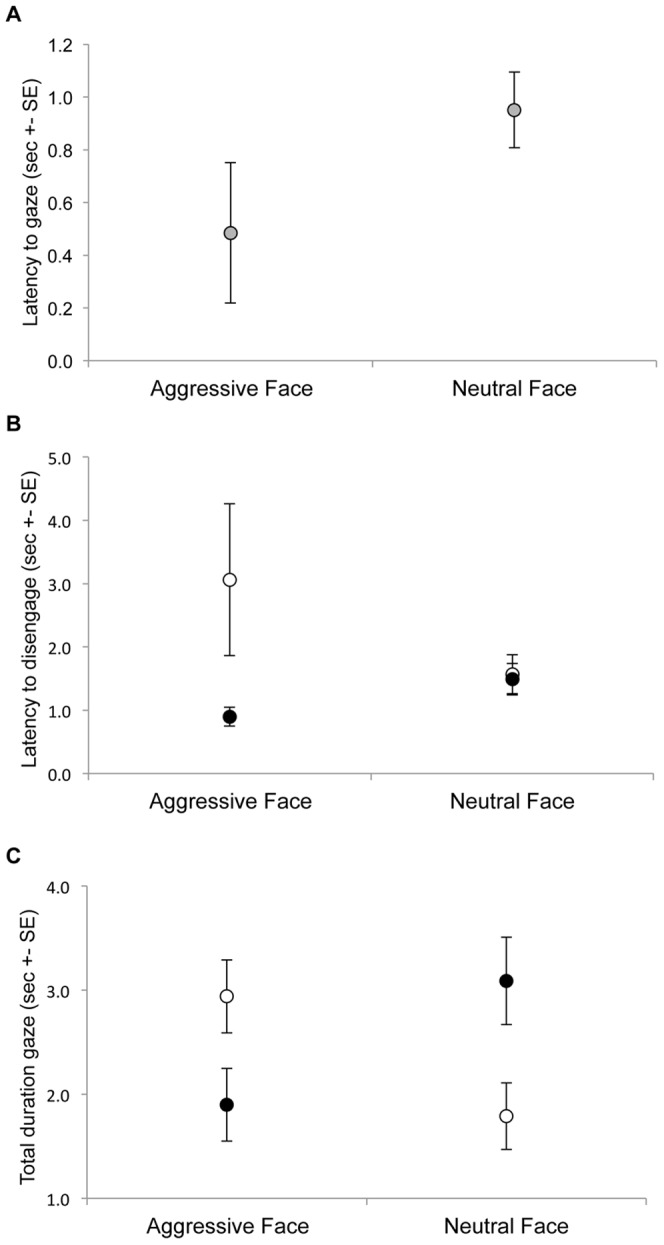
Principle findings: The macaques showed initial vigilance for aggressive faces across both conditions, but subsequent responses differed between conditions. Following the health check, initial vigilance was followed by rapid and sustained avoidance of aggressive faces. By contrast, during the period of enrichment, the macaques showed sustained attention towards the same aggressive faces.
Conclusions/significance: These data provide, to our knowledge, the first evidence that shifts in emotion state mediate social attention towards and away from facial cues of emotion in a non-human animal. This work provides novel insights into the evolution of emotion-attention interactions in humans, and mechanisms of social behaviour in non-human primates, and may have important implications for understanding animal psychological wellbeing.
Conflict of interest statement
Figures
References
-
- Bar-Haim Y, Lamy D, Pergamin L, Bakermans-Kranenburg MJ, van Ijzendoorn MH (2007) Threat-related attentional bias in anxious and nonanxious individuals: A meta-analytic study. Psychological Bulletin 133: 1–24. - PubMed
-
- Garner M, Mogg K, Bradley BP (2006) Orienting and maintenance of gaze to facial expressions in social anxiety. Journal of Abnormal Psychology 115: 760–770. - PubMed
-
- Clark DM (1999) Anxiety disorders: why they persist and how to treat them. Behaviour Research and Therapy 37: S5–S27. - PubMed
-
- Derakshan N, Eysenck MW, Myers LB (2007) Emotional information processing in repressors: The vigilance-avoidance theory. Cognition & Emotion 21: 1585–1614.
-
- Yiend J (2010) The effects of emotion on attention: a review of attentional processing of emotional information. 24: 3–47.
Publication types
MeSH terms
LinkOut - more resources
Full Text Sources
