


Delta and kappa opioid receptor polymorphisms influence the effects of naltrexone on subjective responses to alcohol
- PMID: 22954510
- PMCID: PMC3683577
- DOI: 10.1016/j.pbb.2012.08.019
Delta and kappa opioid receptor polymorphisms influence the effects of naltrexone on subjective responses to alcohol
Abstract
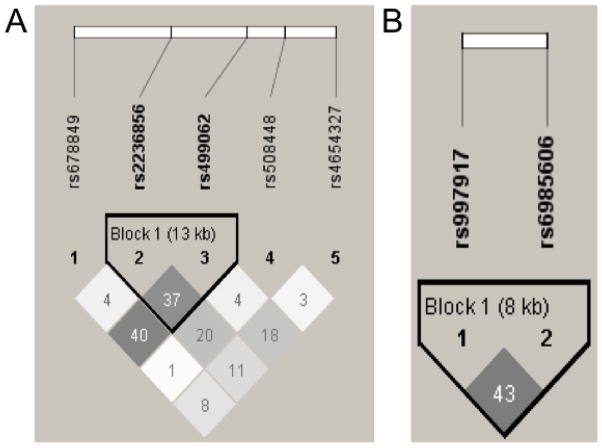
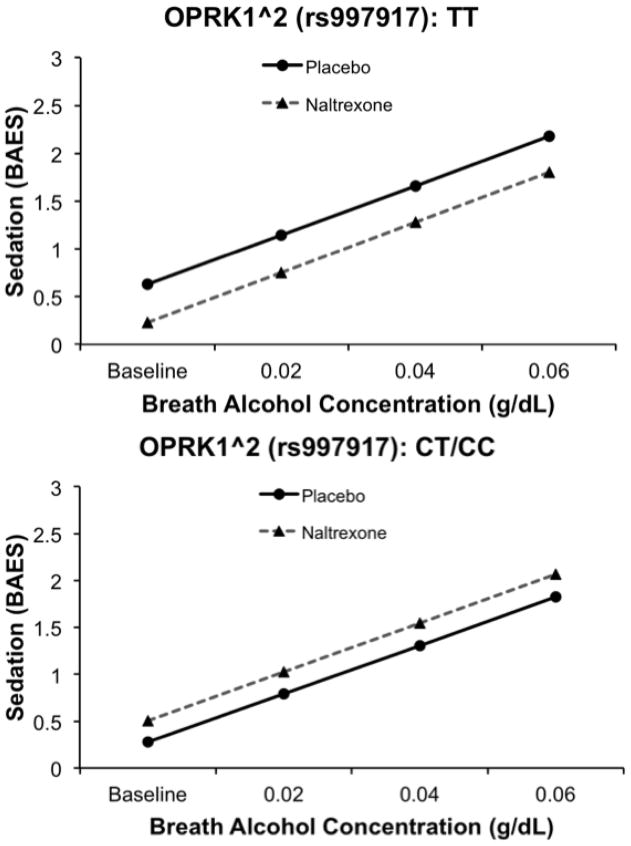
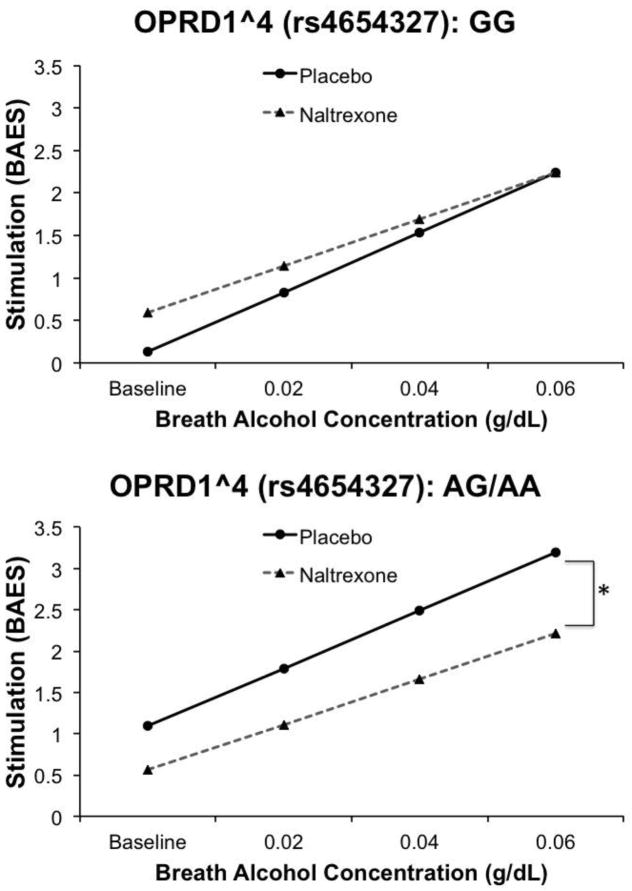
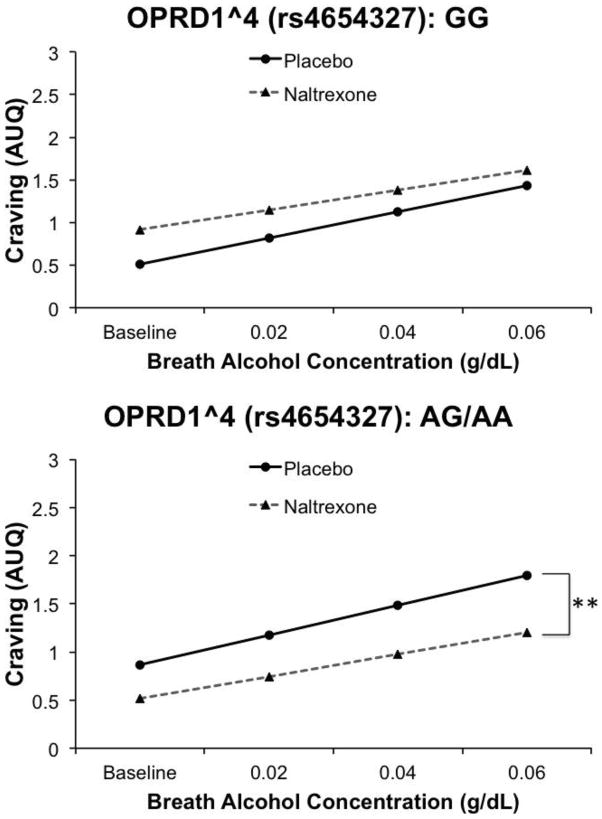
Naltrexone, one of four FDA-approved pharmacotherapies for alcohol dependence, has shown moderate efficacy in clinical trials. Pharmacogenetic effects have been reported such that allelic variation at the gene encoding the mu-opioid receptor (OPRM1, rs1799971) predicts naltrexone-induced blunting of the positively reinforcing effects of alcohol. However, naltrexone also binds, albeit to a lesser degree, to kappa and delta opioid receptors in the brain. This alternate binding presents the possibility that single nucleotide polymorphisms (SNPs) in the kappa and delta opioid receptor (OPRK1 and OPRD1) genes may contribute to naltrexone pharmacogenetics. Therefore, the goal of this exploratory study was to re-examine data from a double-blind placebo controlled laboratory trial of naltrexone for pharmacogenetic effects at kappa and delta opioid receptor tag SNPs. Participants were 40 heavy drinkers (12 female) who underwent an intravenous alcohol challenge paradigm after receiving naltrexone (50mg) or placebo in randomized and crossover fashion. Dependent variables were self-reported alcohol-induced stimulation, sedation, and craving. Multilevel models revealed a significant Naltrexone×OPRK1 Genotype (rs997917) interaction predicting alcohol-induced sedation, such that TT homozygotes reported lower naltrexone-induced alcohol sedation as compared to carriers of the C allele. Moreover, there was a significant Naltrexone×OPRD1 Genotype (rs4654327) interaction predicting alcohol-induced stimulation and craving, such that carriers of the A allele at this locus reported greater naltrexone-induced blunting of alcohol stimulation and alcohol craving compared to GG homozygotes. These findings suggest that additional pharmacogenetic effects in the opioid receptor system may account for individual differences in response to naltrexone in the human laboratory.
Copyright © 2012 Elsevier Inc. All rights reserved.
Figures
References
-
- Allen JP, Litten RZ, Fertig JB, Babor T. A review of research on the Alcohol Use Disorders Identification Test (AUDIT) Alcohol Clin Exp Res. 1997;21:613–9. - PubMed
-
- Ananthan S, Kezar HS, 3rd, Carter RL, Saini SK, Rice KC, Wells JL, et al. Synthesis, opioid receptor binding, and biological activities of naltrexone-derived pyrido- and pyrimidomorphinans. Journal of medicinal chemistry. 1999;42:3527–38. - PubMed
-
- Anton RF, Drobes DJ, Voronin K, Durazo-Avizu R, Moak D. Naltrexone effects on alcohol consumption in a clinical laboratory paradigm: temporal effects of drinking. Psychopharmacology (Berl) 2004;173:32–40. - PubMed
-
- Anton RF, Moak DH, Waid LR, Latham PK, Malcolm RJ, Dias JK. Naltrexone and cognitive behavioral therapy for the treatment of outpatient alcoholics: results of a placebo-controlled trial. Am J Psychiatry. 1999;156:1758–64. - PubMed
-
- Anton RF, O’Malley SS, Ciraulo DA, Cisler RA, Couper D, Donovan DM, et al. Combined pharmacotherapies and behavioral interventions for alcohol dependence: the COMBINE study: a randomized controlled trial. JAMA. 2006;295:2003–17. - PubMed
Publication types
MeSH terms
Substances
Grants and funding
LinkOut - more resources
Full Text Sources
Molecular Biology Databases
Research Materials
