


Amygdala response to negative images in postpartum vs nulliparous women and intranasal oxytocin
- PMID: 22956670
- PMCID: PMC3871727
- DOI: 10.1093/scan/nss100
Amygdala response to negative images in postpartum vs nulliparous women and intranasal oxytocin
Abstract
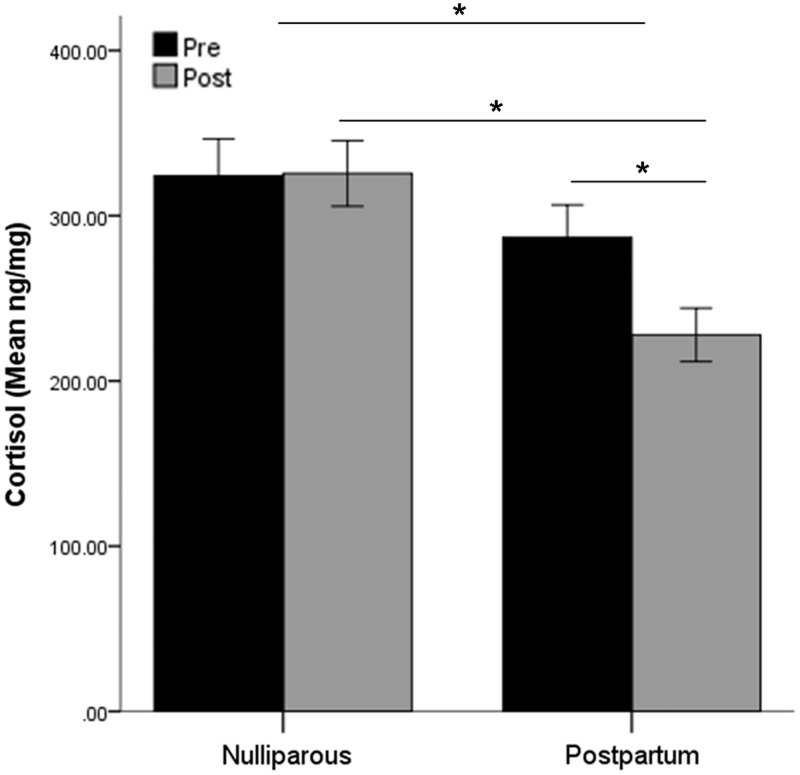
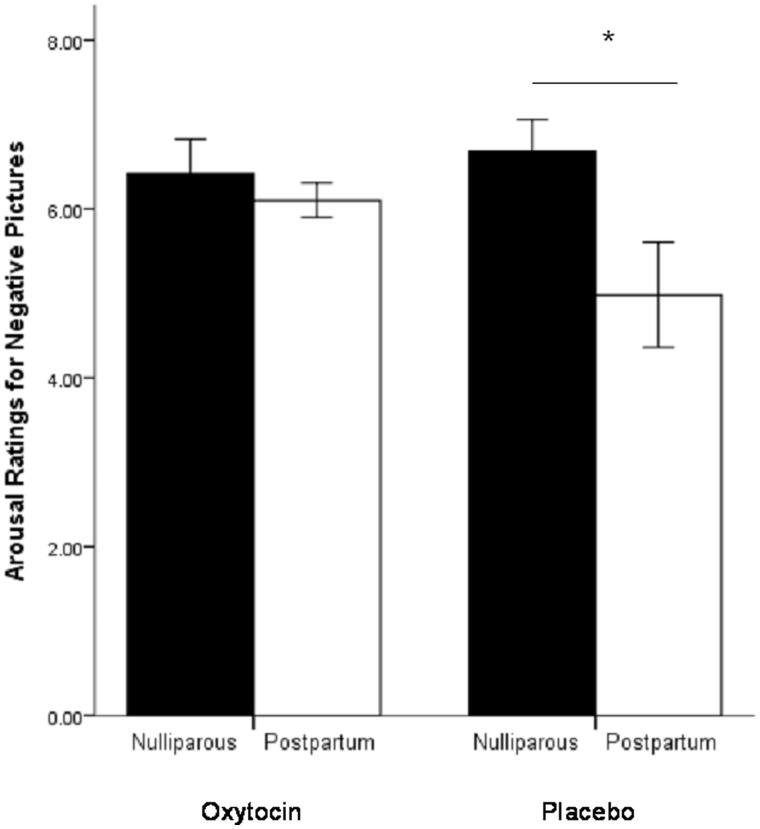
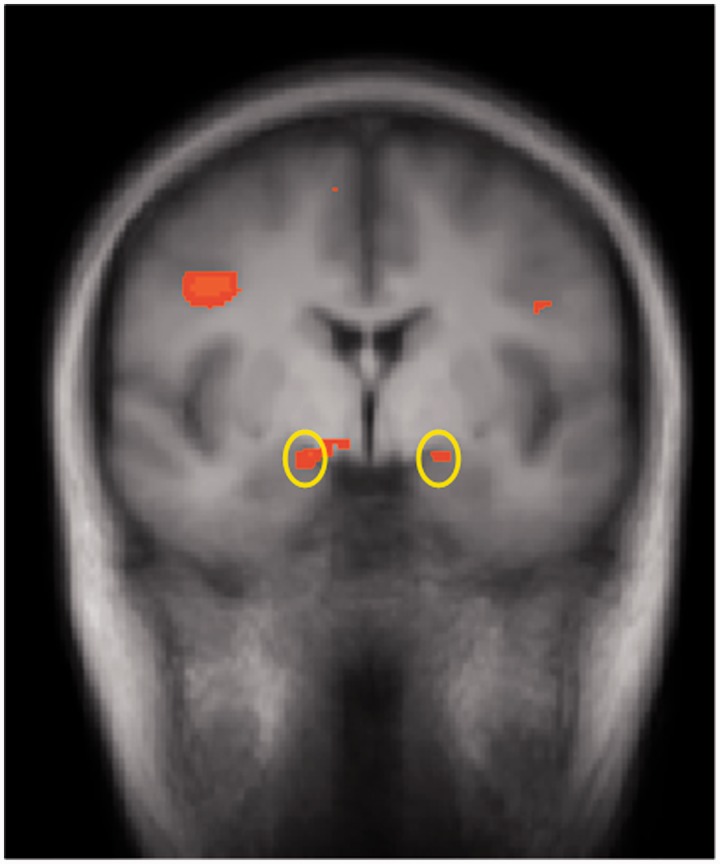
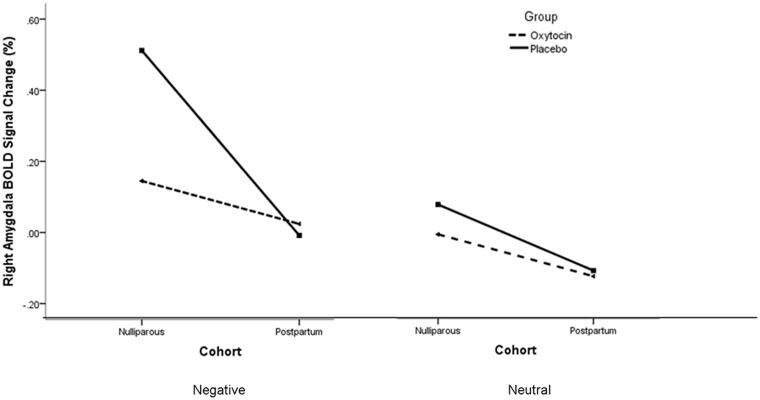
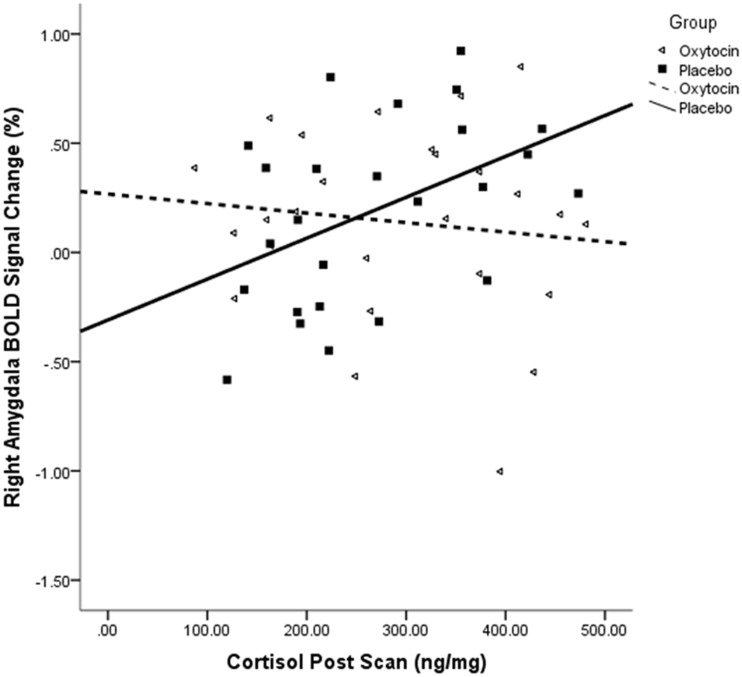
The neuroendocrine state of new mothers may alter their neural processing of stressors in the environment through modulatory actions of oxytocin on the limbic system. We predicted that amygdala sensitivity to negatively arousing stimuli would be suppressed in postpartum compared to nulliparous women and that this suppression would be modulated by administration of oxytocin nasal spray. We measured brain activation (fMRI) and subjective arousal in response to negatively arousing pictures in 29 postpartum and 30 nulliparous women who received either oxytocin nasal spray or placebo before scanning. Pre- and post-exposure urinary cortisol levels were also measured. Postpartum women (placebo) demonstrated lower right amygdala activation in response to negative images, lower cortisol and lower negative photo arousal ratings to nulliparous women. Nulliparous women receiving oxytocin had lower right amygdala activation compared to placebo. Cortisol levels in the placebo group, and ratings of arousal across all women, were positively associated with right amygdala activation. Together, these findings demonstrate reductions in both amygdala activation and subjective negative arousal in untreated postpartum vs nulliparous women, supporting the hypothesis of an attenuated neural response to arousing stimuli in postpartum women. A causal role of oxytocin and the timing of potential effects require future investigation.
Keywords: amygdale; arousal; cortisol; oxytocin; postpartum.
Figures
References
-
- Altemus M. Neuropeptides in anxiety disorders—effects of lactation. Annals of the New York Academy of Sciences. 1995;771:697–707. - PubMed
-
- Altemus M, Redwine LS, Leong Y, Frye CA, Porges SW, Carter SC. Responses to laboratory psychosocial stress in postpartum women. Psychosomatic Medicine. 2001;63:814–21. - PubMed
-
- Bartz JA, Hollander E. The neuroscience of affiliation: forging links between basic and clinical research on neuropeptides and social behavior. Hormones and Behavior. 2006;50:518–28. - PubMed
-
- Britton JC, Taylor SF, Sudheimer KD, Liberzon I. Facial expressions and complex IAPS pictures: common and differential networks. Neuroimage. 2006;31:906–19. - PubMed
Publication types
MeSH terms
Substances
Grants and funding
LinkOut - more resources
Full Text Sources
Medical
