


Psychopharmacological treatment and psychological interventions in irritable bowel syndrome
- PMID: 22956940
- PMCID: PMC3432371
- DOI: 10.1155/2012/486067
Psychopharmacological treatment and psychological interventions in irritable bowel syndrome
Abstract
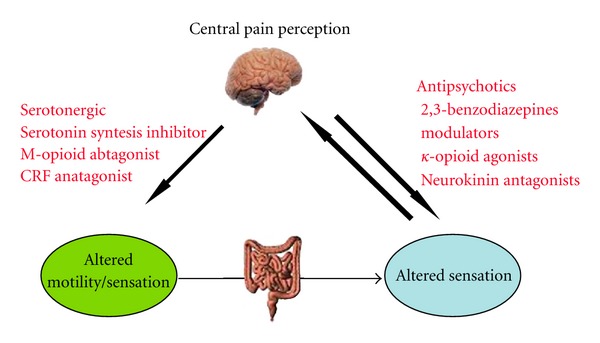
Irritable bowel syndrome (IBS) accounts for 25% of gastroenterology output practice, making it one of the most common disorders in this practice. Psychological and social factors may affect the development of this chronic disorder. Furthermore, psychiatric symptoms and psychiatric diseases are highly prevalent in this condition, but the approach to treating these is not always straightforward. As emphasized in the biopsychosocial model of IBS, with regard to the modulatory role of stress-related brain-gut interactions and association of the disease with psychological factors and emotional state, it proves useful to encourage psychopharmacological treatments and psychosocial therapies, both aiming at reducing stress perception. The aim of this paper is to analyze the effectiveness of psychopharmacological treatment and psychological interventions on irritable bowel syndrome.
Figures
References
-
- Boyce PM, Koloski NA, Talley NJ. Irritable bowel syndrome according to varying diagnostic criteria: are the new Rome II criteria unnecessarily restrictive for research and practice? American Journal of Gastroenterology. 2000;95(11):3176–3183. - PubMed
-
- Hillilä MT, Färkkilä MA. Prevalence of irritable bowel syndrome according to different diagnostic criteria in a non-selected adult population. Alimentary Pharmacology and Therapeutics. 2004;20(3):339–345. - PubMed
-
- Hungin APS, Whorwell PJ, Tack J, Mearin F. The prevalence, patterns and impact of irritable bowel syndrome: an international survey of 40 000 subjects. Alimentary Pharmacology and Therapeutics. 2003;17(5):643–650. - PubMed
-
- Mearin F, Badía X, Balboa A, et al. Irritable bowel syndrome prevalence varies enormously depending on the employed diagnostic criteria: comparison of Rome II versus previous criteria in a general population. Scandinavian Journal of Gastroenterology. 2001;36(11):1155–1161. - PubMed
-
- Harvey RF, Salih SY, Read AE. Organic and functional disorders in 2000 gastroenterology outpatients. The Lancet. 1983;1(8325):632–634. - PubMed
LinkOut - more resources
Full Text Sources
Research Materials
