


Transcriptional abnormalities of hamstring muscle contractures in children with cerebral palsy
- PMID: 22956992
- PMCID: PMC3431909
- DOI: 10.1371/journal.pone.0040686
Transcriptional abnormalities of hamstring muscle contractures in children with cerebral palsy
Abstract
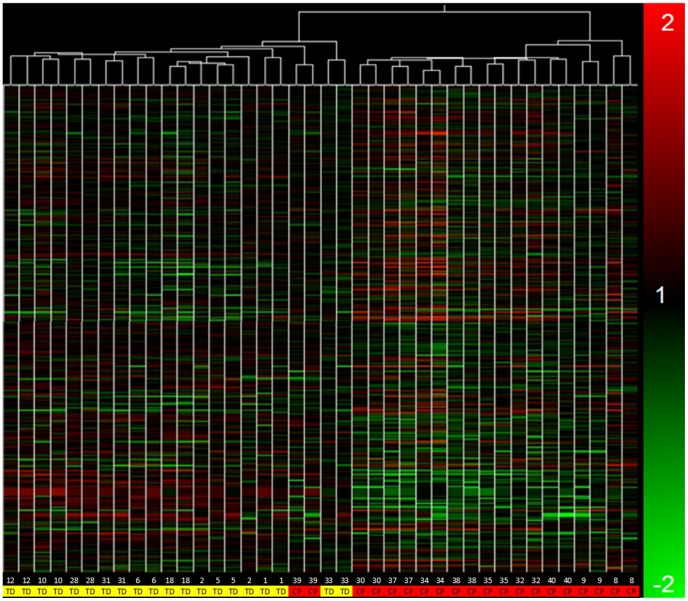
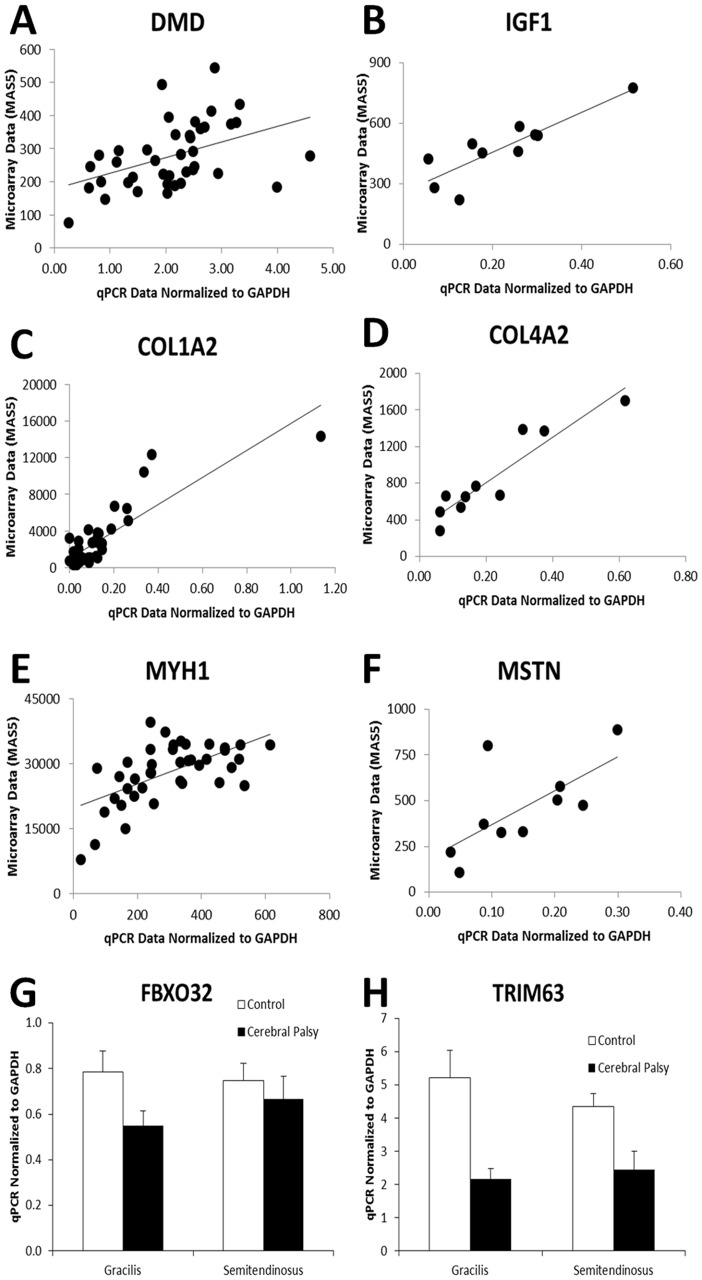
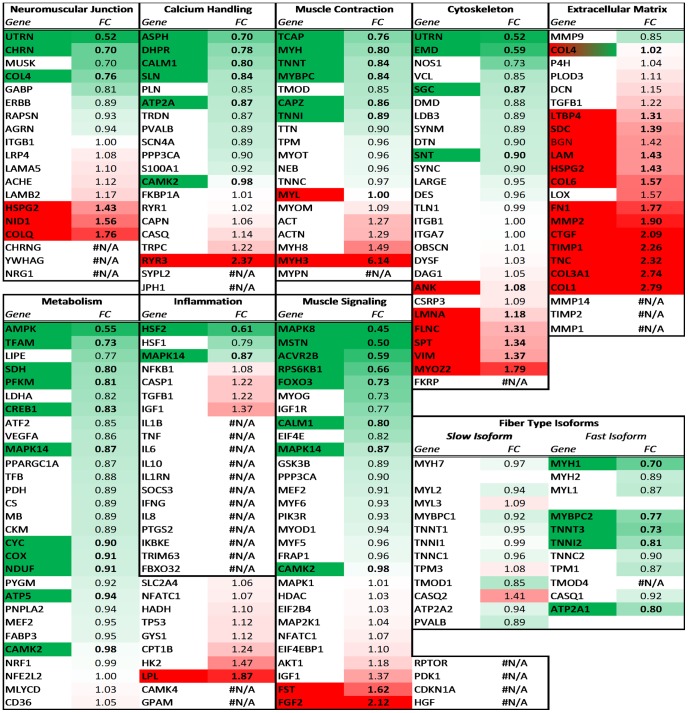
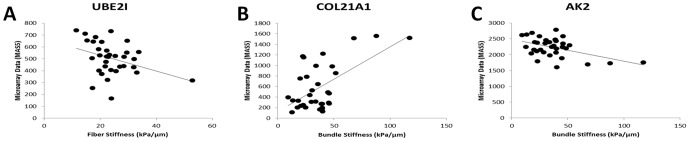
Cerebral palsy (CP) is an upper motor neuron disease that results in a spectrum of movement disorders. Secondary to the neurological lesion, muscles from patients with CP are often spastic and form debilitating contractures that limit range of motion and joint function. With no genetic component, the pathology of skeletal muscle in CP is a response to aberrant complex neurological input in ways that are not fully understood. This study was designed to gain further understanding of the skeletal muscle response in CP using transcriptional profiling correlated with functional measures to broadly investigate muscle adaptations leading to mechanical deficits.Biopsies were obtained from both the gracilis and semitendinosus muscles from a cohort of patients with CP (n = 10) and typically developing patients (n = 10) undergoing surgery. Biopsies were obtained to define the unique expression profile of the contractures and passive mechanical testing was conducted to determine stiffness values in previously published work. Affymetrix HG-U133A 2.0 chips (n = 40) generated expression data, which was validated for selected transcripts using quantitative real-time PCR. Chips were clustered based on their expression and those from patients with CP clustered separately. Significant genes were determined conservatively based on the overlap of three summarization algorithms (n = 1,398). Significantly altered genes were analyzed for over-representation among gene ontologies and muscle specific networks.The majority of altered transcripts were related to increased extracellular matrix expression in CP and a decrease in metabolism and ubiquitin ligase activity. The increase in extracellular matrix products was correlated with mechanical measures demonstrating the importance in disability. These data lay a framework for further studies and development of novel therapies.
Conflict of interest statement
Figures
References
-
- Rosenbaum P, Paneth N, Leviton A, Goldstein M, Bax M, et al. (2007) A report: the definition and classification of cerebral palsy April 2006. Dev Med Child Neurol Suppl 109: 8–14. - PubMed
-
- Reddihough DS, Collins KJ (2003) The epidemiology and causes of cerebral palsy. Aust J Physiother 49: 7–12. - PubMed
-
- Yeargin-Allsopp M, Van Naarden Braun K, Doernberg NS, Benedict RE, Kirby RS, et al. (2008) Prevalence of cerebral palsy in 8-year-old children in three areas of the United States in 2002: a multisite collaboration. Pediatrics 121: 547–554. - PubMed
-
- Kerr Graham H, Selber P (2003) Musculoskeletal aspects of cerebral palsy. J Bone Joint Surg Br 85: 157–166. - PubMed
-
- Crenna P (1998) Spasticity and ‘spastic’ gait in children with cerebral palsy. Neurosci Biobehav Rev 22: 571–578. - PubMed
Publication types
MeSH terms
Substances
Grants and funding
LinkOut - more resources
Full Text Sources
Medical
Molecular Biology Databases
Miscellaneous
