


Seroprevalence of chronic hepatitis B virus infection and prior immunity in immigrants and refugees: a systematic review and meta-analysis
- PMID: 22957088
- PMCID: PMC3434171
- DOI: 10.1371/journal.pone.0044611
Seroprevalence of chronic hepatitis B virus infection and prior immunity in immigrants and refugees: a systematic review and meta-analysis
Abstract
Background: International migrants experience increased mortality from hepatocellular carcinoma compared to host populations, largely due to undetected chronic hepatitis B infection (HBV). We conducted a systematic review of the seroprevalence of chronic HBV and prior immunity in migrants arriving in low HBV prevalence countries to identify those at highest risk in order to guide disease prevention and control strategies.
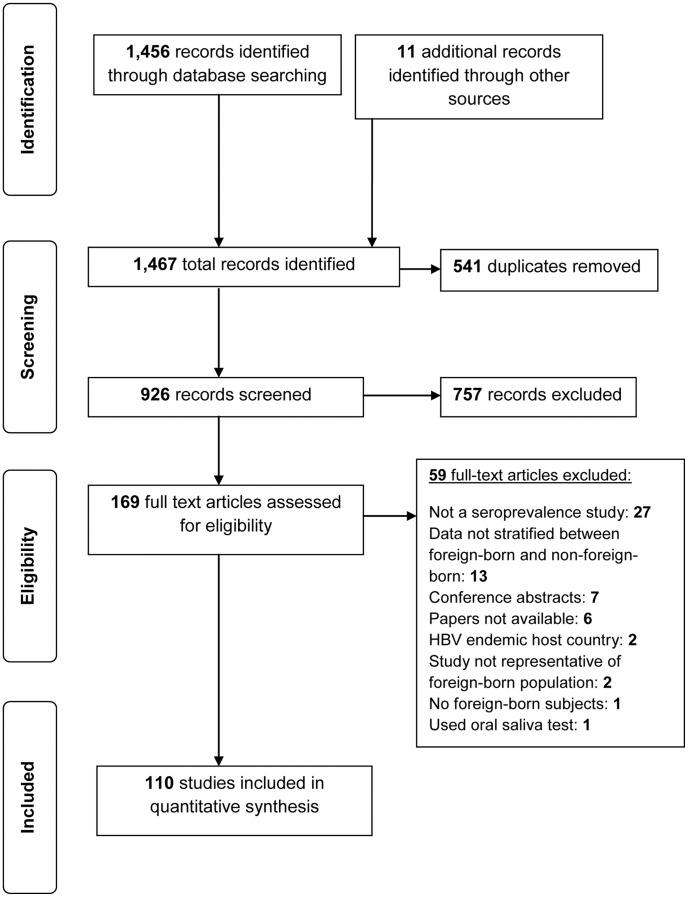
Methods and findings: Medline, Medline In-Process, EMBASE and the Cochrane Database of Systematic Reviews were searched. Studies that reported HBV surface antigen or surface antibodies in migrants were included. The seroprevalence of chronic HBV and prior immunity were pooled by region of origin and immigrant class, using a random-effects model. A random-effects logistic regression was performed to explore heterogeneity. The number of chronically infected migrants in each immigrant-receiving country was estimated using the pooled HBV seroprevalences and country-specific census data. A total of 110 studies, representing 209,822 immigrants and refugees were included. The overall pooled seroprevalence of infection was 7.2% (95% CI: 6.3%-8.2%) and the seroprevalence of prior immunity was 39.7% (95% CI: 35.7%-43.9%). HBV seroprevalence differed significantly by region of origin. Migrants from East Asia and Sub-Saharan Africa were at highest risk and migrants from Eastern Europe were at an intermediate risk of infection. Region of origin, refugee status and decade of study were independently associated with infection in the adjusted random-effects logistic model. Almost 3.5 million migrants (95% CI: 2.8-4.5 million) are estimated to be chronically infected with HBV.
Conclusions: The seroprevalence of chronic HBV infection is high in migrants from most world regions, particularly among those from East Asia, Sub-Saharan Africa and Eastern Europe, and more than 50% were found to be susceptible to HBV. Targeted screening and vaccination of international migrants can become an important component of HBV disease control efforts in immigrant-receiving countries.
Conflict of interest statement
Figures
References
-
- Custer B, Sullivan SD, Hazlet TK, Iloeje U, Veenstra DL, et al. (2004) Global epidemiology of hepatitis B virus. J Clin Gastroenterol 38: S158–168. - PubMed
-
- Lavanchy D (2004) Hepatitis B virus epidemiology, disease burden, treatment, and current and emerging prevention and control measures. J Viral Hepat 11: 97–107. - PubMed
-
- Weinbaum CM, Williams I, Mast EE, Wang SA, Finelli L, et al. (2008) Recommendations for identification and public health management of persons with chronic hepatitis B virus infection. MMWR Recomm Rep 57: 1–20. - PubMed
-
- Mast EE, Margolis HS, Fiore AE, Brink EW, Goldstein ST, et al. (2005) A comprehensive immunization strategy to eliminate transmission of hepatitis B virus infection in the United States: recommendations of the Advisory Committee on Immunization Practices (ACIP) part 1: immunization of infants, children, and adolescents. MMWR Recomm Rep 54: 1–31. - PubMed
-
- Mast EE, Weinbaum CM, Fiore AE, Alter MJ, Bell BP, et al. (2006) A comprehensive immunization strategy to eliminate transmission of hepatitis B virus infection in the United States: recommendations of the Advisory Committee on Immunization Practices (ACIP) Part II: immunization of adults. MMWR Recomm Rep 55: 1–33. - PubMed
Publication types
MeSH terms
LinkOut - more resources
Full Text Sources
