


Epidemiology of East Coast fever (Theileria parva infection) in Kenya: past, present and the future
- PMID: 22958352
- PMCID: PMC3465218
- DOI: 10.1186/1756-3305-5-194
Epidemiology of East Coast fever (Theileria parva infection) in Kenya: past, present and the future
Abstract
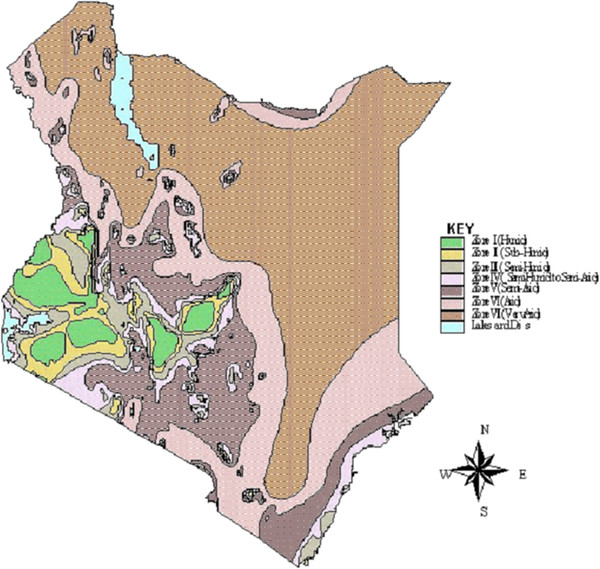
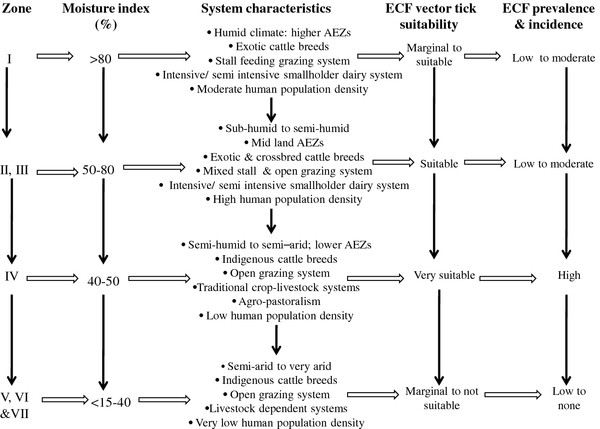
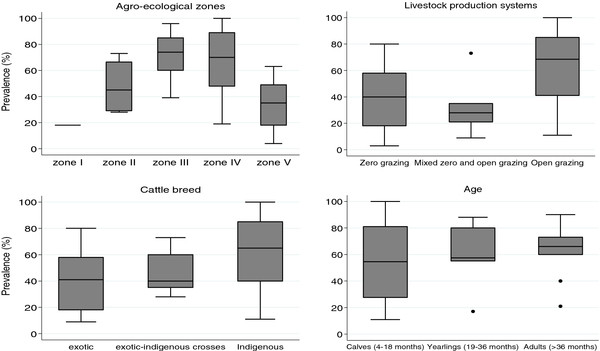
In this article, we review the epidemiology of East Coast fever (ECF), a tick-borne infection of cattle, in Kenya. The major factors associated with epidemiology of ECF include the agro-ecological zone (AEZ), livestock production system (LPS) and both animal breed and age. These factors appear to influence the epidemiology of ECF through structured gradients. We further show that the gradients are dynamically shaped by socio-demographic and environmental processes. For a vector-borne disease whose transmission depends on environmental characteristics that influence vector dynamics, a change in the environment implies a change in the epidemiology of the disease. The review recommends that future ECF epidemiological studies should account for these factors and the dynamic interactions between them. In Kenya, ECF control has previously relied predominantly on tick control using acaricides and chemotherapy while ECF immunization is steadily being disseminated. We highlight the contribution of ECF epidemiology and economics in the design of production system and/or geographical area-specific integrated control strategies based on both the dynamic epidemiological risk of the disease and economic impacts of control strategies. In all production systems (except marginal areas), economic analyses demonstrate that integrated control in which ECF immunization is always an important component, can play an important role in the overall control of the disease. Indeed, Kenya has recently approved ECF immunization in all production systems (except in marginal areas). If the infrastructure of the vaccine production and distribution can be heightened, large ECF endemic areas are expected to be endemically stable and the disease controlled. Finally, the review points the way for future research by identifying scenario analyses as a critical methodology on which to base future investigations on how both dynamic livestock management systems and patterns of land use influence the dynamics and complexity of ECF epidemiology and the implications for control.
Figures
References
-
- Norval RAI, Perry BD, Young AS, Lawrence JA, Mukhebi AW, Bishop R, McKeever D. The Epidemiology of Theileriosis in Africa. Academic Press, London, UK; 1992.
-
- Lawrence JA, Perry BD, Williamson SM. In: Infectious Diseases of Livestock. Volume 1. 2. Coetzer JAW, Tustin RC, editor. Oxford University Press, Southern Africa, Cape Town; 1992. East coast fever; pp. 448–467.
-
- Minjauw B, McLeod A. Tick-borne diseases and poverty. The impact of ticks and tick-borne diseases on the livelihood of small-scale and marginal livestock owners in India and eastern and southern Africa. Research report, DFID Animal Health Programme, Centre for Tropical Veterinary Medicine, University of Edinburgh, UK; 2003.
-
- Sombroek WG, Braun HM, van der Pouw BJ. Exploratory soil map and agroclimatic zones map of Kenya. Exploratory Soil Survey Report No. E1, Kenya Soil Survey, Nairobi, Kenya; 1982.
Publication types
MeSH terms
Substances
LinkOut - more resources
Full Text Sources
Miscellaneous
