Randomized Controlled Trial
. 2012 Oct-Nov;87(4-5):135-41.
doi: 10.1016/j.plefa.2012.08.004. Epub 2012 Sep 5.

Lowering dietary linoleic acid reduces bioactive oxidized linoleic acid metabolites in humans

Affiliations
Randomized Controlled Trial

Lowering dietary linoleic acid reduces bioactive oxidized linoleic acid metabolites in humans

Christopher E Ramsden et al. Prostaglandins Leukot Essent Fatty Acids. 2012 Oct-Nov.

Abstract

Linoleic acid (LA) is the most abundant polyunsaturated fatty acid in human diets, a major component of human tissues, and the direct precursor to the bioactive oxidized LA metabolites (OXLAMs), 9- and 13 hydroxy-octadecadienoic acid (9- and 13-HODE) and 9- and 13-oxo-octadecadienoic acid (9- and 13-oxoODE). These four OXLAMs have been mechanistically linked to pathological conditions ranging from cardiovascular disease to chronic pain. Plasma OXLAMs, which are elevated in Alzheimer's dementia and non-alcoholic steatohepatitis, have been proposed as biomarkers useful for indicating the presence and severity of both conditions. Because mammals lack the enzymatic machinery needed for de novo LA synthesis, the abundance of LA and OXLAMs in mammalian tissues may be modifiable via diet. To examine this issue in humans, we measured circulating LA and OXLAMs before and after a 12-week LA lowering dietary intervention in chronic headache patients. Lowering dietary LA significantly reduced the abundance of plasma OXLAMs, and reduced the LA content of multiple circulating lipid fractions that may serve as precursor pools for endogenous OXLAM synthesis. These results show that lowering dietary LA can reduce the synthesis and/or accumulation of oxidized LA derivatives that have been implicated in a variety of pathological conditions. Future studies evaluating the clinical implications of diet-induced OXLAM reductions are warranted.


Figures

Figure 1
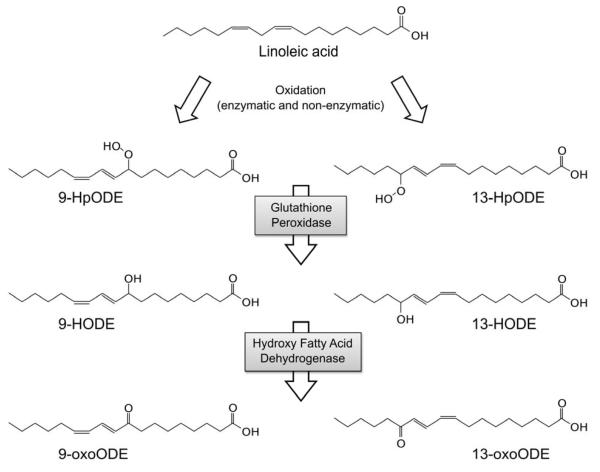
Figure 1. Oxidative metabolism of linoleic acid
LA can be enzymatically or non-enzymatically converted to 9- and 13-HpODE, with subsequent enzymatic conversion to hydroxy (9- and 13-HODE) and ketone (9- and 13-oxoODE) derivatives. The initial step (A) can be catalyzed by 12/15-lipoxygenase, cyclooxygenase, or cytochrome P450 enzymes. Abbreviations: LA: linoleic acid; LOX: lipoxygenase; COX: cyclooxygenase; HpODE; hydroperoxy-octadecadienoic acid; HODE: hydroxy-octadecadienoic acid; oxoODE: oxo-octadecadienoic acid.
Figure 2
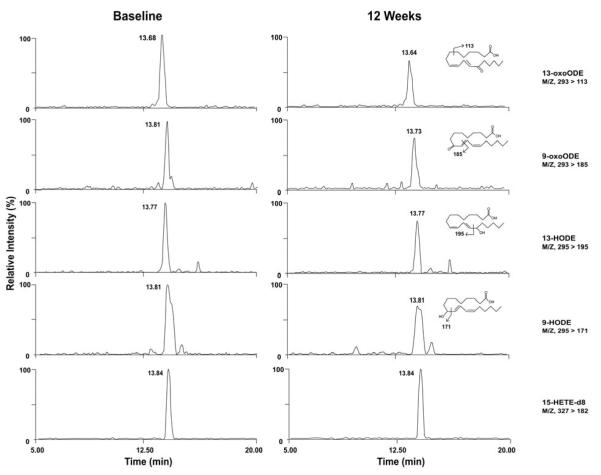
Figure 2. Detection and quantification of OXLAM profile by ESI/LC/MS/MS
Individual isomers of HODEs and oxoODEs formed by LA oxidation were quantified with a single injection. Lipid extracts were resolved by HPLC and monitored online by ESI/LC/MS/MS [3]. Abbreviations: HODE: hydroxy-octadecadenoic acid; oxoODE, oxo-octadecadenoic acid; 15-HETE-d8, internal standard.
Figure 3
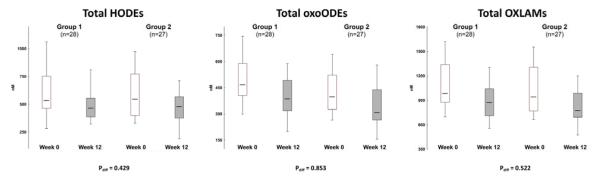
Figure 3. Comparable OXLAM reductions in the two LA lowering intervention groups
There were no between-group differences in the median reductions in HODEs, oxo-ODEs or total OXLAMs, indicating that the observed changes were primarily due to the decrease in dietary LA rather than the n-3 fatty acids provided only to Group 2. Data for the combined groups are presented in subsequent tables and figures. The box-whisker plot is represented with the lower boundary of the box indicating the 25th percentile, the line within the box indicating the median value, and the upper boundary indicating the 75th percentile. The whiskers extend to the non-outlier range. P values represent between group comparisons using a Mann Whitney U test. Abbreviations: HODE: hydroxy-octadecadienoic acid; oxo-ODE: oxo-octadecadienoic acid; OXLAM: oxidized linoleic acid metabolite.

References

    1. Patwardhan AM, Akopian AN, Ruparel NB, Diogenes A, Weintraub ST, Uhlson C, Murphy RC, Hargreaves KM. Heat generates oxidized linoleic acid metabolites that activate TRPV1 and produce pain in rodents. The Journal of clinical investigation. 2010;120:1617–1626. - PMC - PubMed
    1. Patwardhan AM, Scotland PE, Akopian AN, Hargreaves KM. Activation of TRPV1 in the spinal cord by oxidized linoleic acid metabolites contributes to inflammatory hyperalgesia. Proceedings of the National Academy of Sciences of the United States of America. 2009;106:18820–18824. - PMC - PubMed
    1. Feldstein AE, Lopez R, Tamimi TA, Yerian L, Chung YM, Berk M, Zhang R, McIntyre TM, Hazen SL. Mass spectrometric profiling of oxidized lipid products in human nonalcoholic fatty liver disease and nonalcoholic steatohepatitis. Journal of lipid research. 2010;51:3046–3054. - PMC - PubMed
    1. Nagy L, Tontonoz P, Alvarez JG, Chen H, Evans RM. Oxidized LDL regulates macrophage gene expression through ligand activation of PPARgamma. Cell. 1998;93:229–240. - PubMed
    1. Aisen PS, Haines KA, Given W, Abramson SB, Pras M, Serhan C, Hamberg M, Samuelsson B, Weissmann G. Circulating hydroxy fatty acids in familial Mediterranean fever. Proceedings of the National Academy of Sciences of the United States of America. 1985;82:1232–1236. - PMC - PubMed

Publication types

MeSH terms