


Wars and Child Health: Evidence from the Eritrean-Ethiopian Conflict
- PMID: 22962514
- PMCID: PMC3433062
- DOI: 10.1016/j.jdeveco.2012.04.001
Wars and Child Health: Evidence from the Eritrean-Ethiopian Conflict
Abstract
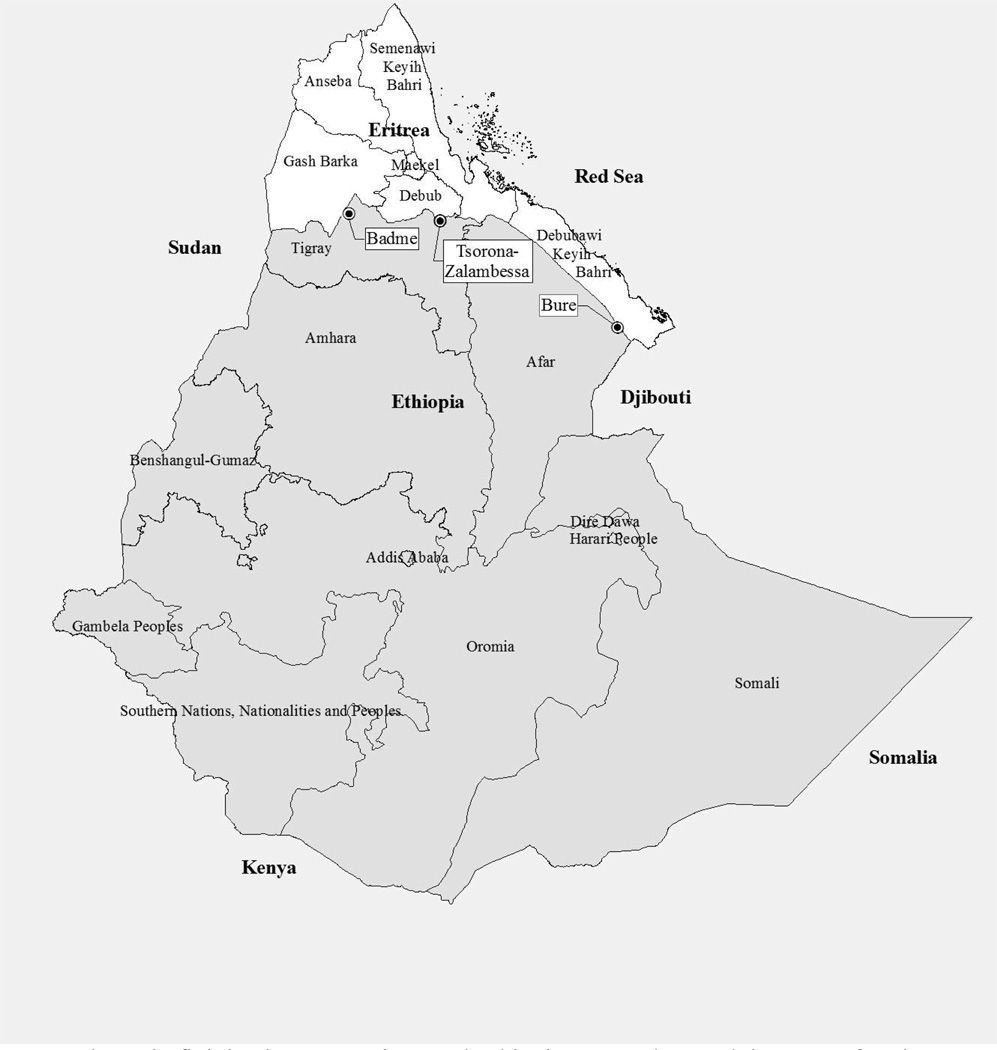
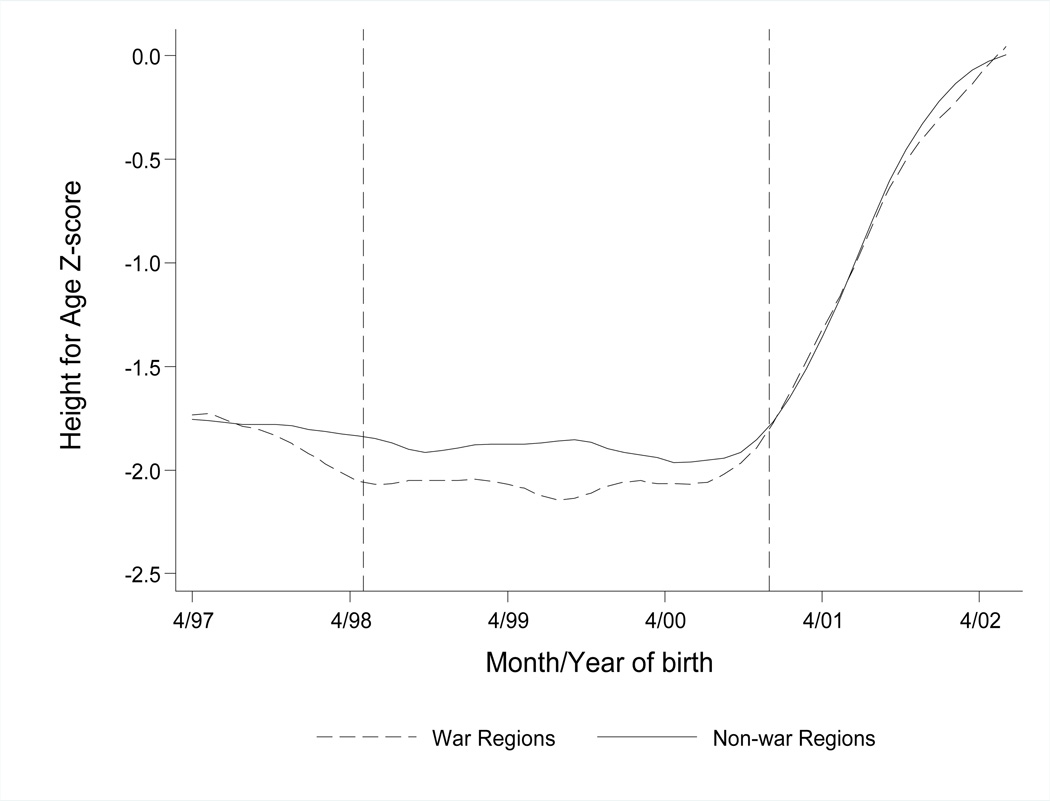
Conflict between and within countries can have lasting health and economic consequences, but identifying such effects can be empirically challenging. This paper uses household survey data from Eritrea to estimate the effect of exposure to the 1998-2000 Eritrea-Ethiopia war on children's health. The identification strategy exploits exogenous variation in the conflict's geographic extent and timing and the exposure of different birth cohorts to the fighting. The unique survey data include details on each household's migration history, which allows us to measure a child's geographic location during the war and without which war exposure would be incorrectly classified. War-exposed children have lower height-for-age Z-scores, with similar effects for children born before or during the war. Both boys and girls who are born during the war experience negative impacts due to conflict. Effects are robust to including region-specific time trends, alternative conflict exposure measures, and mother fixed effects.
Figures
References
-
- Akbulut-Yuksel Mevlude. Children of War: The Long-Run Effects of Large-Scale Physical Destruction and Warfare on Children. IZA Discussion Paper 4407. 2009
-
- Akresh Richard, de Walque Damien. Armed Conflict and Schooling: Evidence from the 1994 Rwandan Genocide. IZA Discussion Paper 3516. 2008
-
- Akresh Richard, Verwimp Philip, Bundervoet Tom. Civil War, Crop Failure, and Child Stunting in Rwanda. Economic Development and Cultural Change. 2011;59(4):777–810.
-
- Akresh Richard, Bhalotra Sonia, Leone Marinella, Osili Una. War and Stature: Growing Up During the Nigerian Civil War. American Economic Review, Papers and Proceedings. 2012;102(3) forthcoming.
-
- Alderman Harold, Hoddinott John, Kinsey Bill. Long Term Consequences of Early Childhood Malnutrition. Oxford Economic Papers. 2006;58(3):450–474.
Grants and funding
LinkOut - more resources
Full Text Sources