Comparative Study
. 2012 Nov;9(3):249-60.
doi: 10.1016/j.scr.2012.08.001. Epub 2012 Aug 19.

Comparative testing of various pancreatic cancer stem cells results in a novel class of pancreatic-cancer-initiating cells

Affiliations
Comparative Study

Comparative testing of various pancreatic cancer stem cells results in a novel class of pancreatic-cancer-initiating cells

Kshama R Jaiswal et al. Stem Cell Res. 2012 Nov.

Abstract

No systemic therapy is effective against pancreatic cancer (PC). Pancreatic cancer stem cells (PCSC) are hypothesized to account for therapeutic resistance. Several PCSC subpopulations were reported, each characterized by different markers. To be able to target PCSC, we sought to better define this putative heterogeneity. Therefore, we tested most of the known putative PCSC markers in established and fresh tumor cell lines. CD20, CD24, CD44, CD133, CD184 (CXCR4), CD326 (EpCam, ESA), Sox-2, OCT 3/4, and the side-population (SP) were tested in five PC cell lines, and the effects of confluency, hypoxia, radiation, and gemcitabine on the SP. The testing phase suggested several putative PCSC populations that were further tested and validated for their tumor-initiating capacity against known PCSC in 3 established and 1 fresh PC cell lines. Cell surface and intracellular markers showed significant variability among cell lines. SP was the only common marker in all cell lines and consistently less than 1%. SP response to confluence, hypoxia, radiation, and gemcitabine was inconsistent between cell lines. The initial testing phase suggested that SP/CD44-CD24-CD326+ cells might be a novel PCSC subpopulation. Tumor initiation capacity tests in nude mice confirmed their increased tumorigenicity over previously reported PCSC. Our data better define the heterogeneity of reported PCSC in cell lines tested in this study. We propose that prior to targeting PC via PCSC, one will need to gain more insight into this heterogeneity. Finally, we show that SP/CD44-CD24-CD326+ cells are a novel subpopulation of pancreatic cancer tumor initiating cells. Further mechanistic studies may lead to better targeting of PC via targeting this novel PCSC.


Conflict of interest statement

Author Disclosure Statement

The authors indicate no potential conflicts of interest.

Figures
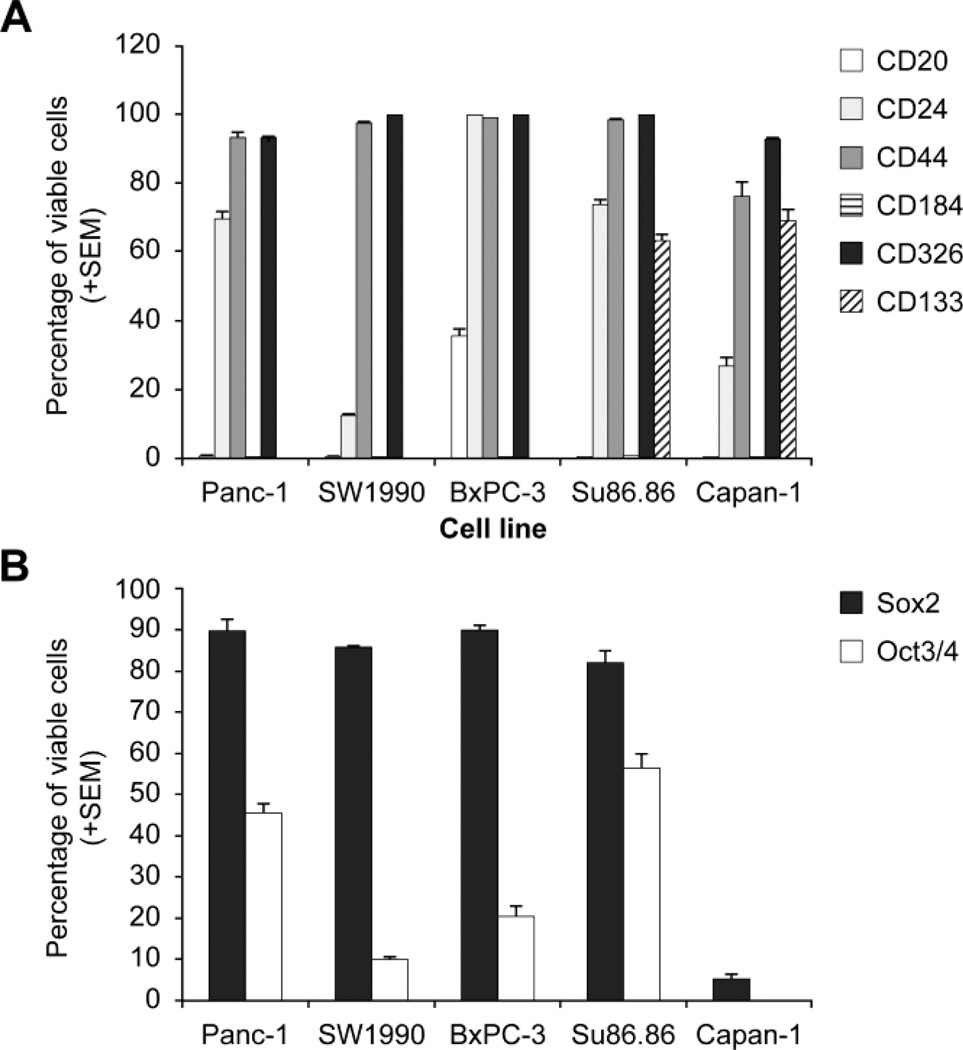
Figure 1
Figure 1
Cancer Stem Cells Markers Expression. Comparative expression of extracellular (A) and intracellular (B) cancer stem cells markers in 5 pancreatic cancer cell lines.
Figure 2
Figure 2
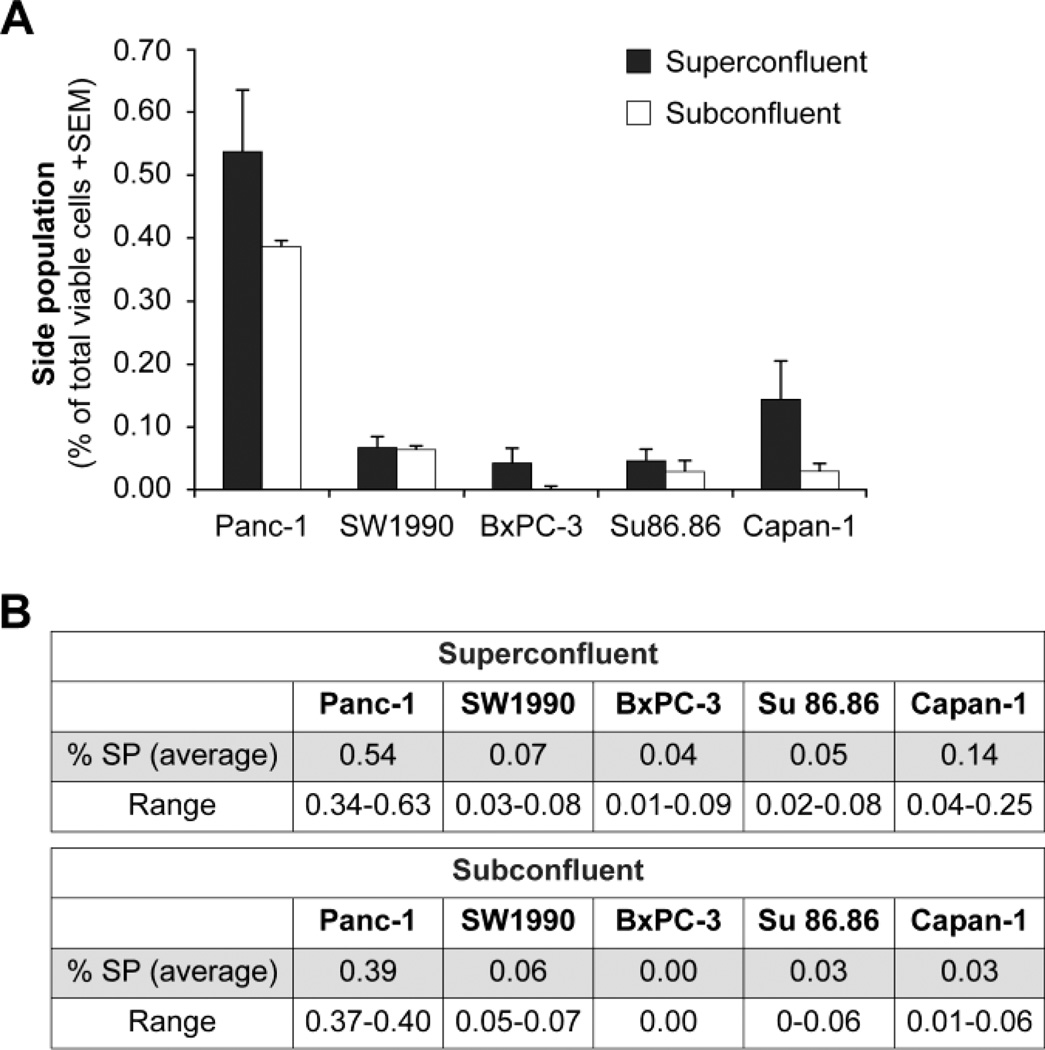
Side Population. The side population is rare and exists in all pancreatic cancer cell lines tested. Comparisons between cells grown under super-confluent and sub-confluent conditions show no statistical difference in the side population for any of the cell lines, with p > 0.05 in all cases and using a 2-sided t-test.
Figure 3
Figure 3
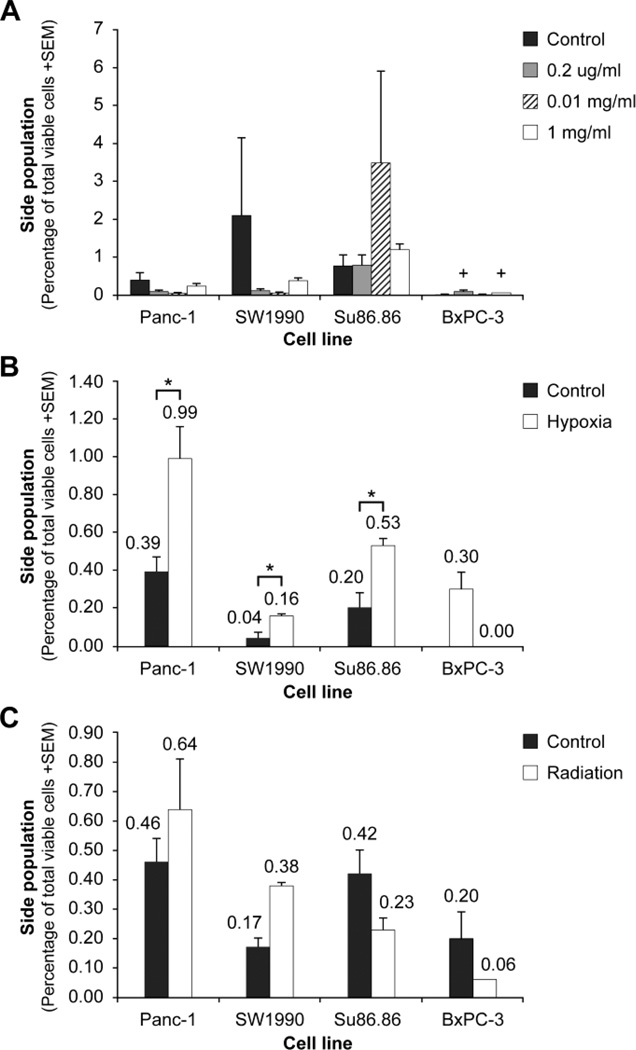
Side population response to chemotherapy, hypoxia, and radiation. (A) Cells were exposed to clinically relevant increasing doses of gemcitabine: 0.2µg/ml; 0.01mg/ml; and 1mg/ml. There is no statistical significance in the relative proportion of the SP in 4 of 5 cell lines tested. Only in BxPC-3 does there appear to be a statistical trend (+, 0.01 < p < 0.05, adjusted to multiple comparisons) where 0.01mg/ml and 1mg/ml may increase the relative proportion of the side population relative to control cell. (Significance evaluated by Dunnett’s test, n = 3). (B) Cells exposed to 1% oxygen were compared with cells under normal culture conditions in terms of side population. There is a statistically significant increase in side population under hypoxic conditions in panc-1 and Su86.86 cells. (*, p = 0.009 and p = 0.004, respectively). In SW1990 cells, there is a statistical trend (+, p = 0.015) toward increased side population with hypoxic exposure (adjusted to multiple comparisons). Significance was evaluated by a 2-sample t-test. (C) Cells exposed to 4 Gy radiation were compared with cells under normal culture conditions. Although in 2 of 4 cell lines tested the SP increased after radiation, there is no statistically significant difference between radiated cells and control cells. Significance was evaluated by a 2- sample t-test. Results are an average of 3 repetitions.
Figure 4
Figure 4
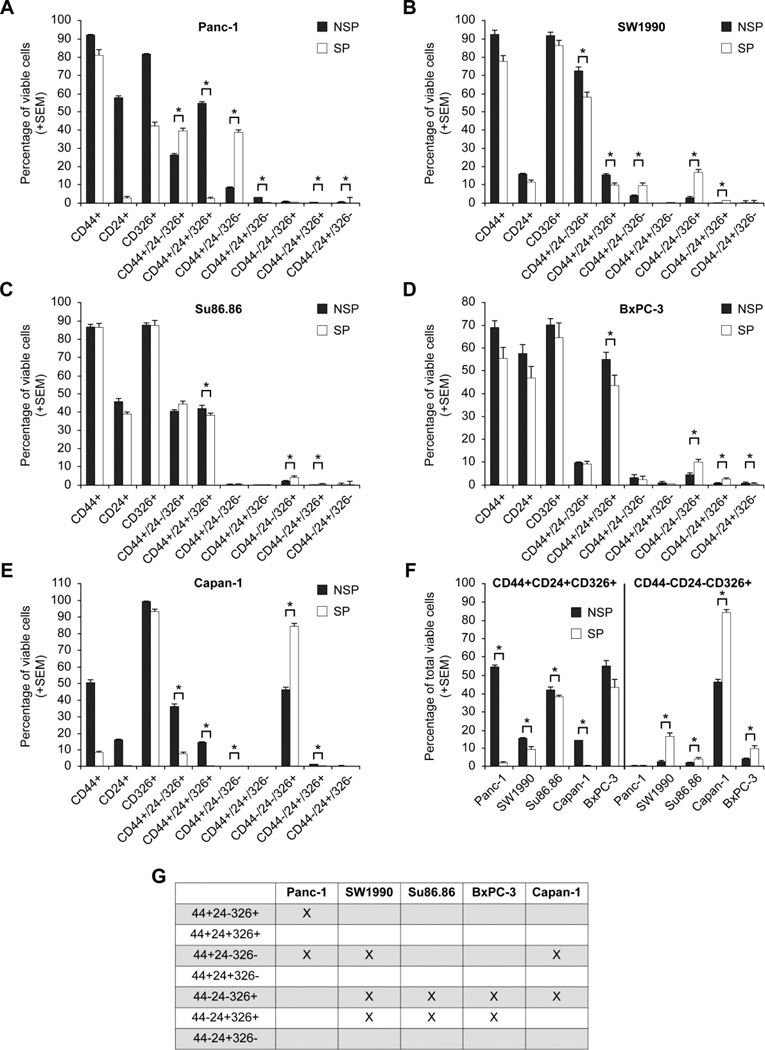
Pancreatic cancer stem cells surface markers expression in the side population (SP) versus the non-side population (NSP). CD44, CD24, CD326 positive and negative combinations are shown within the non-side population (NSP) and side population (SP) in various cell lines. Here we show that various combinations are statistically significantly different from each other (*, p < 0.01) in different cell lines (A–E). Comparing the previously described CD44+CD24+CD326+ cells with CD44-CD24-CD326+ cells shows that the latter is present in relatively higher amounts in the SP than in the NSP in 4 of 5 cell lines (F). The triple positive cells are lower in the SP than NSP in all cell lines. Cell surface marker combinations that are statistically higher in the SP than in the NSP are shown: CD44+/CD24−/CD 326+ is only significant in panc-1 cells; CD 44+CD24-CD326- and CD44-CD24+CD326+ are significant in 3 of 5 cell lines. CD 44-CD24-CD326+ is significant in 4 out of 5 cell lines(G).
Figure 5
Figure 5
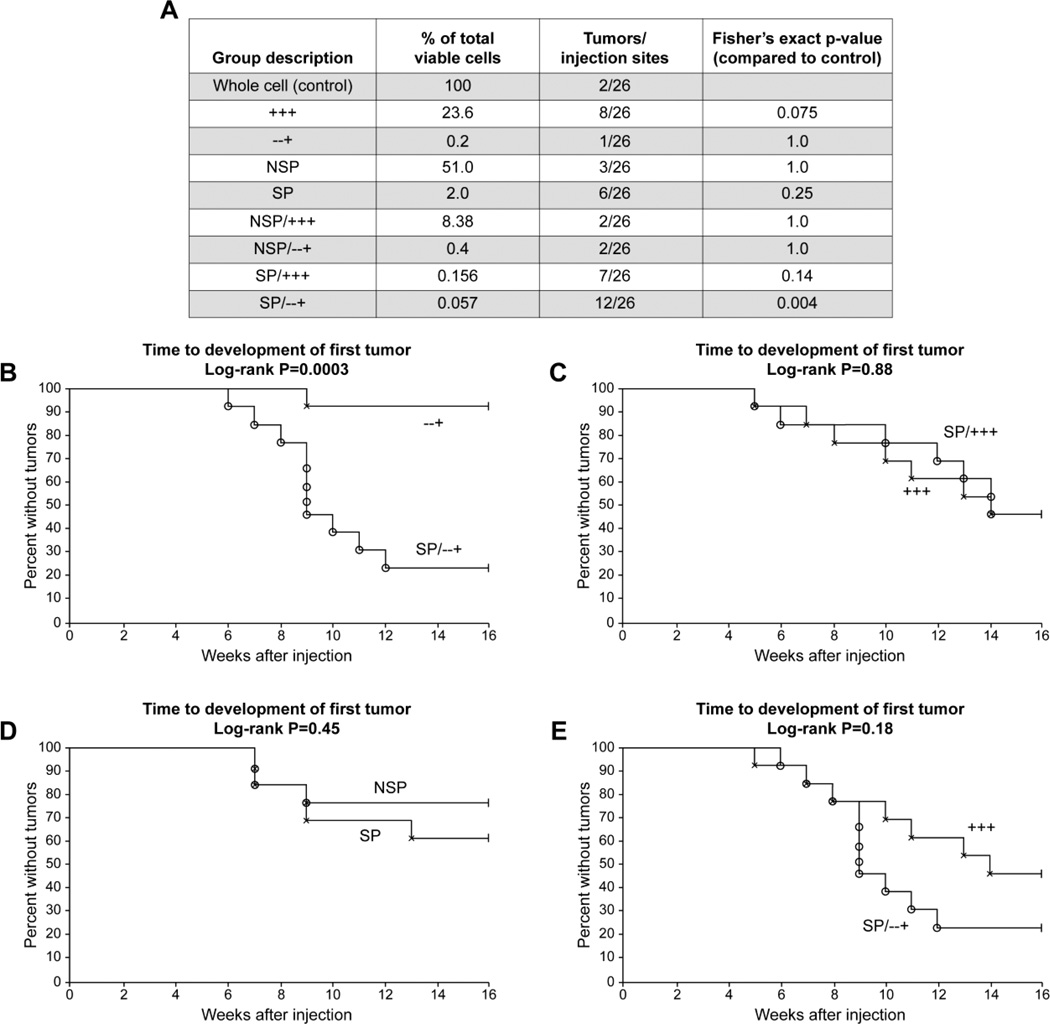
Tumor-initiating capacity testing experiment. Nine different subpopulation of cells derived from SW1990 cells were xenotrasplanted. Each group was compared to a whole cell control with p-values listed. The side population CD44- CD 24-CD326+ (SP/−−+) is the only group that is statistically significantly more tumorigenic than controls (A). Further testing was done using Kaplan-Meier analysis to test whether the time to development of first tumor was different between the various groups (B–E). In comparing the following couplets: SP/−−+ vs −−+; SP vs. NSP (p = 0.45); SP/+++ vs. +++ (p = 0.88); and SP/−−+ vs. +++ (p = 0.18), only SP/−−+ vs. −−+ showed a statistically significant difference (p = 0.0003) (B).
Figure 6
Figure 6
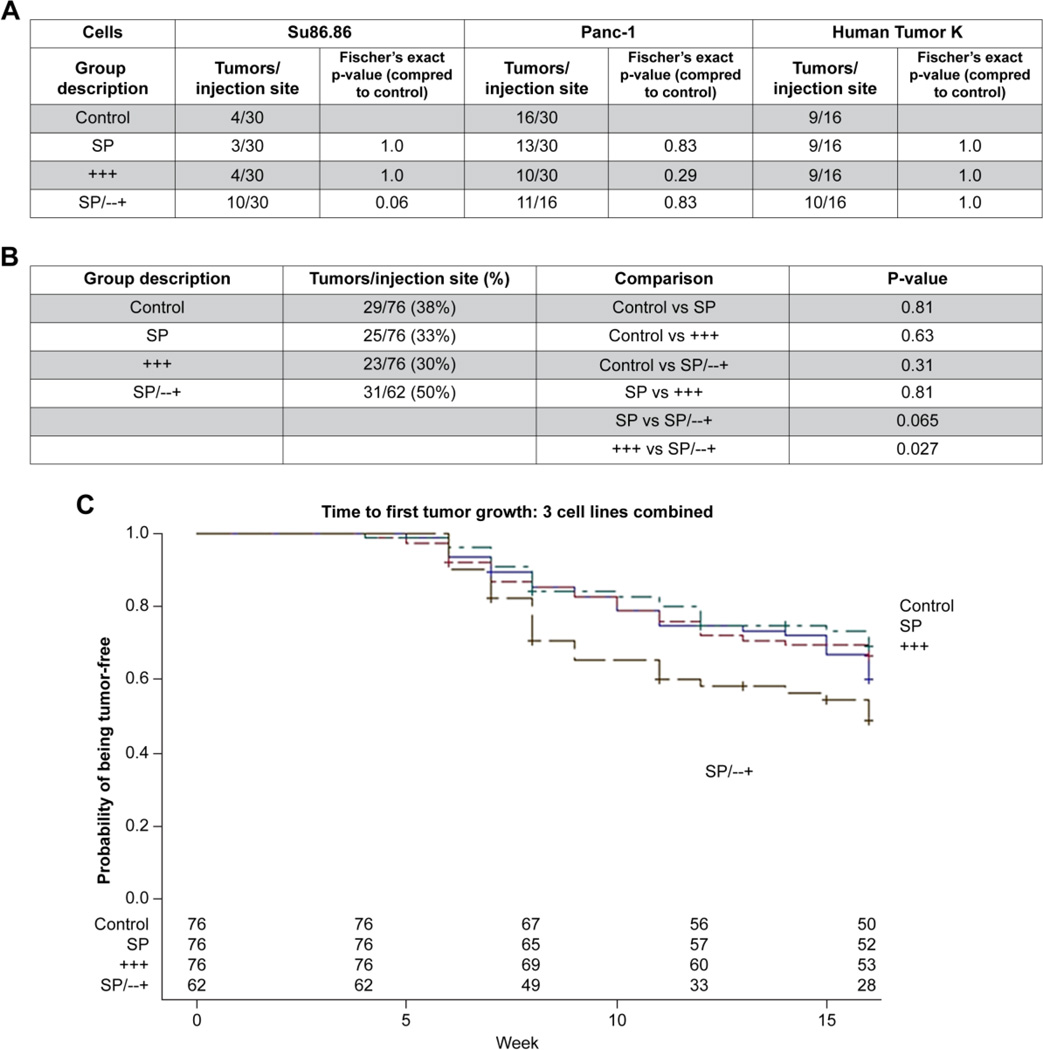
Tumor-initiating capacity validating experiemnt. Xenotransplantation using 100 cells in Su86.86, Panc-1, and Human tumor K. Table A shows the number of tumors that grew per total number of sites injected. Each group was compared to the whole cell control with p-values listed. Table B shows combined analysis pooling numbers of tumors from all 3 cell lines and the comparisons between groups. Graph C shows the time to the development of a tumor combining all 3 cell lines together. SP/CD44-CD 24-CD326+ developed tumors more quickly than the CD44+CD24+CD326+ (p = 0.037).

References

    1. Bonnet D, Dick JE. Human acute myeloid leukemia is organized as a hierarchy that originates from a primitive hematopoietic cell. Nat Med. 1997;3:730–737. - PubMed
    1. Clarke MF, Dick JE, Dirks PB, Eaves CJ, Jamieson CH, Jones DL, Visvader J, Weissman IL, Wahl GM. Cancer stem cells--perspectives on current status and future directions: AACR Workshop on cancer stem cells. Cancer Res. 2006;66:9339–9344. - PubMed
    1. Dai L, Li C, Shedden KA, Lee CJ, Quoc H, Simeone DM, Lubman DM. Quantitative Proteomic Profiling Studies of Pancreatic Cancer Stem Cells. J Proteome Res. 2010 - PMC - PubMed
    1. Das B, Tsuchida R, Malkin D, Koren G, Baruchel S, Yeger H. Hypoxia enhances tumor stemness by increasing the invasive and tumorigenic side population fraction. Stem Cells. 2008;26:1818–1830. - PubMed
    1. Goodell MA, Brose K, Paradis G, Conner AS, Mulligan RC. Isolation and functional properties of murine hematopoietic stem cells that are replicating in vivo. The Journal of experimental medicine. 1996;183:1797–1806. - PMC - PubMed

Publication types