


Impact of a reduced red and processed meat dietary pattern on disease risks and greenhouse gas emissions in the UK: a modelling study
- PMID: 22964113
- PMCID: PMC3467613
- DOI: 10.1136/bmjopen-2012-001072
Impact of a reduced red and processed meat dietary pattern on disease risks and greenhouse gas emissions in the UK: a modelling study
Abstract
Objectives: Consumption of red and processed meat (RPM) is a leading contributor to greenhouse gas (GHG) emissions, and high intakes of these foods increase the risks of several leading chronic diseases. The aim of this study was to use newly derived estimates of habitual meat intakes in UK adults to assess potential co-benefits to health and the environment from reduced RPM consumption.
Design: Modelling study using dietary intake data from the National Diet and Nutrition Survey of British Adults.
Setting: British general population.
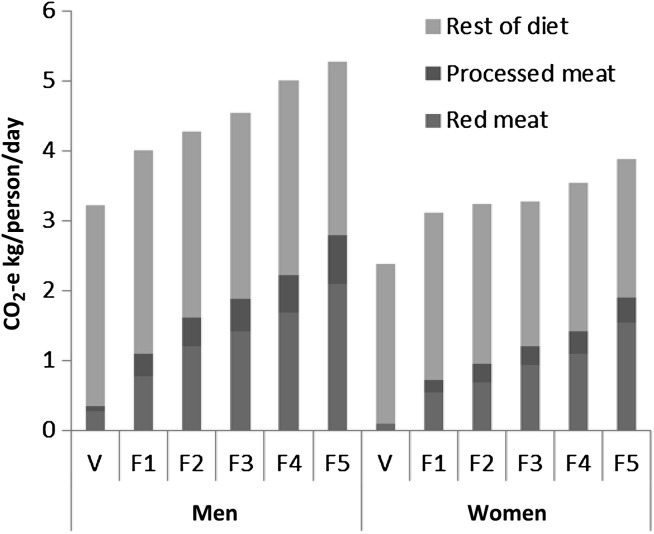
Methods: Respondents were divided into fifths by energy-adjusted RPM intakes, with vegetarians constituting a sixth stratum. GHG emitted in supplying the diets of each stratum was estimated using data from life-cycle analyses. A feasible counterfactual UK population was specified, in which the proportion of vegetarians measured in the survey population doubled, and the remainder adopted the dietary pattern of the lowest fifth of RPM consumers.
Outcome measures: Reductions in risks of coronary heart disease, diabetes and colorectal cancer, and GHG emissions, under the counterfactual.
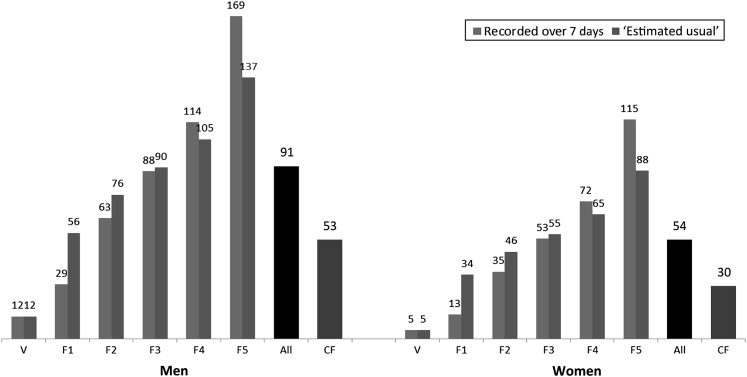
Results: Habitual RPM intakes were 2.5 times higher in the top compared with the bottom fifth of consumers. Under the counterfactual, statistically significant reductions in population aggregate risks ranged from 3.2% (95% CI 1.9 to 4.7) for diabetes in women to 12.2% (6.4 to 18.0) for colorectal cancer in men, with those moving from the highest to lowest consumption levels gaining about twice these averages. The expected reduction in GHG emissions was 0.45 tonnes CO(2) equivalent/person/year, about 3% of the current total, giving a reduction across the UK population of 27.8 million tonnes/year.
Conclusions: Reduced consumption of RPM would bring multiple benefits to health and environment.
Conflict of interest statement
Figures
References
-
- Costello A, Abbas M, Allen A, et al. Managing the health effects of climate change: Lancet and University College London Institute for Global Health Commission. Lancet 2009;373:1693–733 - PubMed
-
- Garnett T. Cooking Up a Storm: Food, Greenhouse Gas Emissions and Our Changing Climate. Guildford: Food Climate Research Network, 2008
-
- Audsley E, Brander M, Chatterton J, et al. How Low Can We Go? An Assessment of Greenhouse Gas Emissions from the UK Food System and the Scope for Reduction by 2050. Godalming: WWF-UK, 2010
-
- Food and Agriculture Organisation Livestock's Long Shadow: Environmental Issues and Options. Rome: FAO, 2006
-
- McMichael AJ, Powles JW, Butler CD, et al. Energy and health 5-Food, livestock production, energy, climate change, and health. Lancet 2007;370:1253–63 - PubMed
LinkOut - more resources
Full Text Sources
