


Predicting the diagnosis of autism spectrum disorder using gene pathway analysis
- PMID: 22965006
- PMCID: PMC3966080
- DOI: 10.1038/mp.2012.126
Predicting the diagnosis of autism spectrum disorder using gene pathway analysis
Abstract
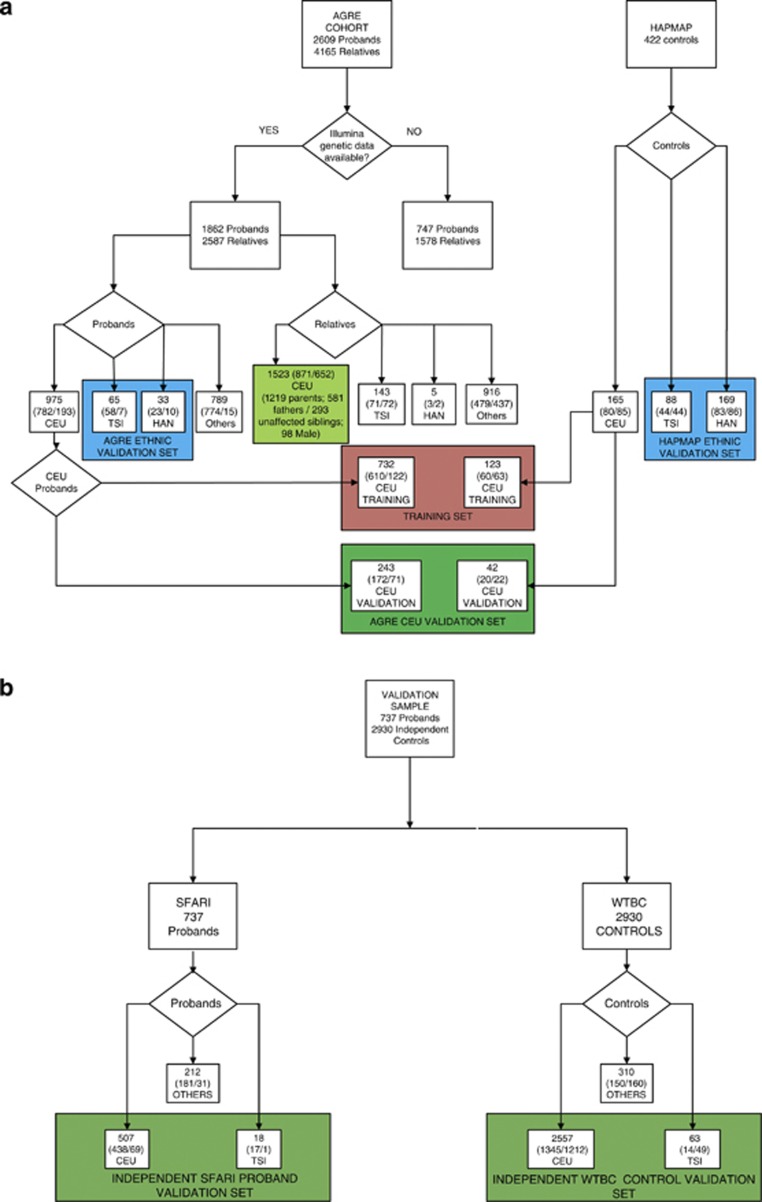
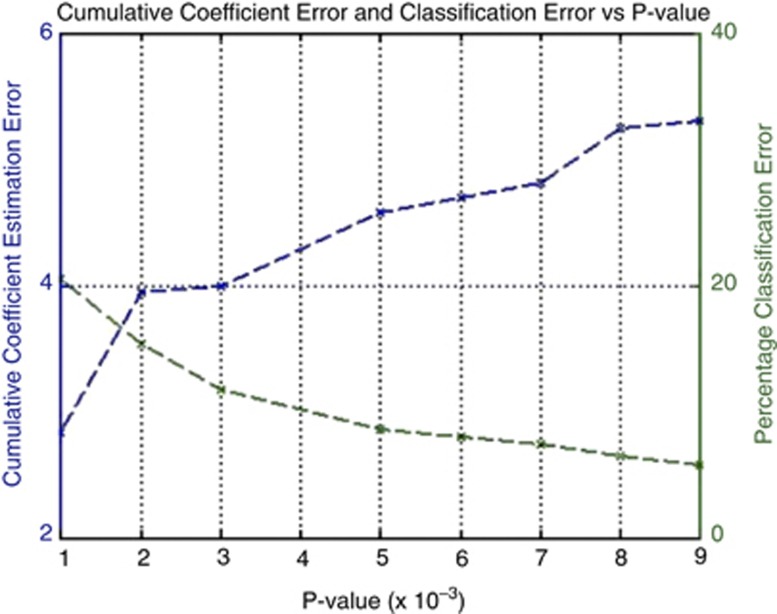
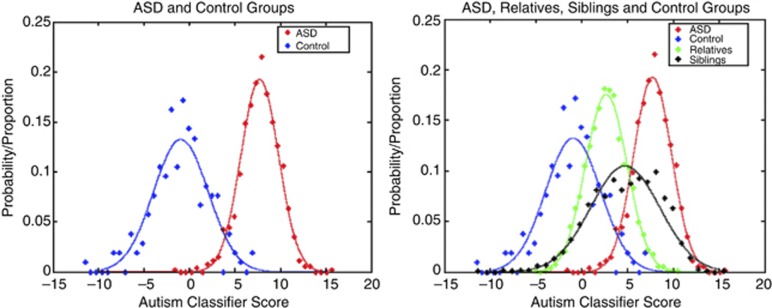
Autism spectrum disorder (ASD) depends on a clinical interview with no biomarkers to aid diagnosis. The current investigation interrogated single-nucleotide polymorphisms (SNPs) of individuals with ASD from the Autism Genetic Resource Exchange (AGRE) database. SNPs were mapped to Kyoto Encyclopedia of Genes and Genomes (KEGG)-derived pathways to identify affected cellular processes and develop a diagnostic test. This test was then applied to two independent samples from the Simons Foundation Autism Research Initiative (SFARI) and Wellcome Trust 1958 normal birth cohort (WTBC) for validation. Using AGRE SNP data from a Central European (CEU) cohort, we created a genetic diagnostic classifier consisting of 237 SNPs in 146 genes that correctly predicted ASD diagnosis in 85.6% of CEU cases. This classifier also predicted 84.3% of cases in an ethnically related Tuscan cohort; however, prediction was less accurate (56.4%) in a genetically dissimilar Han Chinese cohort (HAN). Eight SNPs in three genes (KCNMB4, GNAO1, GRM5) had the largest effect in the classifier with some acting as vulnerability SNPs, whereas others were protective. Prediction accuracy diminished as the number of SNPs analyzed in the model was decreased. Our diagnostic classifier correctly predicted ASD diagnosis with an accuracy of 71.7% in CEU individuals from the SFARI (ASD) and WTBC (controls) validation data sets. In conclusion, we have developed an accurate diagnostic test for a genetically homogeneous group to aid in early detection of ASD. While SNPs differ across ethnic groups, our pathway approach identified cellular processes common to ASD across ethnicities. Our results have wide implications for detection, intervention and prevention of ASD.
Figures
Comment in
-
Population structure confounds autism genetic classifier.Mol Psychiatry. 2014 Apr;19(4):405-7. doi: 10.1038/mp.2013.34. Epub 2013 Apr 2. Mol Psychiatry. 2014. PMID: 23546168 Free PMC article. No abstract available.
-
Response to 'Predicting the diagnosis of autism spectrum disorder using gene pathway analysis'.Mol Psychiatry. 2014 Aug;19(8):859-61. doi: 10.1038/mp.2013.125. Epub 2013 Oct 22. Mol Psychiatry. 2014. PMID: 24145379 Free PMC article. No abstract available.
-
Response to Belgard et al.Mol Psychiatry. 2014 Apr;19(4):407-9. doi: 10.1038/mp.2013.186. Epub 2014 Jan 14. Mol Psychiatry. 2014. PMID: 24419040 Free PMC article. No abstract available.
-
Response to Robinson et al.Mol Psychiatry. 2015 Jul;20(7):794. doi: 10.1038/mp.2015.15. Epub 2015 Mar 10. Mol Psychiatry. 2015. PMID: 25754086 No abstract available.
References
-
- Autism and Developmental Disabilities Monitoring Network Surveillance Year 2002 Principal Investigators. Prevalence of autism spectrum disorders—autism and developmental disabilities monitoring network, 14 sites, United States, 2002. MMWR Surveill Summ. 2007;56:12–28. - PubMed
-
- Association AP.Diagnostic and Statistical Manual of Mental DisordersRevised 4th edn. Washington, DC; 2000
-
- Bailey A, Le Couteur A, Gottesman I, Bolton P, Simonoff E, Yuzda E, et al. Autism as a strongly genetic disorder: evidence from a British twin study. Psychol Med. 1995;25:63–77. - PubMed
Publication types
MeSH terms
Substances
Grants and funding
LinkOut - more resources
Full Text Sources
Other Literature Sources
