


Increased memory differentiation is associated with decreased polyfunctionality for HIV but not for cytomegalovirus-specific CD8+ T cells
- PMID: 22966086
- PMCID: PMC3466366
- DOI: 10.4049/jimmunol.1201488
Increased memory differentiation is associated with decreased polyfunctionality for HIV but not for cytomegalovirus-specific CD8+ T cells
Abstract
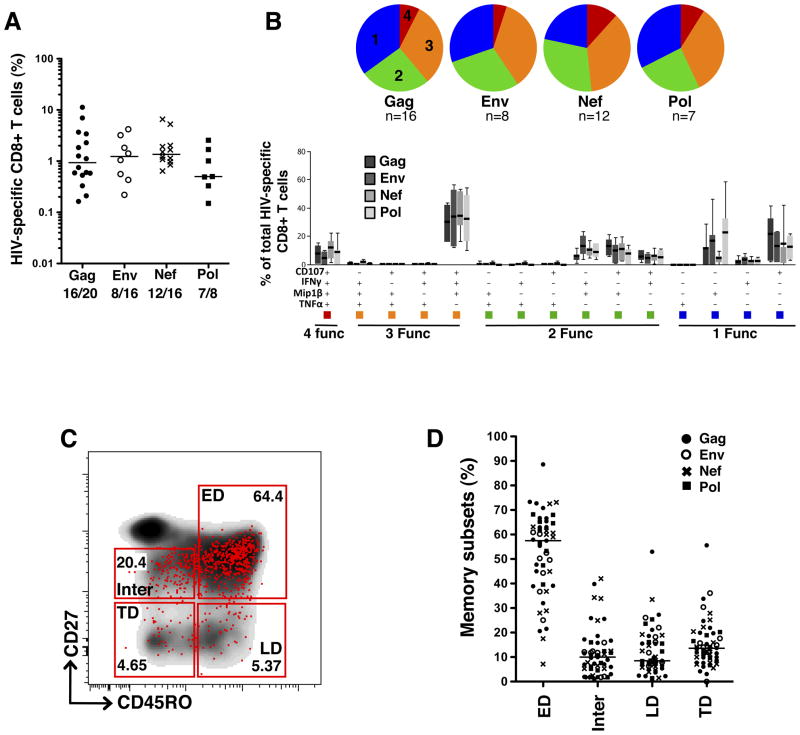
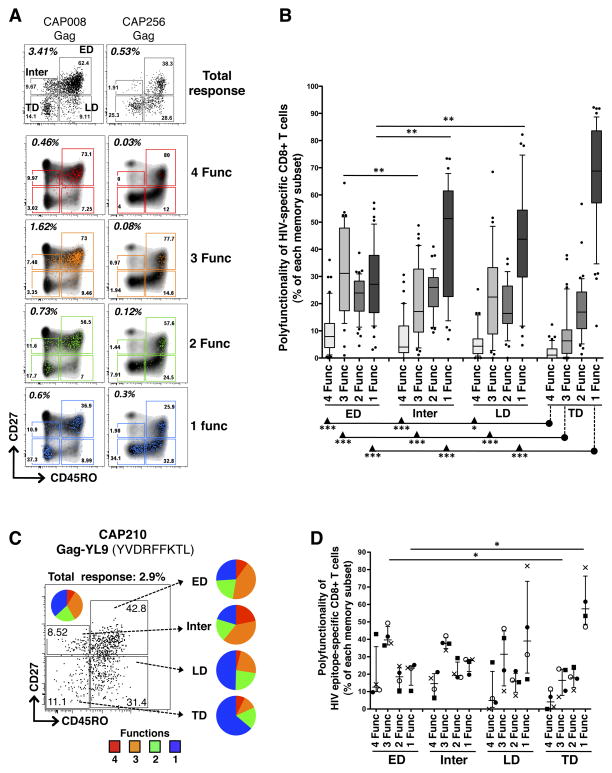
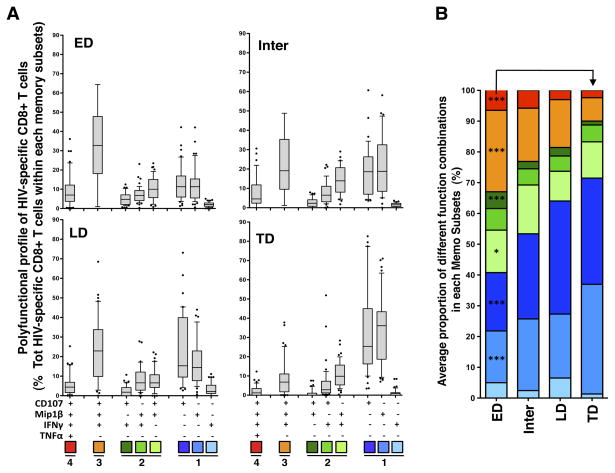
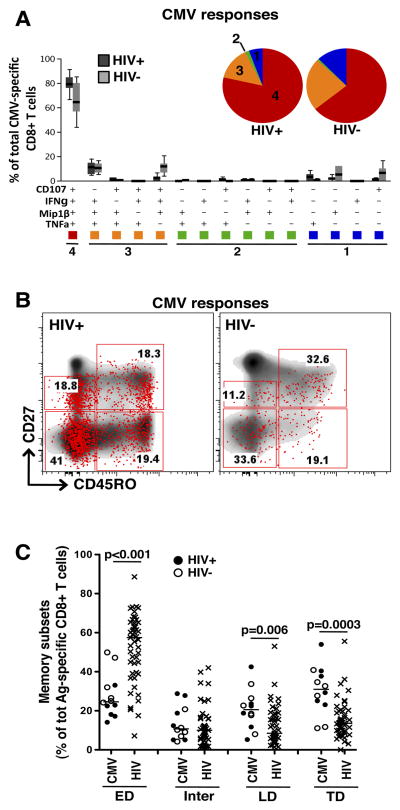
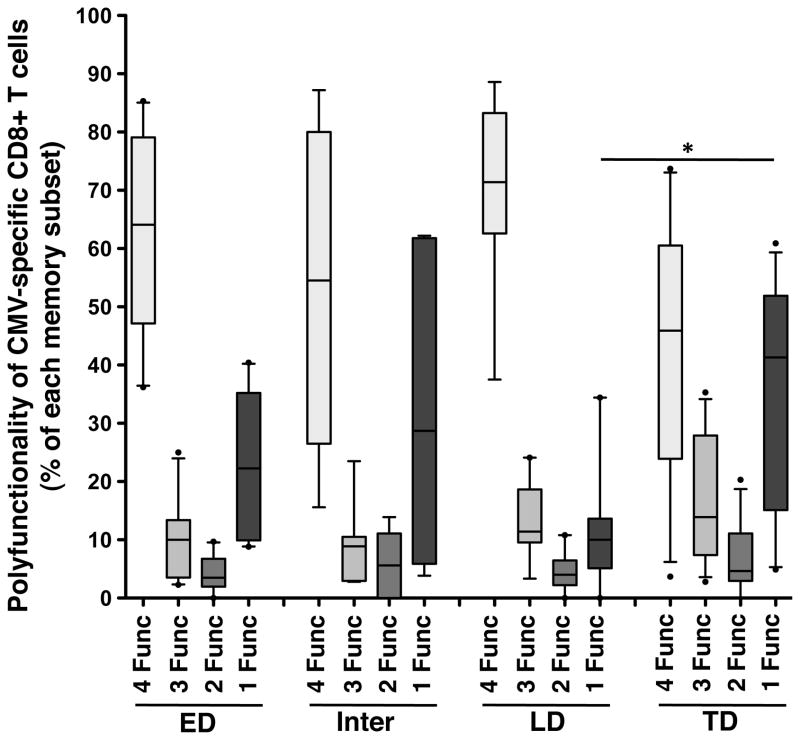
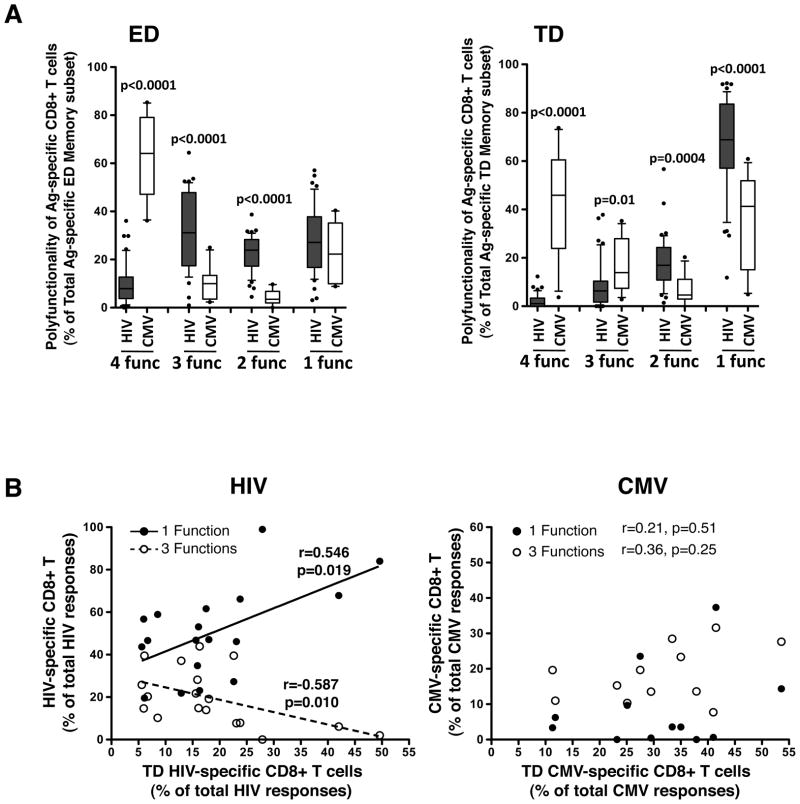
The generation of polyfunctional CD8(+) T cells, in response to vaccination or natural infection, has been associated with improved protective immunity. However, it is unclear whether the maintenance of polyfunctionality is related to particular cellular phenotypic characteristics. To determine whether the cytokine expression profile is linked to the memory differentiation stage, we analyzed the degree of polyfunctionality of HIV-specific CD8(+) T cells within different memory subpopulations in 20 antiretroviral therapy-naive HIV-1-infected individuals at ∼34 wk postinfection. These profiles were compared with CMV-specific CD8(+) T cell responses in HIV-uninfected control subjects and in individuals chronically infected with HIV. Our results showed that the polyfunctional abilities of HIV-specific CD8(+) T cells differed according to their memory phenotype. Early-differentiated cells (CD45RO(+)CD27(+)) exhibited a higher proportion of cells positive for three or four functions (p < 0.001), and a lower proportion of monofunctional cells (p < 0.001) compared with terminally differentiated (TD; CD45RO(-)CD27(-)) HIV-specific CD8(+) T cells. The majority of TD HIV-specific CD8(+) T cells were monofunctional (median 69% [interquartile range: 57-83]), producing predominantly CD107a or MIP1β. Moreover, proportions of HIV-specific monofunctional CD8(+) T cells positively associated with proportions of TD HIV-specific CD8(+) T cells (p = 0.019, r = 0.54). In contrast, CMV-specific CD8(+) T cell polyfunctional capacities were similar across all memory subpopulations, with terminally and early-differentiated cells endowed with comparable polyfunctionality. Overall, these data show that the polyfunctional abilities of HIV-specific CD8(+) T cells are influenced by the stage of memory differentiation, which is not the case for CMV-specific responses.
Conflict of interest statement
Disclosure: The authors have no conflict of interest
Figures
References
-
- Schmitz JE, Kuroda MJ, Santra S, Sasseville VG, Simon MA, Lifton MA, Racz P, Tenner-Racz K, Dalesandro M, Scallon BJ, Ghrayeb J, Forman MA, Montefiori DC, Rieber EP, Letvin NL, Reimann KA. Control of viremia in simian immunodeficiency virus infection by CD8+ lymphocytes. Science (New York, NY. 1999;283:857–860. - PubMed
-
- Betts MR, Ambrozak DR, Douek DC, Bonhoeffer S, Brenchley JM, Casazza JP, Koup RA, Picker LJ. Analysis of total human immunodeficiency virus (HIV)-specific CD4(+) and CD8(+) T-cell responses: relationship to viral load in untreated HIV infection. Journal of virology. 2001;75:11983–11991. - PMC - PubMed
-
- Addo MM, Yu XG, Rathod A, Cohen D, Eldridge RL, Strick D, Johnston MN, Corcoran C, Wurcel AG, Fitzpatrick CA, Feeney ME, Rodriguez WR, Basgoz N, Draenert R, Stone DR, Brander C, Goulder PJ, Rosenberg ES, Altfeld M, Walker BD. Comprehensive epitope analysis of human immunodeficiency virus type 1 (HIV-1)-specific T-cell responses directed against the entire expressed HIV-1 genome demonstrate broadly directed responses, but no correlation to viral load. Journal of virology. 2003;77:2081–2092. - PMC - PubMed
Publication types
MeSH terms
Substances
Grants and funding
LinkOut - more resources
Full Text Sources
Research Materials
