


Mutations associated with occult hepatitis B virus infection result in decreased surface antigen expression in vitro
- PMID: 22967103
- PMCID: PMC3442934
- DOI: 10.1111/j.1365-2893.2012.01595.x
Mutations associated with occult hepatitis B virus infection result in decreased surface antigen expression in vitro
Abstract
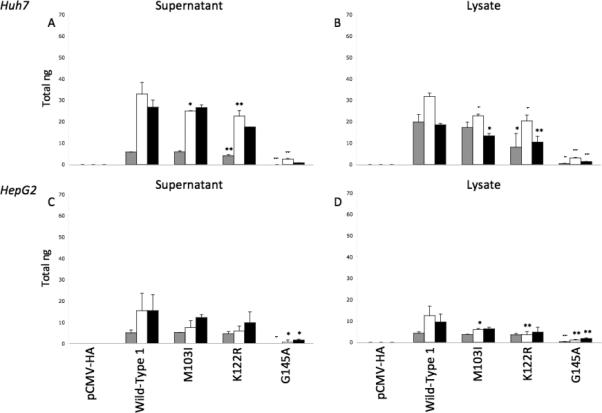
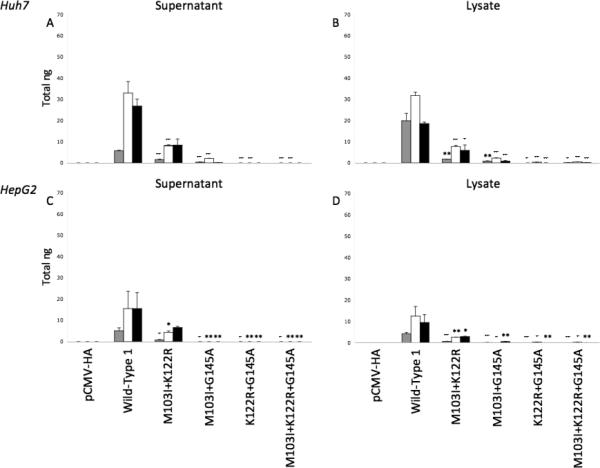
Occult hepatitis B virus (HBV) infection is characterized by the absence of detectable hepatitis B surface antigen (HBsAg) in the serum, despite detectable HBV DNA. Investigations of the mechanisms underlying the development of occult HBV infection are lacking in the current literature, although viral mutations in the surface region, resulting in decreased HBsAg expression or secretion, represent one potential mechanism. Wild-type HBsAg expression vectors were constructed from genotype-matched chronic HBV sequences. Site-directed mutagenesis was then utilized to introduce three genotype A mutations - M103I, K122R and G145A - associated with occult HBV infection in vivo, alone and in combination, into the wild-type HBsAg vectors. Transfection of Huh7 and HepG2 cell lines was performed, and cell culture supernatants and cell lysates were collected over 7 days to assess the effects of these mutations on extracellular and intracellular HBsAg levels. The G145A mutation resulted in significantly decreased extracellular and intracellular HBsAg expression in vitro. The most pronounced reduction in HBsAg expression was observed when all three mutations were present. The mutations evaluated in vitro in the current study resulted in decreased HBsAg expression and potentially increased hepatic retention and/or decreased hepatic secretion of synthesized HBsAg, which could explain the lack of HBsAg detection that is characteristic of occult HBV infection in vivo.
© 2012 Blackwell Publishing Ltd.
Figures
References
-
- Lavanchy D. Hepatitis B virus epidemiology, disease burden, treatment, and current and emerging prevention and control measures. Journal of Viral Hepatitis. 2004;11(2):97–107. - PubMed
-
- Lok ASF, McMahon BJ. Chronic hepatitis B. Hepatology. 2007;45(2):507–39. - PubMed
-
- Bodsworth NJ, Cooper DA, Donovan B. The influence of human immunodeficiency virus type 1 infection on the development of the hepatitis B virus carrier state. Journal of Infectious Diseases. 1991;163(5):1138–40. - PubMed
-
- Jilg W, Sieger E, Zachoval R, Schatzl H. Individuals with antibodies against hepatitis B core antigen as the only serological marker for hepatitis B infection: high percentage of carriers of hepatitis B and C virus. Journal of Hepatology. 1995;23(1):14–20. - PubMed
-
- Shire NJ, Rouster SD, Stanford SD, et al. The prevalence and significance of occult hepatitis B virus in a prospective cohort of HIV-infected patients. Journal of Acquired Immune Deficiency Syndromes. 2007;44(3):309–14. - PubMed
Publication types
MeSH terms
Substances
Grants and funding
LinkOut - more resources
Full Text Sources
Medical
