


MHC mismatch results in neural progenitor cell rejection following spinal cord transplantation in a model of viral-induced demyelination
- PMID: 22969049
- PMCID: PMC3479361
- DOI: 10.1002/stem.1234
MHC mismatch results in neural progenitor cell rejection following spinal cord transplantation in a model of viral-induced demyelination
Abstract
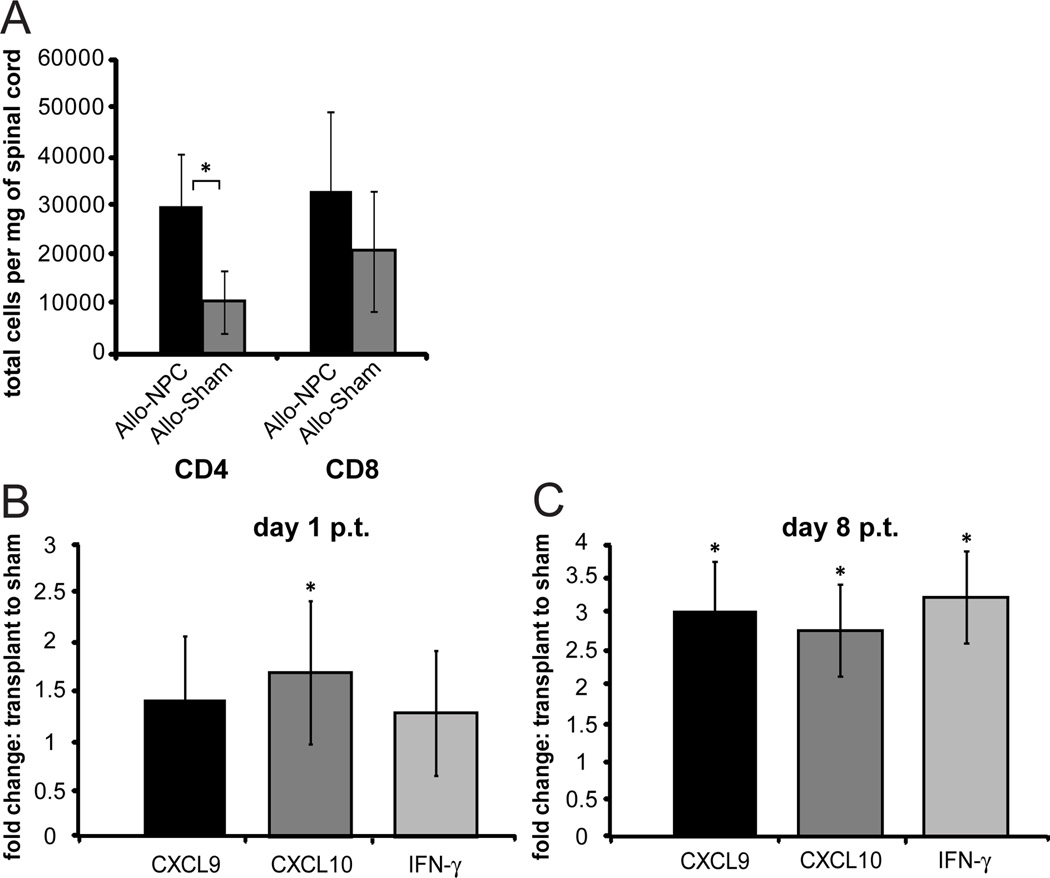
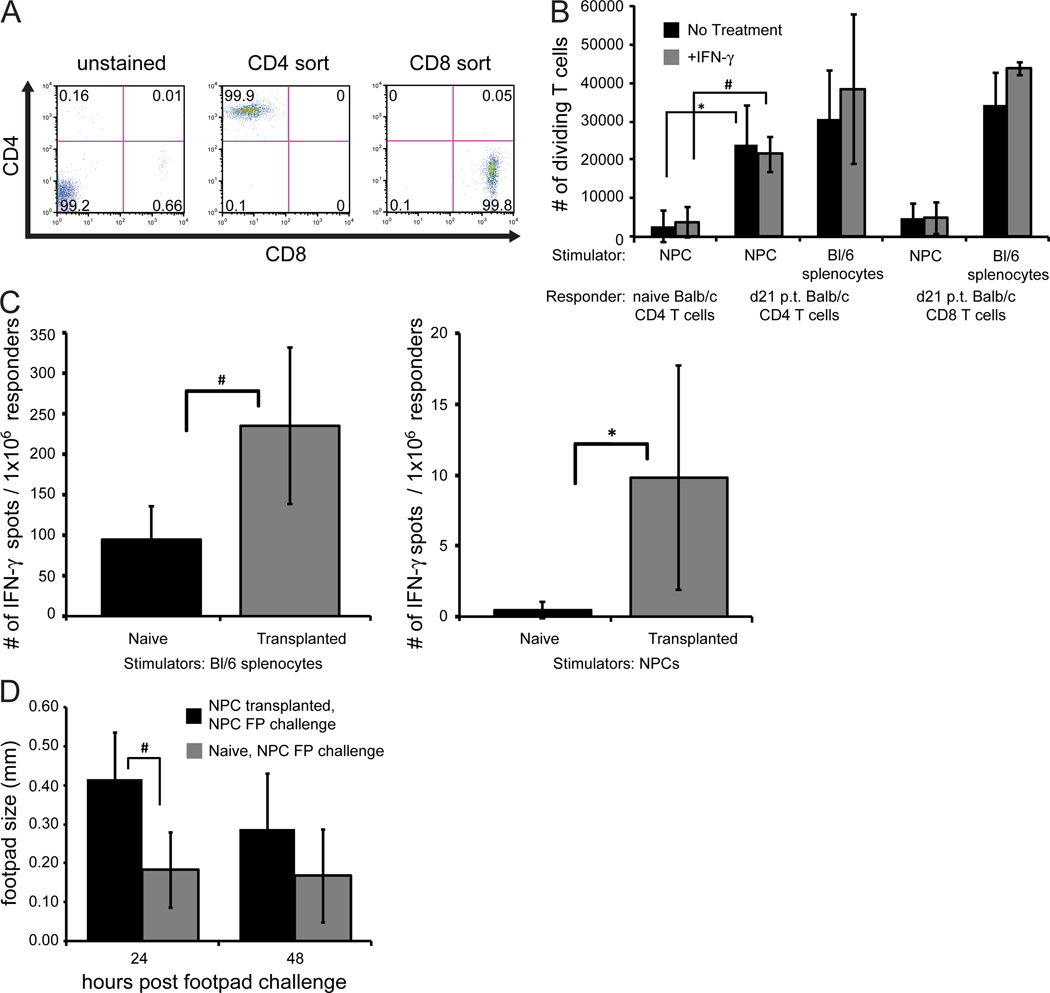
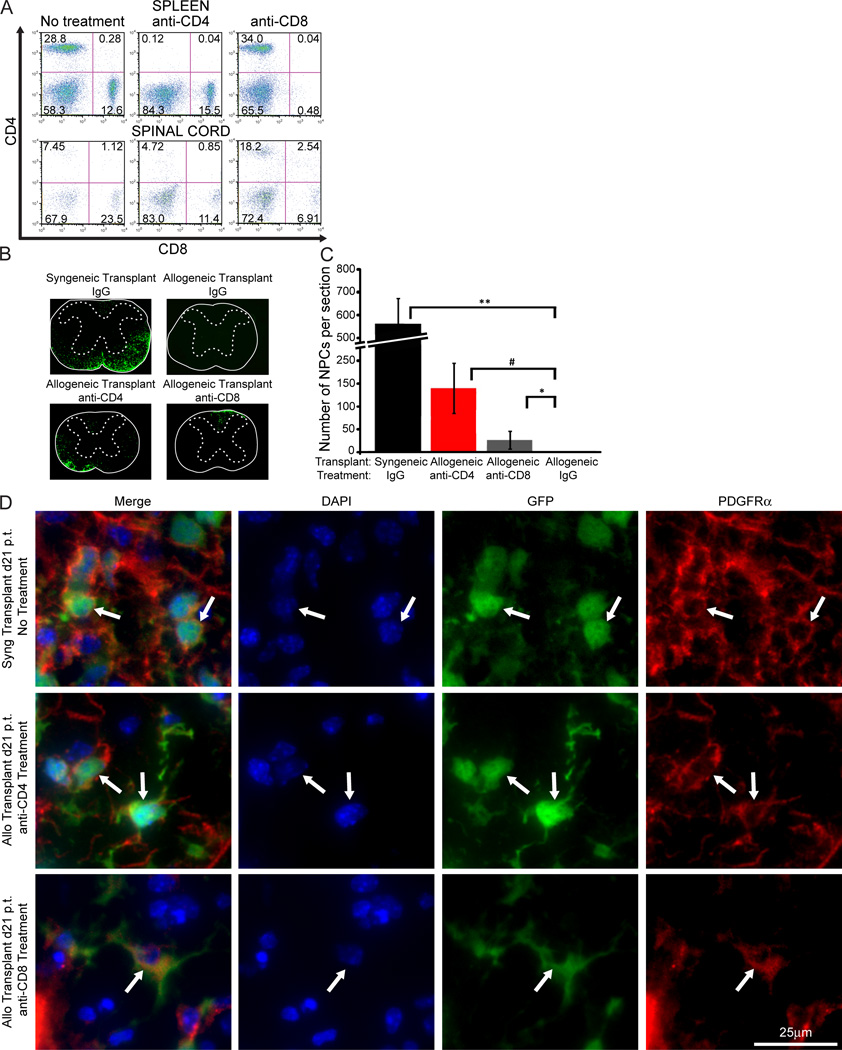
Transplantation of syngeneic neural progenitor cells (NPCs) into mice persistently infected with the JHM strain of mouse hepatitis virus (JHMV) results in enhanced differentiation into oligodendrocyte progenitor cells that is associated with remyelination, axonal sparing, and clinical improvement. Whether allogeneic NPCs are tolerated or induce immune-mediated rejection is controversial and poorly defined under neuroinflammatory demyelinating conditions. We have used the JHMV-induced demyelination model to evaluate the antigenicity of transplanted allogeneic NPCs within the central nervous system (CNS) of mice with established immune-mediated demyelination. Cultured NPCs constitutively expressed the costimulatory molecules CD80/CD86, and IFN-γ treatment induced expression of MHC class I and II antigens. Injection of allogeneic C57BL/6 NPCs (H-2b background) led to a delayed type hypersensitivity response in BALB/c (H-2d background) mice associated with T-cell proliferation and IFN-γ secretion following coculture with allogeneic NPCs. Transplantation of MHC-mismatched NPCs into JHMV-infected mice resulted in increased transcripts encoding the T-cell chemoattractant chemokines CXCL9 and CXCL10 that correlated with increased T-cell infiltration that was associated with NPC rejection. Treatment of MHC-mismatched mice with T-cell subset-specific depleting antibodies increased survival of allogeneic NPCs without affecting commitment to an oligodendrocyte lineage. Collectively, these results show that allogeneic NPCs are antigenic, and T-cells contribute to rejection following transplantation into an inflamed CNS suggesting that immunomodulatory treatments may be necessary to prolong survival of allogeneic cells.
Copyright © 2012 AlphaMed Press.
Figures
References
-
- Weinshenker BG. The natural history of multiple sclerosis: update 1998. Semin Neurol. 1998;18:301–307. - PubMed
-
- Rothman KJ. Epidemilogy, an introduction. New York: Oxford Univeristy Press; 2002. What is causation.
-
- Ebers GC, Sadovnick AD, Risch NJ. A genetic basis for familial aggregation in multiple sclerosis. Canadian Collaborative Study Group. Nature. 1995;377:150–151. - PubMed
-
- Sospedra M, Martin R. Immunology of multiple sclerosis. Annu Rev Immunol. 2005;23:683–747. - PubMed
-
- Ascherio A, Munger KL. Environmental risk factors for multiple sclerosis. Part I: the role of infection. Ann Neurol. 2007;61:288–299. - PubMed
Publication types
MeSH terms
Substances
Grants and funding
LinkOut - more resources
Full Text Sources
Other Literature Sources
Research Materials
