


Glycan-related gene expression signatures in human metastatic hepatocellular carcinoma cells
- PMID: 22969905
- PMCID: PMC3438600
- DOI: 10.3892/etm.2011.430
Glycan-related gene expression signatures in human metastatic hepatocellular carcinoma cells
Abstract
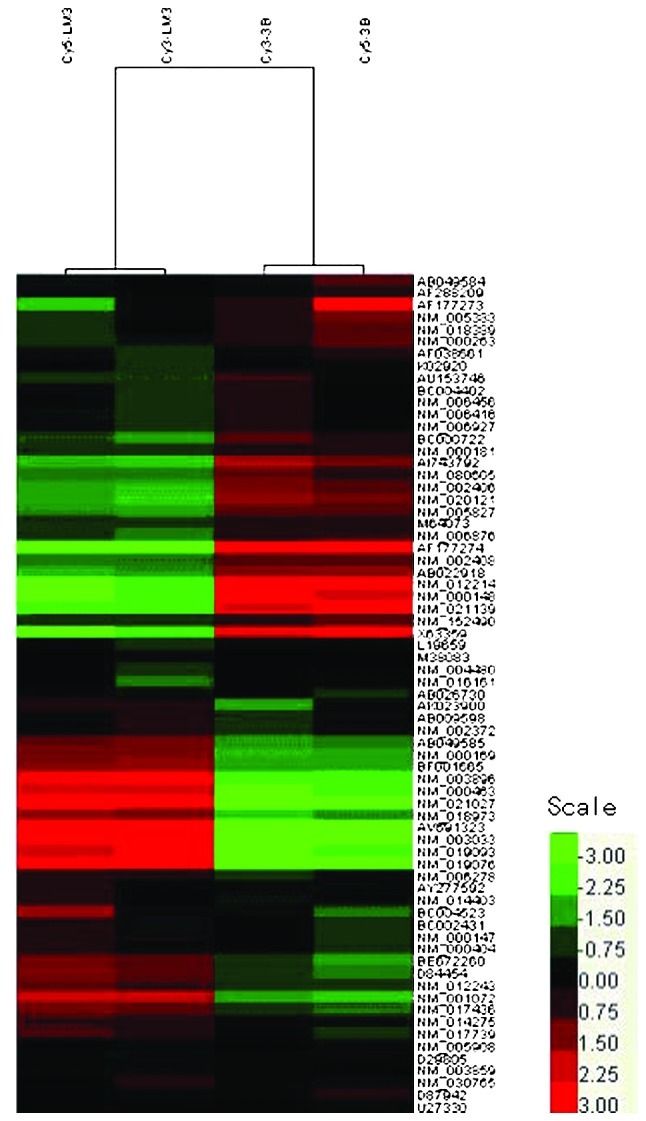
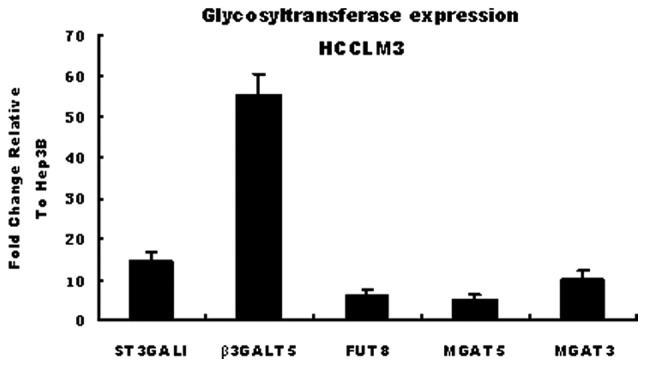
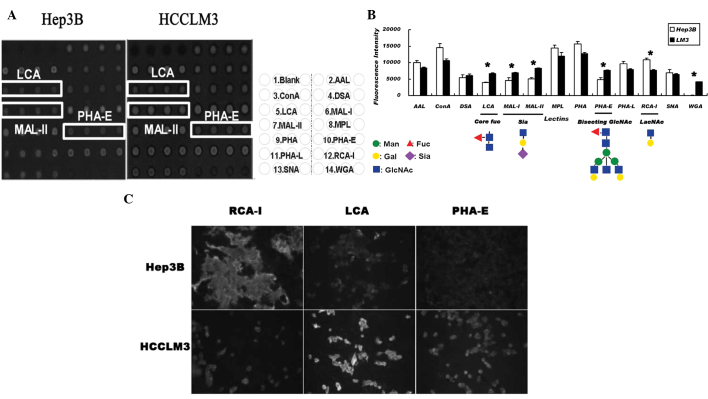
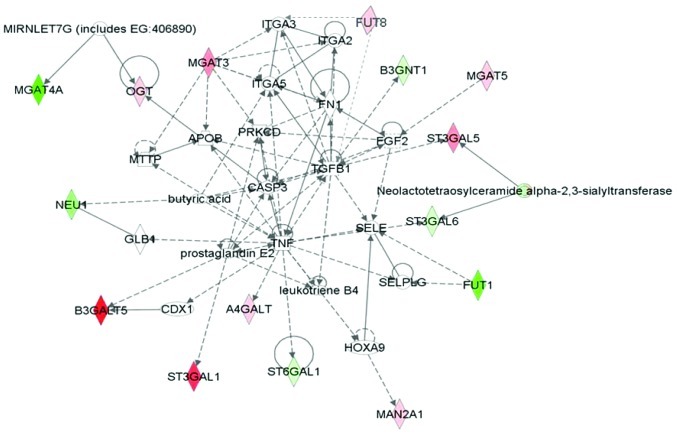
Human hepatocellular carcinoma (HCC) ranks second in cancer mortality in China; recurrence and metastasis have been the cause of the high mortality. Glycans on the cell surface play a pivotal role in tumor metastasis. The global alteration in the structure and composition of N-glycans during HCC metastasis remains unknown. To understand glycan alterations of glycoproteins by correlating the glycosyltransferase expression profile with glycan structure, we systematically used glycan profiling tools: glycogene microarray analyses of 115 genes, including glycotransferases, glycosidases and nuclear sugar transporters and lectin chips to investigate the glycan-related gene expression signatures in the high metastatic potential HCC cell line, HCCLM3, in comparison to the HCC cell line, Hep3B, with low metastatic potential. Of the 115 genes, 18 genes were up-regulated in high metastatic potential HCCLM3 cells in comparison to Hep3B cells, while 11 genes were down-regulated. The differentially expressed genes, such as ST3GalI, FUT8, β3GalT5, MGAT3 and MGAT5, were mainly involved in the synthesis of N-glycan and glycolipids, particularly the sialyl Lewis antigen. The results of the glycogene microarray analysis were further validated by quantitative real-time PCR analysis and lectin-based analysis. The differentially expressed glycogenes identified in this study may provide new insights and represent novel factors for investigating the functional role of cell surface carbohydrate-mediated HCC metastasis.
Figures
References
-
- Chaffer CL, Weinberg RA. A perspective on cancer cell metastasis. Science. 2011;331:1559–1564. - PubMed
-
- Hakomori S. Aberrant glycosylation in tumors and tumor-associated carbohydrate antigens. Adv Cancer Res. 1989;52:257–331. - PubMed
-
- Ohtsubo K, Marth JD. Glycosylation in cellular mechanisms of health and disease. Cell. 2006;126:855–867. - PubMed
-
- Wang FL, Cui SX, Sun LP, et al. High expression of alpha 2, 3-linked sialic acid residues is associated with the metastatic potential of human gastric cancer. Cancer Detect Prev. 2009;32:437–443. - PubMed
-
- Lauc G, Zoldos V. Protein glycosylation - an evolutionary crossroad between genes and environment. Mol Biosyst. 6:2373–2379. - PubMed
LinkOut - more resources
Full Text Sources