


Re-expression of IGF-II is important for beta cell regeneration in adult mice
- PMID: 22970135
- PMCID: PMC3436856
- DOI: 10.1371/journal.pone.0043623
Re-expression of IGF-II is important for beta cell regeneration in adult mice
Abstract
Background: The key factors which support re-expansion of beta cell numbers after injury are largely unknown. Insulin-like growth factor II (IGF-II) plays a critical role in supporting cell division and differentiation during ontogeny but its role in the adult is not known. In this study we investigated the effect of IGF-II on beta cell regeneration.
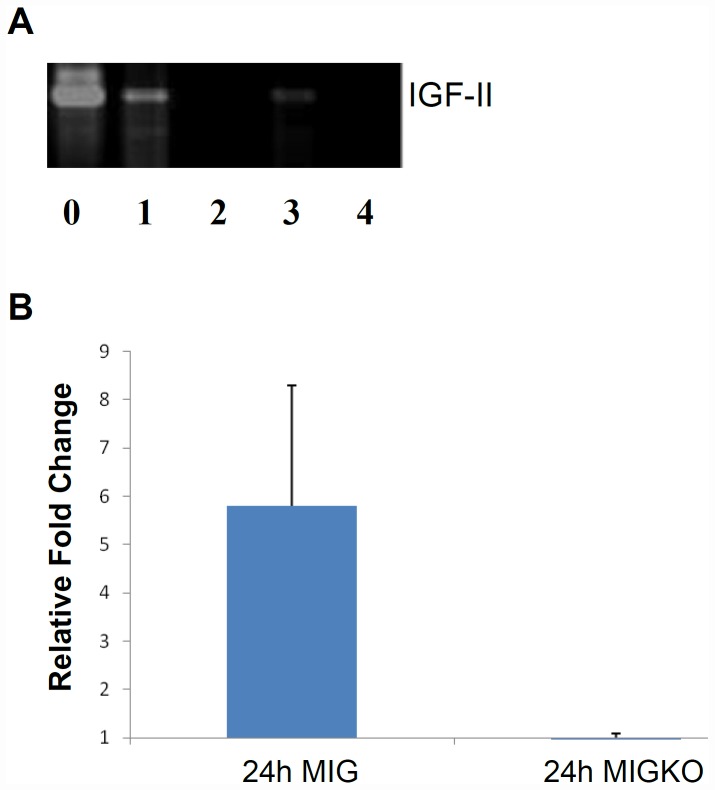
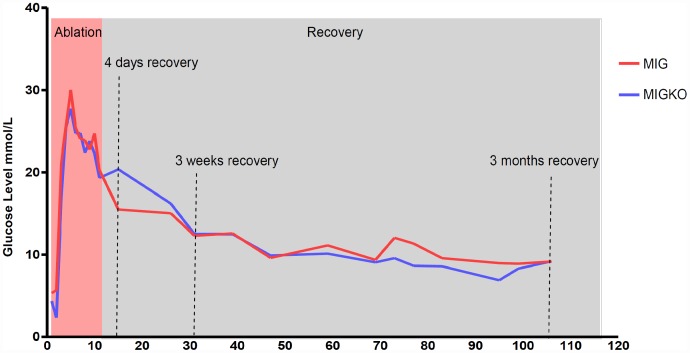
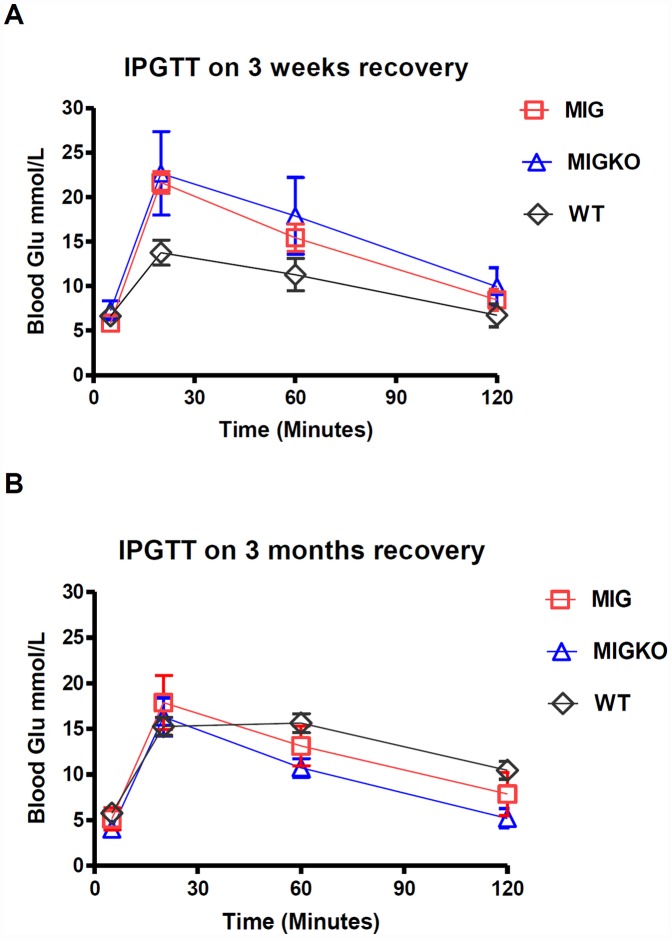
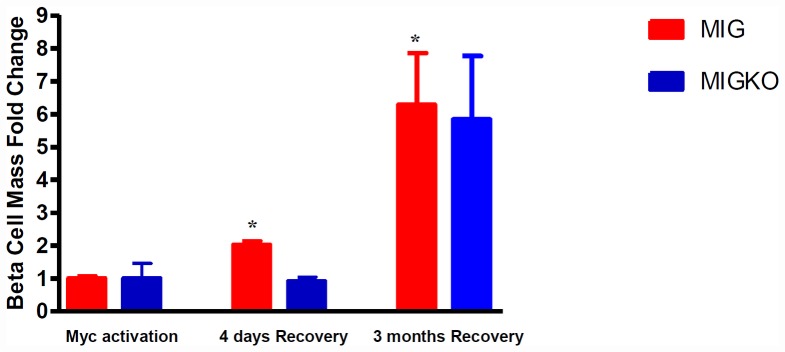
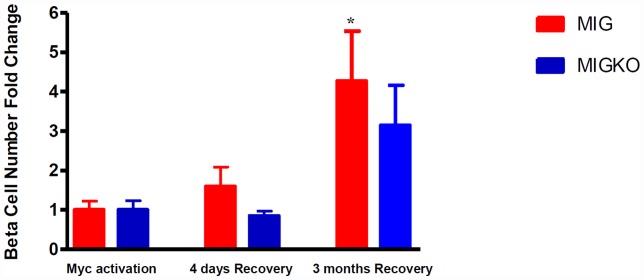
Methodology/principal findings: We employed an in vivo model of 'switchable' c-Myc-induced beta cell ablation, pIns-c-MycER(TAM), in which 90% of beta cells are lost following 11 days of c-Myc (Myc) activation in vivo. Importantly, such ablation is normally followed by beta cell regeneration once Myc is deactivated, enabling functional studies of beta cell regeneration in vivo. IGF-II was shown to be re-expressed in the adult pancreas of pIns-c-MycER(TAM)/IGF-II(+/+) (MIG) mice, following beta cell injury. As expected in the presence of IGF-II beta cell mass and numbers recover rapidly after ablation. In contrast, in pIns-c-MycER(TAM)/IGF-II(+/-) (MIGKO) mice, which express no IGF-II, recovery of beta cell mass and numbers were delayed and impaired. Despite failure of beta cell number increase, MIGKO mice recovered from hyperglycaemia, although this was delayed.
Conclusions/significance: Our results demonstrate that beta cell regeneration in adult mice depends on re-expression of IGF-II, and supports the utility of using such ablation-recovery models for identifying other potential factors critical for underpinning successful beta cell regeneration in vivo. The potential therapeutic benefits of manipulating the IGF-II signaling systems merit further exploration.
Conflict of interest statement
Figures
References
-
- Li Y, Hansotia T, Yusta B, Ris F, Halban PA, et al. (2003) Glucagon-like peptide-1 receptor signaling modulates beta cell apoptosis. J Biol Chem 278: 471–478. - PubMed
-
- Xu G, Stoffers DA, Habener JF, Bonner-Weir S (1999) Exendin-4 stimulates both beta-cell replication and neogenesis, resulting in increased beta-cell mass and improved glucose tolerance in diabetic rats. Diabetes 48: 2270–2276. - PubMed
-
- Drab SR (2009) Clinical studies of liraglutide, a novel, once-daily human glucagon-like peptide-1 analog for improved management of type 2 diabetes mellitus. Pharmacotherapy 29: 43S–54S. - PubMed
-
- Buse JB, Rosenstock J, Sesti G, Schmidt WE, Montanya E, et al. (2009) Liraglutide once a day versus exenatide twice a day for type 2 diabetes: a 26-week randomised, parallel-group, multinational, open-label trial (LEAD-6). Lancet 374: 39–47. - PubMed
-
- Bock T (2004) The source(s) for new pancreatic beta cells in adult life. Bioessays 26: 1156–1159. - PubMed
Publication types
MeSH terms
Substances
Grants and funding
LinkOut - more resources
Full Text Sources
Medical
Molecular Biology Databases
Research Materials
