


The involvement of thaumatin-like proteins in plant food cross-reactivity: a multicenter study using a specific protein microarray
- PMID: 22970164
- PMCID: PMC3436791
- DOI: 10.1371/journal.pone.0044088
The involvement of thaumatin-like proteins in plant food cross-reactivity: a multicenter study using a specific protein microarray
Abstract
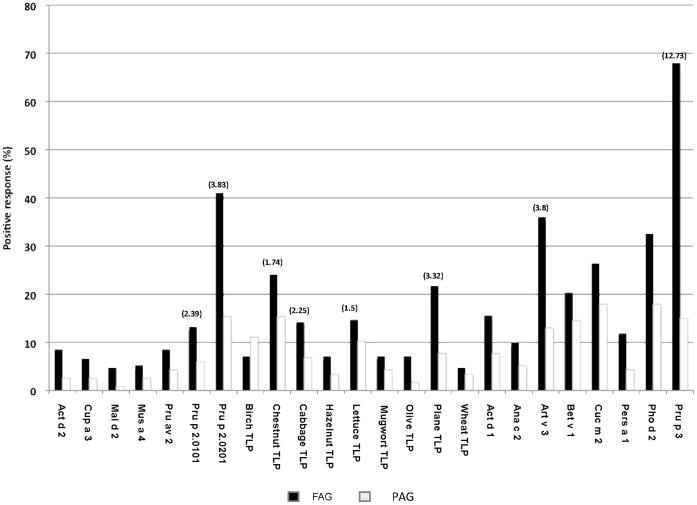
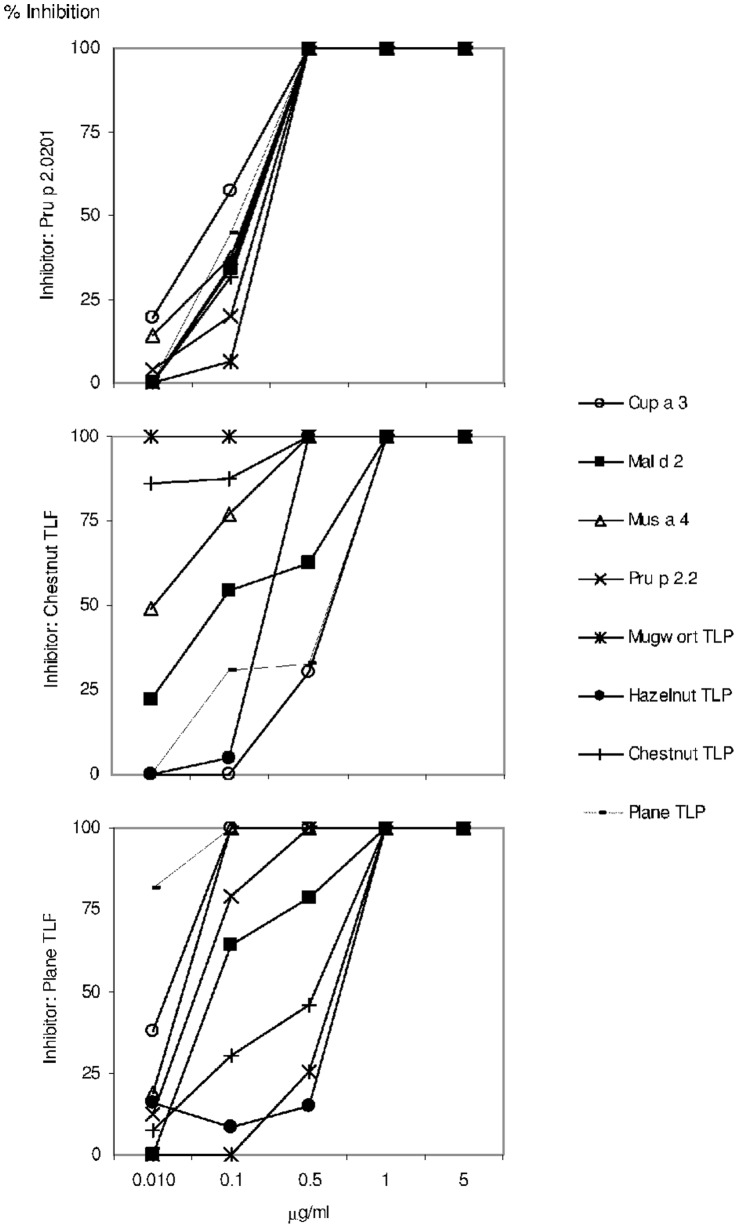
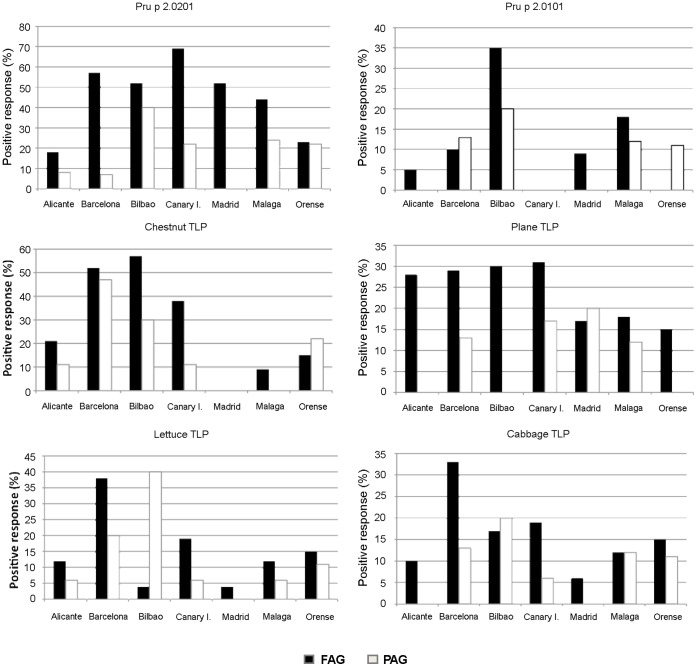
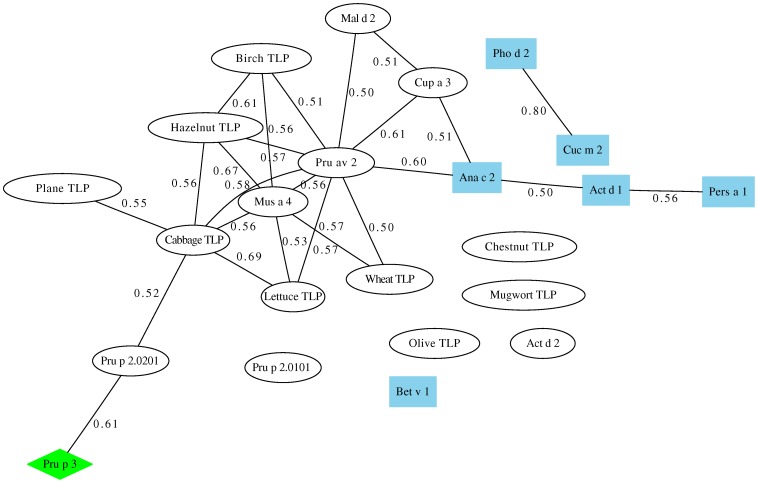
Cross-reactivity of plant foods is an important phenomenon in allergy, with geographical variations with respect to the number and prevalence of the allergens involved in this process, whose complexity requires detailed studies. We have addressed the role of thaumatin-like proteins (TLPs) in cross-reactivity between fruit and pollen allergies. A representative panel of 16 purified TLPs was printed onto an allergen microarray. The proteins selected belonged to the sources most frequently associated with peach allergy in representative regions of Spain. Sera from two groups of well characterized patients, one with allergy to Rosaceae fruit (FAG) and another against pollens but tolerant to food-plant allergens (PAG), were obtained from seven geographical areas with different environmental pollen profiles. Cross-reactivity between members of this family was demonstrated by inhibition assays. Only 6 out of 16 purified TLPs showed noticeable allergenic activity in the studied populations. Pru p 2.0201, the peach TLP (41%), chestnut TLP (24%) and plane pollen TLP (22%) proved to be allergens of probable relevance to fruit allergy, being mainly associated with pollen sensitization, and strongly linked to specific geographical areas such as Barcelona, Bilbao, the Canary Islands and Madrid. The patients exhibited >50% positive response to Pru p 2.0201 and to chestnut TLP in these specific areas. Therefore, their recognition patterns were associated with the geographical area, suggesting a role for pollen in the sensitization of these allergens. Finally, the co-sensitizations of patients considering pairs of TLP allergens were analyzed by using the co-sensitization graph associated with an allergen microarray immunoassay. Our data indicate that TLPs are significant allergens in plant food allergy and should be considered when diagnosing and treating pollen-food allergy.
Conflict of interest statement
Figures
References
-
- Fernández Rivas M (2009) Food allergy in Alergologica-2005. J Investig Allergol Clin Immunol 19 Suppl 237–44. - PubMed
-
- Cuesta-Herranz J, Barber D, Blanco C, Cistero-Bahima A, Crespo JF, et al. (2010) Differences among pollen-allergic patients with and without plant food allergy. Int Arch Allergy Immunol 153: 182–192. - PubMed
-
- Salcedo G, Sánchez-Monge R, Barber D, Díaz-Perales A (2007) Plant non-specific lipid transfer proteins: an interface between plant defence and human allergy. Biochim Biophys Acta 1771: 781–791. - PubMed
-
- Díaz-Perales A, Lombardero M, Sánchez-Monge R, García-Selles FJ, Pernas M, et al. (2000) Lipid-transfer proteins as potential plant panallergens: cross-reactivity among proteins of Artemisia pollen, Castanea nut and Rosaceae fruits, with different IgE-binding capacities. Clin Exp Allergy 30: 1403–1410. - PubMed
-
- Lauer I, Miguel-Moncin MS, Abel T, Foetisch K, Hartz C, et al. (2007) Identification of a plane pollen lipid transfer protein (Pla a 3) and its immunological relation to the peach lipid-transfer protein, Pru p 3. Clin Exp Allergy 37: 261–269. - PubMed
