


α-Tomatine-mediated anti-cancer activity in vitro and in vivo through cell cycle- and caspase-independent pathways
- PMID: 22970166
- PMCID: PMC3435411
- DOI: 10.1371/journal.pone.0044093
α-Tomatine-mediated anti-cancer activity in vitro and in vivo through cell cycle- and caspase-independent pathways
Abstract
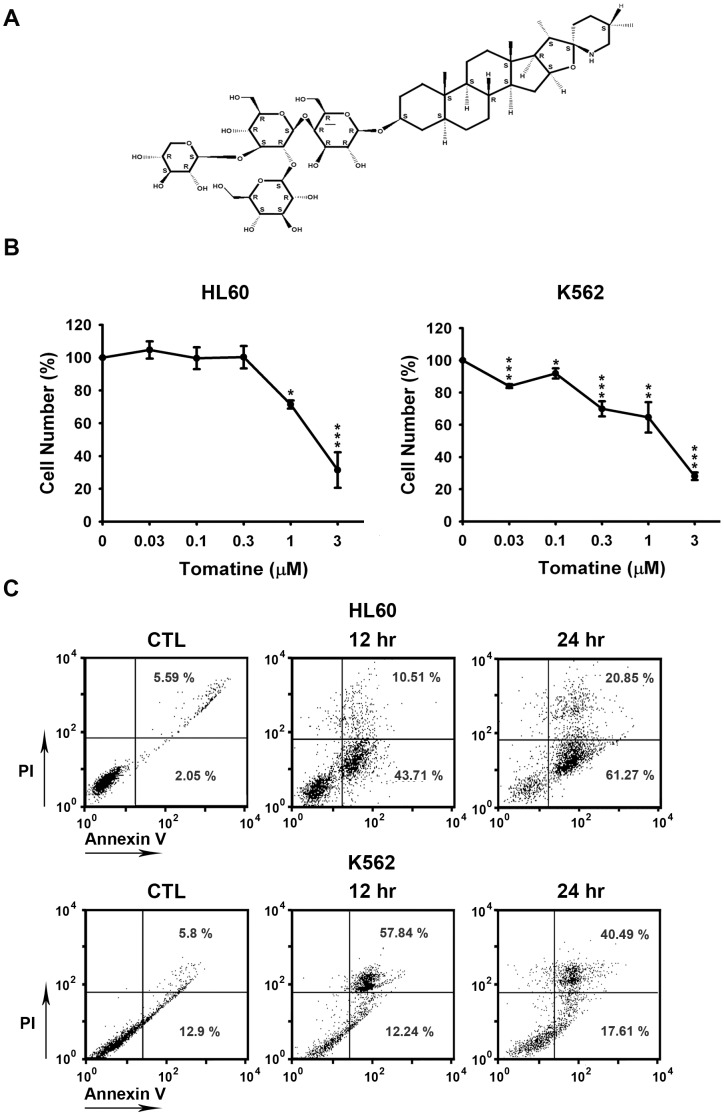
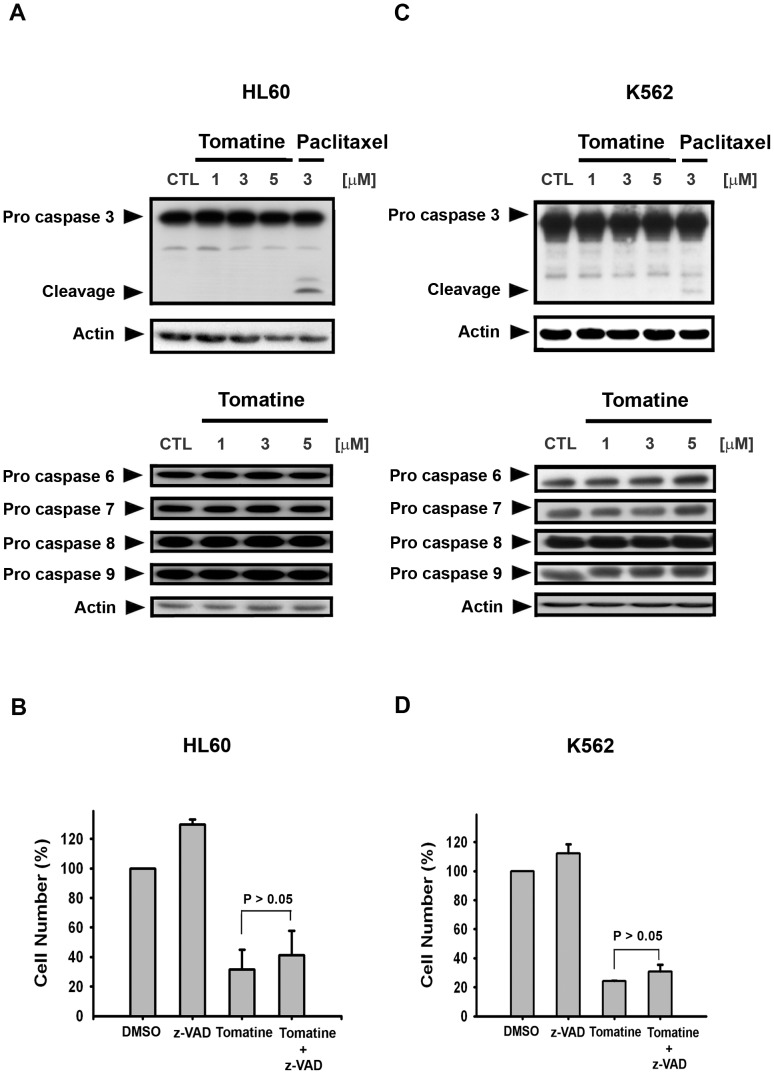
α-Tomatine, a tomato glycoalkaloid, has been reported to possess antibiotic properties against human pathogens. However, the mechanism of its action against leukemia remains unclear. In this study, the therapeutic potential of α-tomatine against leukemic cells was evaluated in vitro and in vivo. Cell viability experiments showed that α-tomatine had significant cytotoxic effects on the human leukemia cancer cell lines HL60 and K562, and the cells were found to be in the Annexin V-positive/propidium iodide-negative phase of cell death. In addition, α-tomatine induced both HL60 and K562 cell apoptosis in a cell cycle- and caspase-independent manner. α-Tomatine exposure led to a loss of the mitochrondrial membrane potential, and this finding was consistent with that observed on activation of the Bak and Mcl-1 short form (Mcl-1s) proteins. Exposure to α-tomatine also triggered the release of the apoptosis-inducing factor (AIF) from the mitochondria into the nucleus and down-regulated survivin expression. Furthermore, α-tomatine significantly inhibited HL60 xenograft tumor growth without causing loss of body weight in severe combined immunodeficiency (SCID) mice. Immunohistochemical test showed that the reduced tumor growth in the α-tomatine-treated mice was a result of increased apoptosis, which was associated with increased translocation of AIF in the nucleus and decreased survivin expression ex vivo. These results suggest that α-tomatine may be a candidate for leukemia treatment.
Conflict of interest statement
Figures



References
-
- Fontaine TD, Irving GW Jr, et al. (1948) Isolation and partial characterization of crystalline tomatine, an antibiotic agent from the tomato plant. Arch Biochem 18: 467–475. - PubMed
-
- Friedman M (2002) Tomato glycoalkaloids: role in the plant and in the diet. J Agric Food Chem 50: 5751–5780. - PubMed
-
- Sandrock RW, Vanetten HD (1998) Fungal Sensitivity to and Enzymatic Degradation of the Phytoanticipin alpha-Tomatine. Phytopathology 88: 137–143. - PubMed
-
- Yang YW, Sheikh NA, Morrow WJ (2002) The ultrastructure of tomatine adjuvant. Biomaterials 23: 4677–4686. - PubMed
-
- Lee KR, Kozukue N, Han JS, Park JH, Chang EY, et al. (2004) Glycoalkaloids and metabolites inhibit the growth of human colon (HT29) and liver (HepG2) cancer cells. J Agric Food Chem 52: 2832–2839. - PubMed
Publication types
MeSH terms
Substances
LinkOut - more resources
Full Text Sources
