. 2012;7(9):e44720.
doi: 10.1371/journal.pone.0044720. Epub 2012 Sep 6.

Metabolic rate regulates L1 longevity in C. elegans

Affiliations

Metabolic rate regulates L1 longevity in C. elegans

Inhwan Lee et al. PLoS One. 2012.

Abstract

Animals have to cope with starvation. The molecular mechanisms by which animals survive long-term starvation, however, are not clearly understood. When they hatch without food, C. elegans arrests development at the first larval stage (L1) and survives more than two weeks. Here we show that the survival span of arrested L1s, which we call L1 longevity, is a starvation response regulated by metabolic rate during starvation. A high rate of metabolism shortens the L1 survival span, whereas a low rate of metabolism lengthens it. The longer worms are starved, the slower they grow once they are fed, suggesting that L1 arrest has metabolic costs. Furthermore, mutants of genes that regulate metabolism show altered L1 longevity. Among them, we found that AMP-dependent protein kinase (AMPK), as a key energy sensor, regulates L1 longevity by regulating this metabolic arrest. Our results suggest that L1 longevity is determined by metabolic rate and that AMPK as a master regulator of metabolism controls this arrest so that the animals survive long-term starvation.


Conflict of interest statement

Competing Interests: The authors have declared that no competing interests exist.

Figures

Figure 1
Figure 1. L1 arrest is a starvation response depending on metabolic rates.
A L1s arrested at low temperature live longer than those arrested at high temperature. Eggs were collected and hatched without food and L1s were maintained at the indicated temperatures . For all L1 longevity assays, each sample contained approximately 10 worms/µl and each plate was plated with approximately 150–200 worms. Every experiment was repeated at least three times with triplicates (see Materials and Methods). B LT 50 (50% lethality) for worms that arrested at 15°C, 20°C and 25°C. C Life spans of arrested L1s of daf-7 and daf-3 mutants tested at 25°C. D Rates of oxygen consumption in wild type, daf-2 and daf-16 mutants (**p<0.01, by two way ANOVA). E Rates of oxygen consumption in wild type and daf-18 mutants (*p<0.05, by two way ANOVA).
Figure 2
Figure 2. Long-term L1 starvation causes tissue damage and delay in development during recovery.
A Fraction of worms that reach adulthood after indicated days of L1 starvation (see Materials and Methods). Approximately 100 worms were used per experiment and each experiment was done with triplicates. B Cumulative fraction of worms that reach adulthood after indicated days of L1 starvation. Line drawn to show the time when 50% worms reach adulthood after indicated hours of refeeding. C DIC (Differential Interference Contrast) image of wild type gonad: the worm was starved for 3 days as an L1 and recovered to grow to an adult. For all experiments to observe gonad defect, approximately 100 worms were used per experiment and each experiment was done with triplicates. D DIC image of wild type gonad: the worm was starved for 9 days as an L1 at 20°C and recovered to grow to an adult at 20°C. No eggs are visible. E–F DIC images of gonads of daf-16 mutants (E) and daf-18 mutants (F): worms were starved for 3 days at 20°C as L1s and recovered to grow to adults at 20°C. No eggs are visible. G Percent destroyed gonad increases as L1 starvation continues.
Figure 3
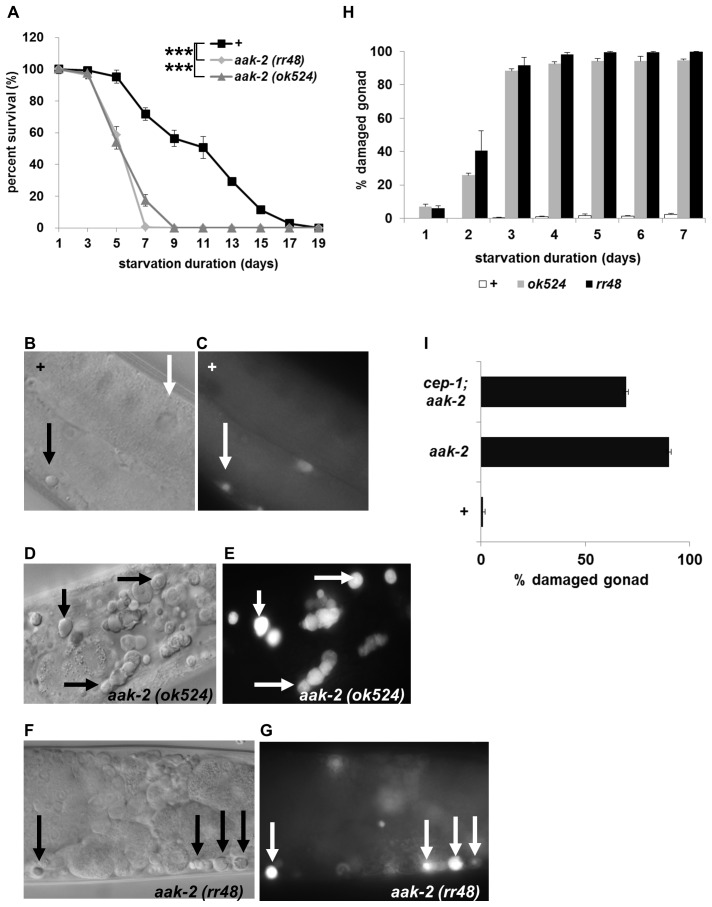
Figure 3. AMPK is necessary for L1 longevity.
A Percent survival of wild type (▪) and two independent aak-2 mutants (ok524 (gray ▴) and rr48 (gray ♦)) after L1 starvation at 22.5°C for the indicated number of days. B DIC (Differential Interference Contrast) image of wild type gonad. The black arrow indicates the button like structure of the nucleus of a dying cell. The white arrow indicates an oocyte. C Fluorescent image of the same worm stained with acridine orange to detect cell death. The white arrow indicates the dying cell. D&F DIC images of AMPK mutant gonads. The black arrows indicate dying cells. Gonads are destroyed and no oocytes are visible. E&G Fluorescent images of the same worms stained with acridine orange reveal more dying cells (the white arrows) in the gonads of AMPK mutants. H Percent destroyed gonads in two independent aak-2 mutants. I After 3 days of L1 starvation at 22.5°C and recovery, cep-1 mutation partially rescued aak-2 gonad phenotype.
Figure 4
Figure 4. Down regulation of metabolism or addition of glucose enhances aak-2 L1 longevity.
A–B Starvation at 15°C enhances aak-2 L1 longevity in aak-2 mutants (A: rr48, B: ok524), ***p<0.001. C Mutation in ife-2 enhances aak-2 L1 longevity, ***p<0.001. D Glucose and fructose (100 mM) slightly enhanced L1 longevity of wild type but sorbitol and L-glucose didn’t. p<0.001 between control and the wild type treated with glucose or fructose. D: D-glucose, L: L-glucose, F: fructose, S: sorbitol. E–F Glucose and fructose enhanced aak-2 L1 longevity but sorbitol and L-glucose didn’t. p<0.001 between control and the aak-2 mutants treated with glucose or fructose. For each experiment, approximately 100–200 L1s were used. D: D-glucose, L: L-glucose, F: fructose, S: sorbitol.
Figure 5
Figure 5. L1 starvation activates AAK-2 partially depending on PAR-4, C. elegans LKB1.
A. L1 starvation activates AMPK. L1s were starved for indicated days and collected to be prepared for Western blot assay (see Materials and Methods). B. Refeeding for one hour after 3 days of starvation reduced activation of AAK-2. Lane 1∶1 day starved L1s, Lane 2∶3 day starved L1s, Lane 3: L1s were starved for 3 days and refed for 1 hour. C. AAK-2 is phosphorylated in response to starvation and mitochondrial poisoning with NaN3 in a partially PAR-4 dependent manner. Lane 1: wild type adults placed on unseeded NGM plates for 6 hours (control), Lane 2: wild type adults treated with 1 mM NaN3 for 6 hours on unseeded NGM plates, Lane 3: aak-2 mutants (ok524) treated with 1 mM NaN3 for 6 hours, Lane 4: par-4 mutants treated with 1 mM NaN3 for 6 hours, Lane 5: wild type adults starved for 24 hours in M9, Lane 6: aak-2 mutants (ok524) starved for 24 hours, Lane 7: par-4 mutants starved for 24 hours. D. Starvation-induced AAK-2 phosphorylation is daf-18 independent. Both wild type and daf-18 mutants were starved for 2 days to measure phosphorylation of AAK-2. Mutation in daf-18 doesn’t decrease but instead increases AAK-2 phosphorylation by starvation, suggesting AAK-2 phosphorylation does not require DAF-18 activity.
Figure 6
Figure 6. par-4 partially phenocopies starvation-induced phenotype of aak-2.
A. Percent damaged gonad of wild type and par-4 mutants after L1 starvation for the indicated days. B. Percent survival of wild type (♦), aak-2 (gray ▪) and par-4 (gray▴) mutants after L1 starvation for the indicated days.

References

    1. Baugh LR, Sternberg PW (2006) DAF-16/FOXO regulates transcription of cki-1/Cip/Kip and repression of lin-4 during C. elegans L1 arrest. Curr Biol 16: 780–785. - PubMed
    1. Fukuyama M, Rougvie AE, Rothman JH (2006) C. elegans DAF-18/PTEN mediates nutrient-dependent arrest of cell cycle and growth in the germline. Curr Biol 16: 773–779. - PubMed
    1. Hardie DG (2007) AMP-activated/SNF1 protein kinases: conserved guardians of cellular energy. Nat Rev Mol Cell Biol 8: 774–785. - PubMed
    1. Egan DF, Shackelford DB, Mihaylova MM, Gelino S, Kohnz RA, et al. (2011) Phosphorylation of ULK1 (hATG1) by AMP-activated protein kinase connects energy sensing to mitophagy. Science 331: 456–461. - PMC - PubMed
    1. Kimura KD, Tissenbaum HA, Liu Y, Ruvkun G (1997) daf-2, an insulin receptor-like gene that regulates longevity and diapause in Caenorhabditis elegans. Science 277: 942–946. - PubMed

Publication types

Substances