


Deficiency in the nuclear-related factor erythroid 2 transcription factor (Nrf1) leads to genetic instability
- PMID: 22971132
- PMCID: PMC3835192
- DOI: 10.1111/febs.12005
Deficiency in the nuclear-related factor erythroid 2 transcription factor (Nrf1) leads to genetic instability
Abstract
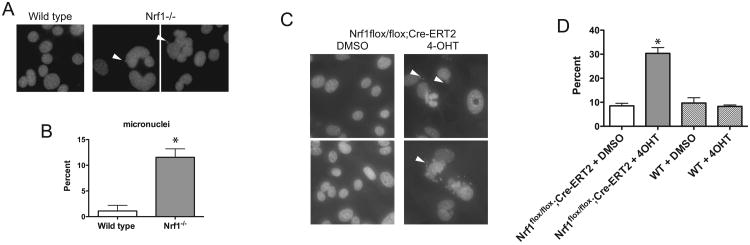
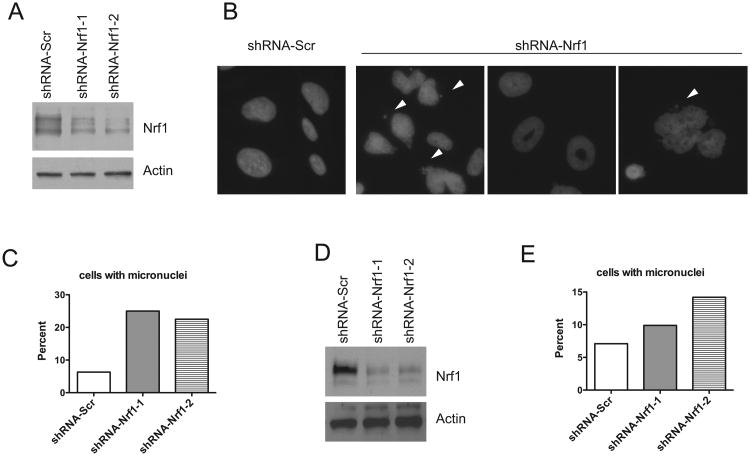
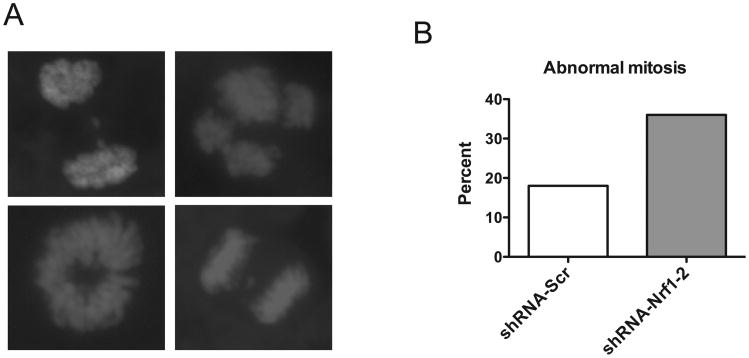
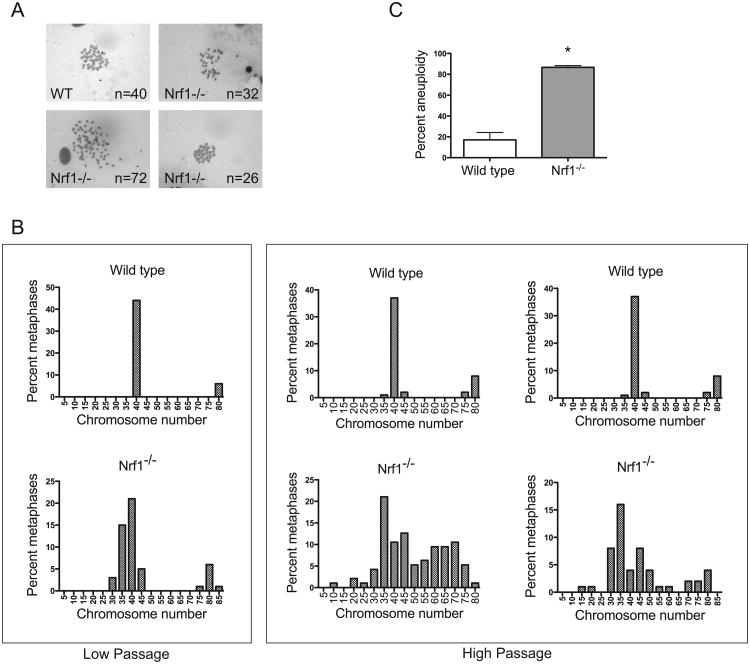
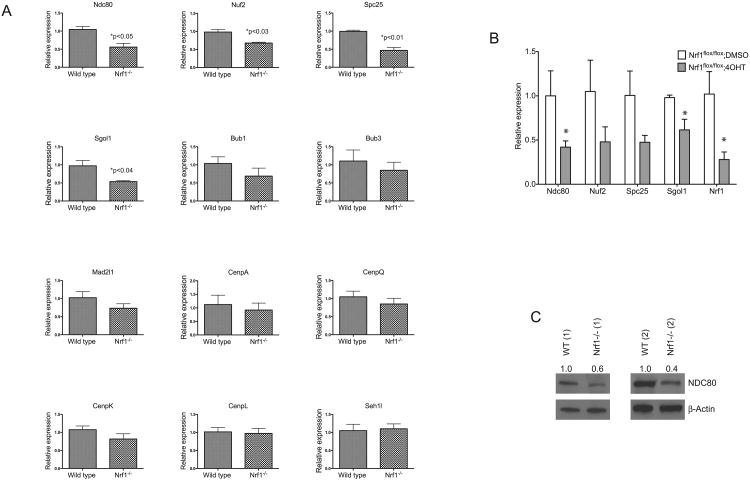
Nuclear factor erythroid-derived 2-related factor 1 (Nrf1) regulates cellular stress response genes, and has also been suggested to play a role in other cellular processes. We previously demonstrated that hepatocyte-specific deletion of Nrf1 in mice resulted in spontaneous apoptosis, inflammation, and development of liver tumors. Here, we showed that both fibroblasts derived from Nrf1 null mouse embryos and fibroblasts expressing a conditional Nrf1 allele showed increased micronuclei and formation of abnormal nuclei. Lentiviral shRNA-mediated knockdown of Nrf1 in SAOS-2 cells also resulted in increased micronuclei, abnormal mitosis and multi-nucleated cells. Metaphase analyses showed increased aneuploidy in Nrf1(-/-) embryonic fibroblasts. Nuclear defects in Nrf1-deficient cells were associated with decreased expression of various genes encoding kinetochore and mitotic checkpoint proteins. Our findings suggest that Nrf1 may play a role in maintaining genomic integrity, and that Nrf1 dysregulation may induce tumorigenesis.
© 2012 The Authors Journal compilation © 2012 FEBS.
Conflict of interest statement
The content is solely the responsibility of the authors, and they have no conflicts of interest to disclose.
Figures
References
-
- Cleveland DW, Mao Y, Sullivan KF. Centromeres and kinetochores: from epigenetics to mitotic checkpoint signaling. Cell. 2003;112:407–421. - PubMed
Publication types
MeSH terms
Substances
Grants and funding
LinkOut - more resources
Full Text Sources
Molecular Biology Databases
