


The MET Oncogene as a Therapeutical Target in Cancer Invasive Growth
- PMID: 22973229
- PMCID: PMC3438853
- DOI: 10.3389/fphar.2012.00164
The MET Oncogene as a Therapeutical Target in Cancer Invasive Growth
Abstract
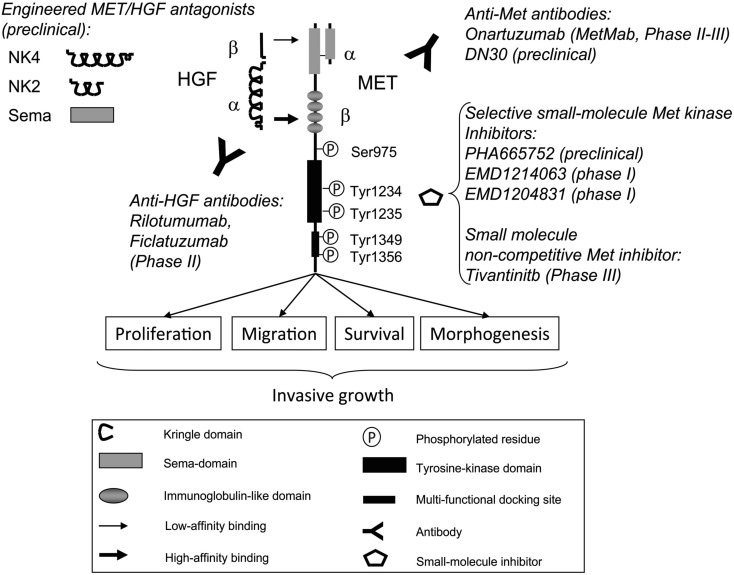
The MET proto-oncogene, encoding the tyrosine kinase receptor for Hepatocyte Growth Factor (HGF) regulates invasive growth, a genetic program that associates control of cell proliferation with invasion of the extracellular matrix and protection from apoptosis. Physiologically, invasive growth takes place during embryonic development, and, in post-natal life, in wound healing and regeneration of several tissues. The MET oncogene is overexpressed and/or genetically mutated in many tumors, thereby sustaining pathological invasive growth, a prerequisite for metastasis. MET is the subject of intense research as a target for small molecule kinase inhibitors and, together with its ligand HGF, for inhibitory antibodies. The tight interplay of MET with the protease network has unveiled mechanisms to be exploited to achieve effective inhibition of invasive growth.
Keywords: MET oncogene; antibody; invasion; metastasis; microenvironment; proteases; small molecule kinase inhibitors; targeted therapy.
Figures
References
-
- Bean J., Brennan C., Shih J. Y., Riely G., Viale A., Wang L., Chitale D., Motoi N., Szoke J., Broderick S., Balak M., Chang W. C., Yu C. J., Gazdar A., Pass H., Rusch V., Gerald W., Huang S. F., Yang P. C., Miller V., Ladanyi M., Yang C. H., Pao W. (2007). MET amplification occurs with or without T790M mutations in EGFR mutant lung tumors with acquired resistance to gefitinib or erlotinib. Proc Natl. Acad. Sci. U.S.A. 104, 20932–20937 10.1073/pnas.0710370104 - DOI - PMC - PubMed
LinkOut - more resources
Full Text Sources
Other Literature Sources
Miscellaneous
