


Self-assembly of filamentous amelogenin requires calcium and phosphate: from dimers via nanoribbons to fibrils
- PMID: 22974364
- PMCID: PMC3496023
- DOI: 10.1021/bm300942c
Self-assembly of filamentous amelogenin requires calcium and phosphate: from dimers via nanoribbons to fibrils
Abstract
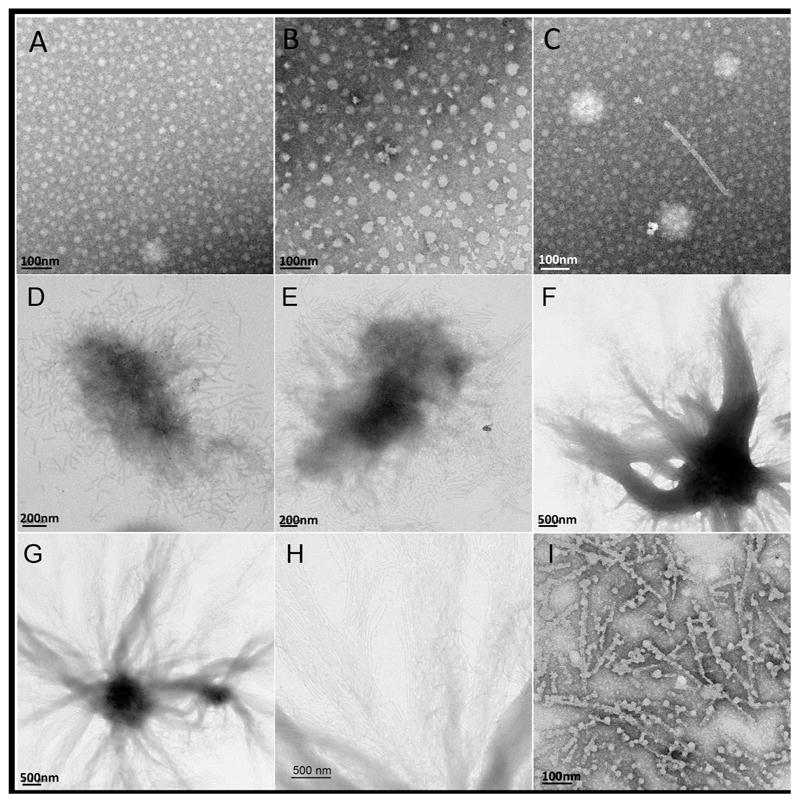
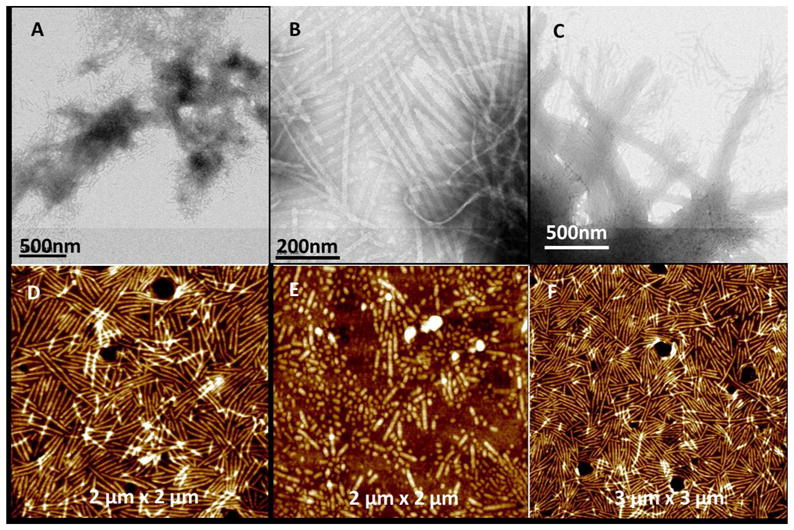
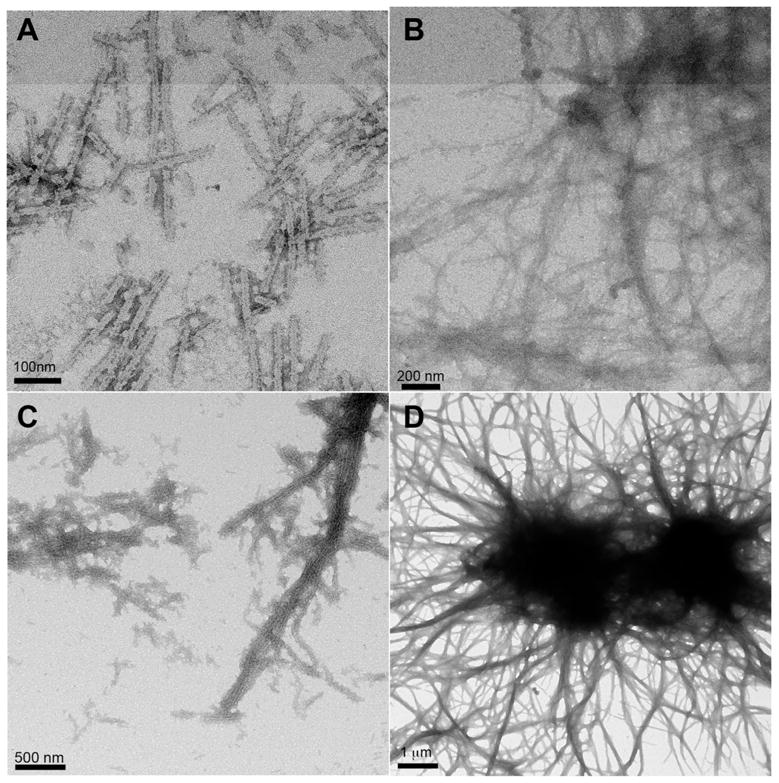
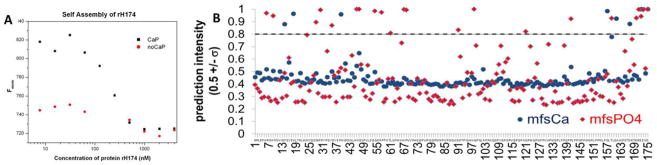
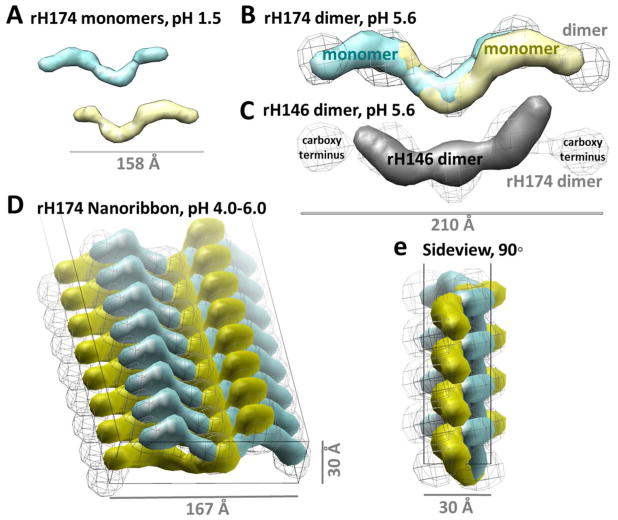
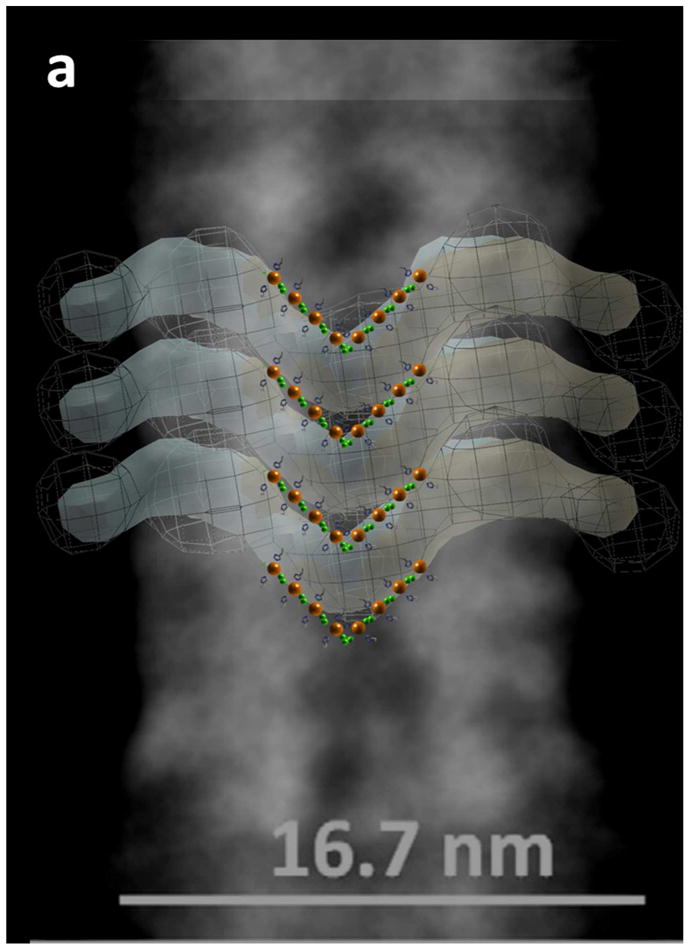
Enamel matrix self-assembly has long been suggested as the driving force behind aligned nanofibrous hydroxyapatite formation. We tested if amelogenin, the main enamel matrix protein, can self-assemble into ribbon-like structures in physiologic solutions. Ribbons 17 nm wide were observed to grow several micrometers in length, requiring calcium, phosphate, and pH 4.0-6.0. The pH range suggests that the formation of ion bridges through protonated histidine residues is essential to self-assembly, supported by a statistical analysis of 212 phosphate-binding proteins predicting 12 phosphate-binding histidines. Thermophoretic analysis verified the importance of calcium and phosphate in self-assembly. X-ray scattering characterized amelogenin dimers with dimensions fitting the cross-section of the amelogenin ribbon, leading to the hypothesis that antiparallel dimers are the building blocks of the ribbons. Over 5-7 days, ribbons self-organized into bundles composed of aligned ribbons mimicking the structure of enamel crystallites in enamel rods. These observations confirm reports of filamentous organic components in developing enamel and provide a new model for matrix-templated enamel mineralization.
Figures
References
-
- Smith KH, Tejeda-Montes E, Poch M, Mata A. Chem Soc Rev. 2011;40:4563–4577. - PubMed
-
- Ingber DE. Sci Am. 1998;278:48–57. - PubMed
-
- Warshawsky H. Anat Rec. 1989;224:242–262. - PubMed
-
- White SN, Luo W, Paine ML, Fong H, Sarikaya M, Snead ML. J Dent Res. 2001;80:321–326. - PubMed
-
- Smith CE. Crit Rev Oral Biol Med. 1998;9:128–161. - PubMed
