


SRC Homology 2 Domain Binding Sites in Insulin, IGF-1 and FGF receptor mediated signaling networks reveal an extensive potential interactome
- PMID: 22974441
- PMCID: PMC3514216
- DOI: 10.1186/1478-811X-10-27
SRC Homology 2 Domain Binding Sites in Insulin, IGF-1 and FGF receptor mediated signaling networks reveal an extensive potential interactome
Abstract
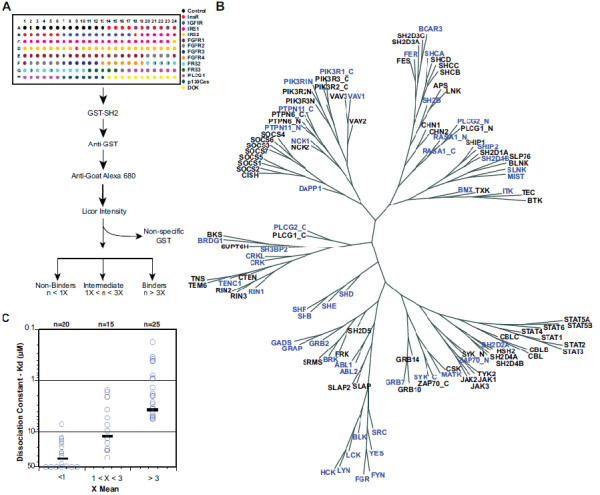
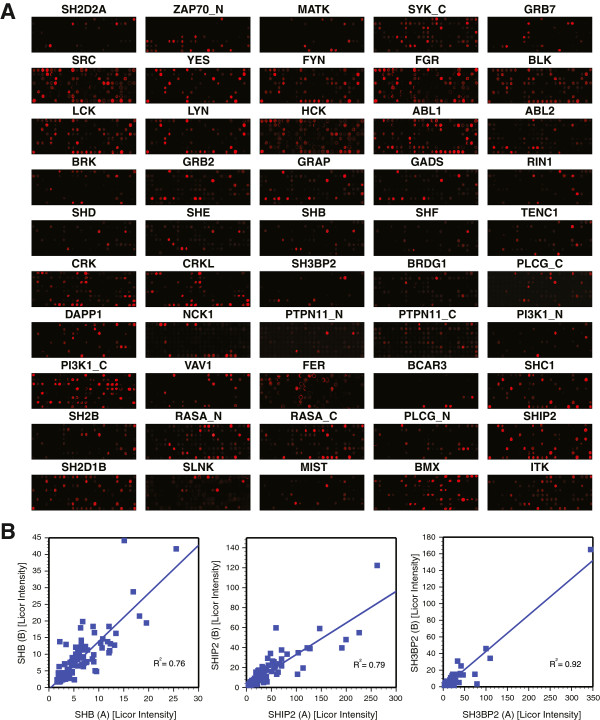
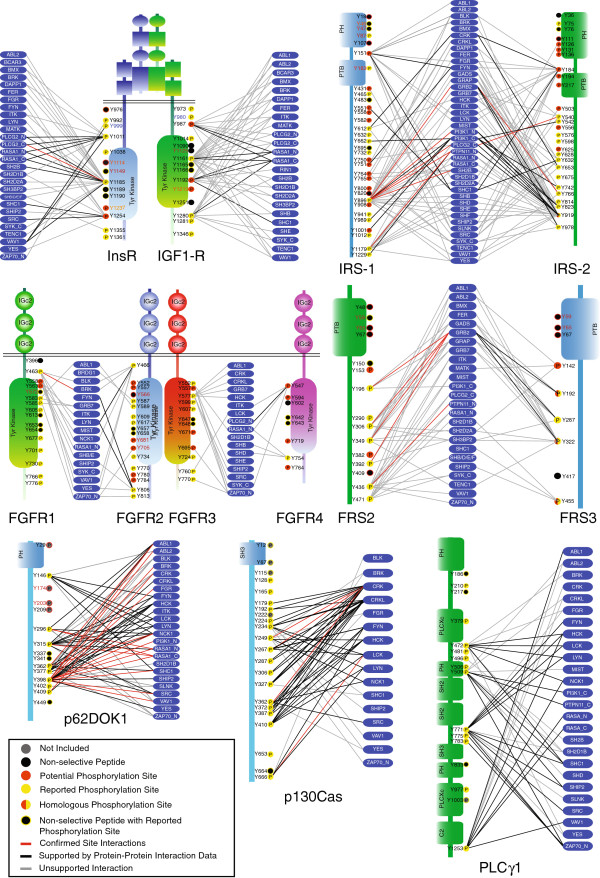
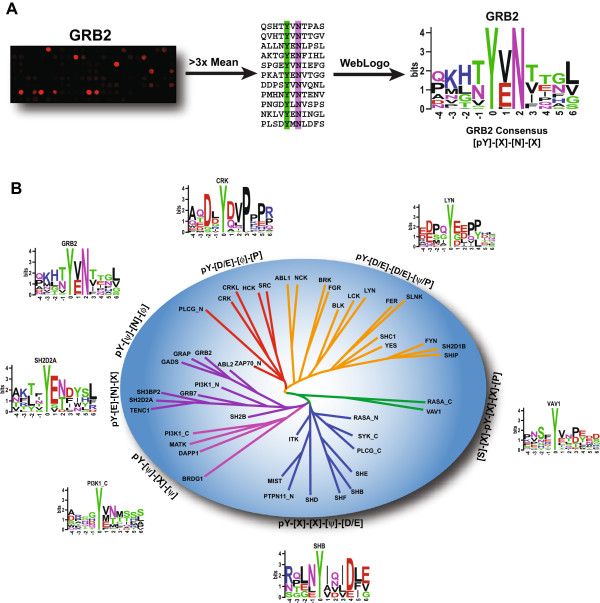
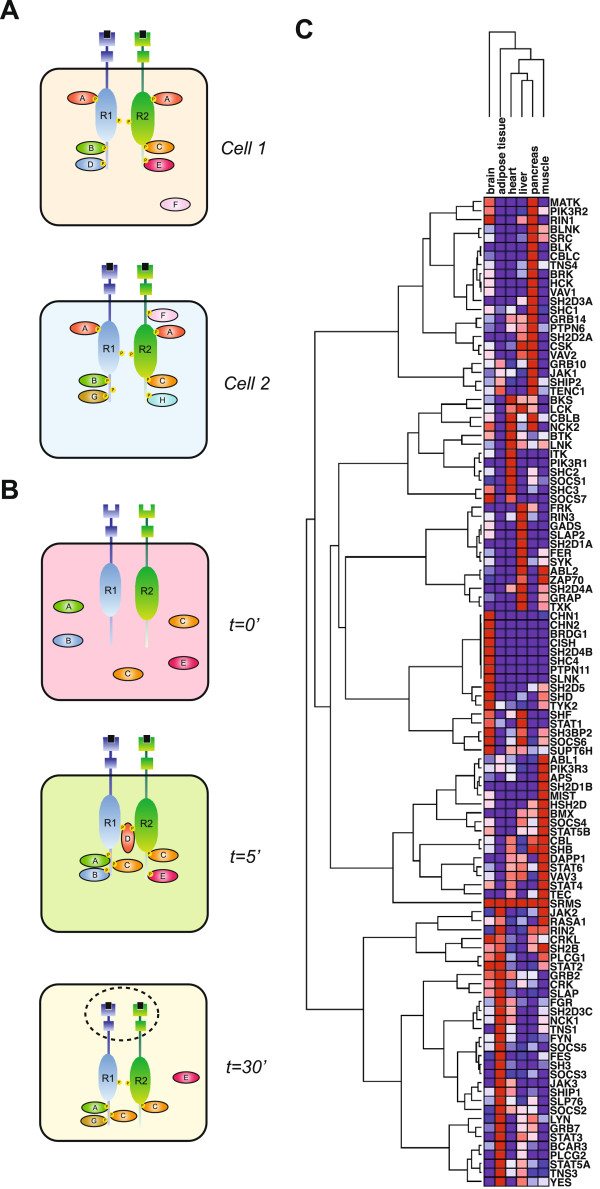
Specific peptide ligand recognition by modular interaction domains is essential for the fidelity of information flow through the signal transduction networks that control cell behavior in response to extrinsic and intrinsic stimuli. Src homology 2 (SH2) domains recognize distinct phosphotyrosine peptide motifs, but the specific sites that are phosphorylated and the complement of available SH2 domains varies considerably in individual cell types. Such differences are the basis for a wide range of available protein interaction microstates from which signaling can evolve in highly divergent ways. This underlying complexity suggests the need to broadly map the signaling potential of systems as a prerequisite for understanding signaling in specific cell types as well as various pathologies that involve signal transduction such as cancer, developmental defects and metabolic disorders. This report describes interactions between SH2 domains and potential binding partners that comprise initial signaling downstream of activated fibroblast growth factor (FGF), insulin (Ins), and insulin-like growth factor-1 (IGF-1) receptors. A panel of 50 SH2 domains screened against a set of 192 phosphotyrosine peptides defines an extensive potential interactome while demonstrating the selectivity of individual SH2 domains. The interactions described confirm virtually all previously reported associations while describing a large set of potential novel interactions that imply additional complexity in the signaling networks initiated from activated receptors. This study of pTyr ligand binding by SH2 domains provides valuable insight into the selectivity that underpins complex signaling networks that are assembled using modular protein interaction domains.
Figures
References
-
- van der Geer P, Hunter T, Lindberg RA. Receptor protein-tyrosine kinases and their signal transduction pathways. Annu Rev Cell Biol. 1994;10:251–337. - PubMed
-
- Fantl WJ, Johnson DE, Williams LT. Signalling by receptor tyrosine kinases. Annu Rev Biochem. 1993;62:453–481. - PubMed
-
- Yaffe MB. Phosphotyrosine-binding domains in signal transduction. Nat Rev Mol Cell Biol. 2002;3:177–186. - PubMed
-
- Pawson T. Specificity in signal transduction: from phosphotyrosine-SH2 domain interactions to complex cellular systems. Cell. 2004;116:191–203. - PubMed
Grants and funding
LinkOut - more resources
Full Text Sources
Miscellaneous
