


Children's symptoms of posttraumatic stress and depression after a natural disaster: comorbidity and risk factors
- PMID: 22974469
- PMCID: PMC3640419
- DOI: 10.1016/j.jad.2012.08.041
Children's symptoms of posttraumatic stress and depression after a natural disaster: comorbidity and risk factors
Abstract
Background: The current study examined rates of comorbidity among children's symptoms of posttraumatic stress (PTS) and depression after a natural disaster, Hurricane Ike. We also compared children with comorbid symptoms to children without comorbid symptoms, examining recovery, severity of symptoms, and risk factors.
Method: Children (n=277; 52% girls; 38% Hispanic, 28% White, 19% Black; grades 2-4) were assessed at 8 and 15 months postdisaster. Children completed measures of PTS and depressive symptoms at both time points and measures of exposure and recovery stressors at 8 months postdisaster.
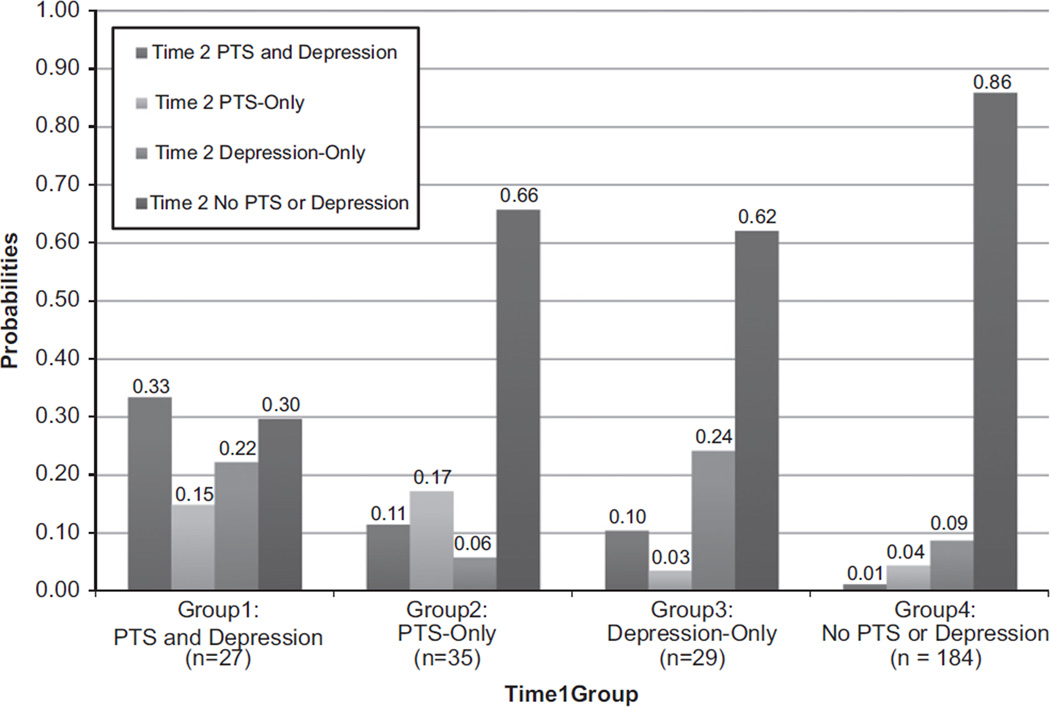
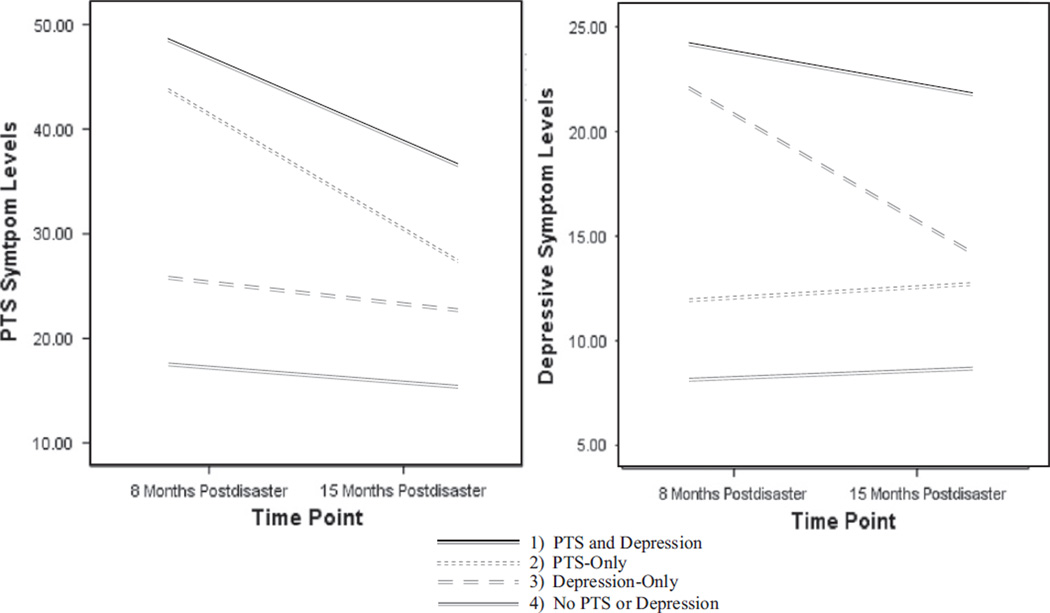
Results: At 8 months postdisaster, 13% of children reported elevated PTS-only, 11% depression-only, and 10% comorbid symptoms of PTS and depression. At 15 months postdisaster, 7% of children reported elevated PTS-only, 11% depression-only, and 7% comorbid symptoms of PTS and depression. Children with comorbid symptoms of PTS and depression had poorer recovery, more severe symptoms, and they reported greater exposure and recovery stressors.
Limitations: We lacked information on children's predisaster functioning and diagnostic interview of psychological distress symptoms.
Conclusions: Children with comorbid symptoms need to be identified early postdisaster. Levels of stressors should be monitored postdisaster, as highly stressed youth have difficulties recovering and may need help. Interventions should be tailored for children with comorbid symptoms of PTS and depression.
Copyright © 2012 Elsevier B.V. All rights reserved.
Conflict of interest statement
All authors declare that they have no conflicts of interest.
Figures
References
-
- AACAP Official Action. Summary of the practice parameters for the assessment and treatment of children and adolescents with posttraumatic stress disorder. Journal of the American Academy of Child and Adolescent Psychiatry. 1998;37:997–1001. - PubMed
-
- Abramson L, Metalsky G, Alloy L. Hopelessness depression: a theory-based subtype of depression. Psychological Review. 1989;96(2):358–372.
-
- Angold A, Costello EJ, Erkanli A. Comorbidity. The Journal of Child Psychology and Psychiatry. 1999;40(1):57–87. - PubMed
-
- Beck A. Cognitive therapy: a 30-year retrospective. American Psychologist. 1991;46(4):368–375. - PubMed
-
- Berg R. Tropical Cyclone Report: Hurricane Ike. National Hurricane Center, National Oceanic and Atmospheric Administration. 2008 < http://www.nhc.noaa.gov/pdf/TCR-AL092008_Ike_3May10.pdf>Retrieved August 14, 2008.
Publication types
MeSH terms
Grants and funding
LinkOut - more resources
Full Text Sources
Other Literature Sources
Medical
