


Aryl-hydrocarbon receptor activity modulates prolactin expression in the pituitary
- PMID: 22975028
- PMCID: PMC3489979
- DOI: 10.1016/j.taap.2012.08.026
Aryl-hydrocarbon receptor activity modulates prolactin expression in the pituitary
Abstract
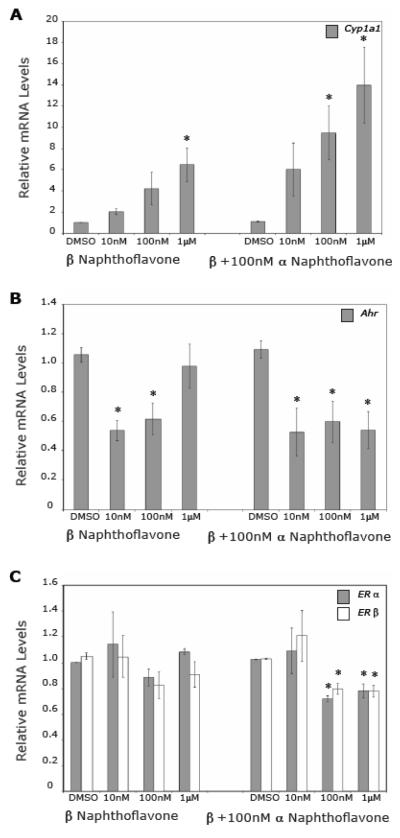
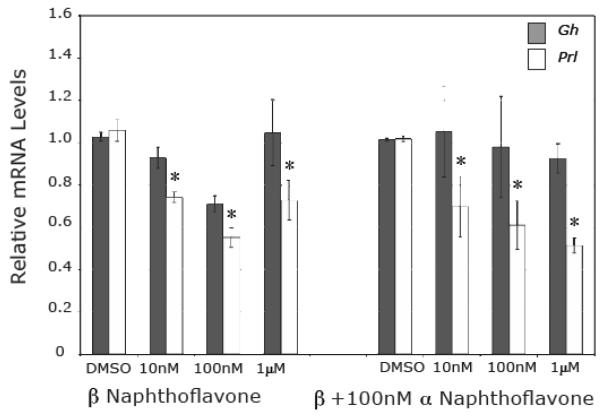
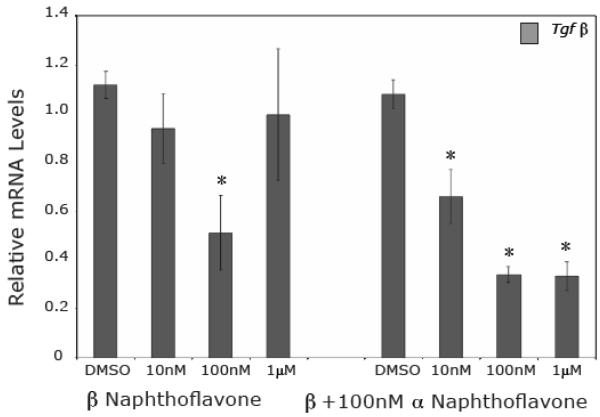
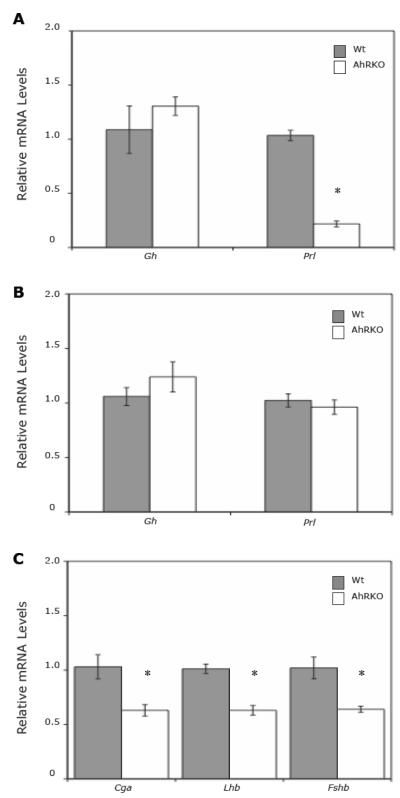
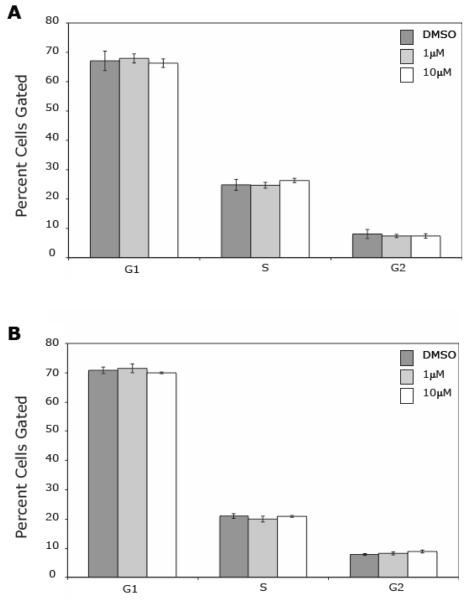
Pituitary tumors account for 15% of intracranial neoplasms, however the extent to which environmental toxicants contribute to the proliferation and hormone expression of pituitary cells is unknown. Aryl-hydrocarbon receptor (AhR) interacting protein (AIP) loss of function mutations cause somatotrope and lactotrope adenomas in humans. AIP sequesters AhR and inhibits its transcriptional function. Because of the link between AIP and pituitary tumors, we hypothesize that exposure to dioxins, potent exogenous ligands for AhR that are persistent in the environment, may predispose to pituitary dysfunction through activation of AhR. In the present study, we examined the effect of AhR activation on proliferation and endogenous pituitary hormone expression in the GH3 rat somatolactotrope tumor cell line and the effect of loss of AhR action in knockout mice. GH3 cells respond to nM doses of the reversible AhR agonist β-naphthoflavone with a robust induction of Cyp1a1. Although mRNA levels of the anti-proliferative signaling cytokine TGFbeta1 are suppressed upon β-naphthoflavone treatment, we did not observe an alteration in cell proliferation. AhR activation with β-naphthoflavone suppresses Ahr expression and impairs expression of prolactin (PRL), but not growth hormone (GH) mRNA in GH3 cells. In mice, loss of Ahr similarly leads to a reduction in Prl mRNA at P3, while Gh is unaffected. Additionally, there is a significant reduction in pituitary hormones Lhb and Fshb in the absence of Ahr. Overall, these results demonstrate that AhR is important for pituitary hormone expression and suggest that environmental dioxins can exert endocrine disrupting effects at the pituitary.
Copyright © 2012 Elsevier Inc. All rights reserved.
Figures
References
-
- Abbott BD, Birnbaum LS. TCDD-induced altered expression of growth factors may have a role in producing cleft palate and enhancing the incidence of clefts after coadministration of retinoic acid and TCDD. Toxicol. Appl. Pharmacol. 1990;106:418–432. - PubMed
-
- Abbott BD, Schmid JE, Pitt JA, Buckalew AR, Wood CR, Held GA, Diliberto JJ. Adverse reproductive outcomes in the transgenic Ah receptor-deficient mouse. Toxicol. Appl. Pharmacol. 1999;155:62–70. - PubMed
-
- Aluru N, Vijayan MM. Brain transcriptomics in response to beta-naphthoflavone treatment in rainbow trout: the role of aryl hydrocarbon receptor signaling. Aquat. Toxicol. 2008;87:1–12. - PubMed
-
- Baglole CJ, Maggirwar SB, Gasiewicz TA, Thatcher TH, Phipps RP, Sime PJ. The aryl hydrocarbon receptor attenuates tobacco smoke-induced cyclooxygenase-2 and prostaglandin production in lung fibroblasts through regulation of the NF-kappaB family member RelB. J. Biol. Chem. 2008;283:28944–28957. - PMC - PubMed
MeSH terms
Substances
Grants and funding
LinkOut - more resources
Full Text Sources
Molecular Biology Databases
Miscellaneous
